China's weak domestic demand chokes economy as GDP growth slows below 5%
Synopsis
China's consumption share of GDP has hit 56% — lower than Japan's at the nadir of its 1990s stagnation — and a $1 trillion trade surplus that looks like strength is actually a symptom of domestic weakness. With the IMF warning Beijing and trading partners raising tariffs, the world's second-largest economy faces a structural reckoning that no export boom can paper over.
Key Takeaways
China's consumption rate stands at just 56% of GDP — the lowest of any major economy, and roughly 10 percentage points below Japan's at its 1990s worst.
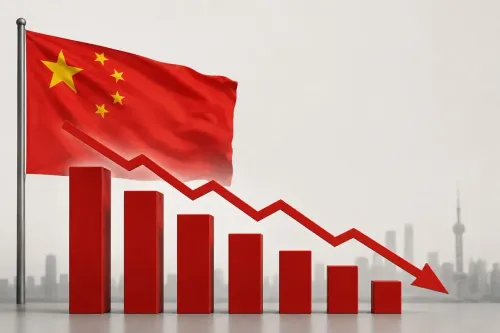
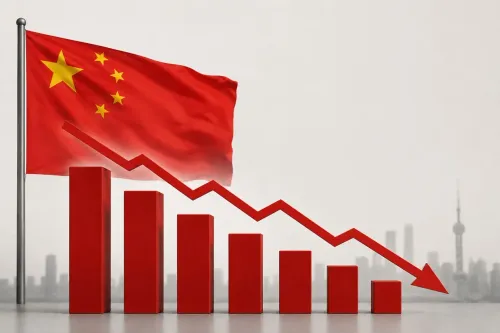
GDP growth has fallen from over 10% in the early 2000s to under 5% today , as debt levels climb to concerning levels.
China's $1 trillion trade surplus reflects not just manufacturing strength but also weak domestic demand and suppressed imports.
Cheap Chinese export flooding is reportedly harming manufacturing industries across Europe and Asia , prompting retaliatory tariffs including from the US .
IMF Managing Director Kristalina Georgieva has warned that a 1.4 billion-person economy cannot rely solely on exports for high growth.
The collapse of China's real estate sector has exacerbated job losses and further depressed consumer spending, deepening the cycle.
Weak domestic demand has emerged as the primary drag on the Chinese economy, with consumption accounting for just 56% of China's GDP — the lowest share among any major economy globally. The situation has deteriorated further as job losses mount in the wake of the country's real estate sector collapse, according to an analysis published in The Diplomat.
A Consumption Crisis in Context
To appreciate the scale of China's consumption deficit, consider that most major economies see consumption represent 70% or more of GDP. More strikingly, China's current consumption share sits roughly 10 percentage points below where Japan's was during the worst of its economic stagnation in the 1990s — a period widely regarded as a cautionary tale in economic history.
The analysis in The Diplomat describes this low consumption rate as 'a flashing warning sign that China's economic model is fundamentally broken.' GDP growth has tumbled from highs of 10% or more in the early 2000s to under 5% today, while the country's overall debt burden has climbed to what economists describe as alarming levels.
Trade Surplus as a Warning Sign
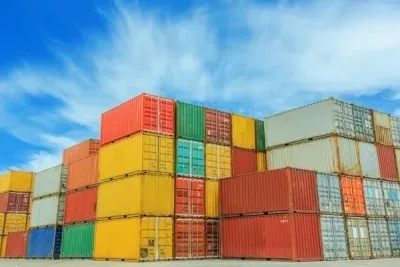
China currently holds a trade surplus of approximately $1 trillion — a figure often cited as proof of the country's manufacturing dominance. However, critics argue it is equally an indicator of structural weakness: Chinese consumers are unable to spend sufficiently on imported goods due to financial constraints, suppressing imports and inflating the surplus. The slower GDP growth rate has also reduced domestic demand for imported production inputs, compounding the imbalance.
This imbalance, the analysis notes, is pushing Chinese industries to ramp up exports at artificially low prices, flooding markets across Europe and Asia. The resulting cheap-goods glut, critics argue, is hollowing out manufacturing sectors worldwide — a dynamic that has drawn sharp responses from trading partners, including higher tariffs from the United States.
IMF Warning and Global Fallout
International Monetary Fund (IMF) Managing Director Kristalina Georgieva has explicitly cautioned Beijing against persisting with export-dependent growth, noting that a country of 1.4 billion people cannot sustain high growth rates on exports alone. The IMF has warned China against deepening economic imbalances that carry risks for both domestic stability and the broader global economy.
The continued export-led strategy is straining international trade relations. Countries from Southeast Asia to the European Union are increasingly considering or implementing import curbs on Chinese goods to shield domestic industries — raising the spectre of a wider trade conflict at a time when global growth is already under pressure.
The Real Estate Collapse Deepens the Problem
Underlying the consumption shortfall is the ongoing collapse of China's real estate sector, which has wiped out household wealth and triggered significant job losses. Real estate has historically been a primary vehicle for Chinese household savings, and its deterioration has eroded both consumer confidence and spending power. This creates a self-reinforcing cycle: lower spending leads to weaker growth, which leads to further job losses and lower spending still.
How Beijing responds — whether through structural reform to boost household incomes or through doubling down on state-led investment and exports — will likely define the trajectory of the world's second-largest economy in the years ahead.
Point of View
At least partly, a symptom of an economy that cannot consume what it produces. The 56% consumption-to-GDP ratio is not merely a structural quirk; it is the product of deliberate policy choices that suppressed household incomes in favour of state-led investment for decades. The real estate collapse has now removed the one asset class that gave ordinary Chinese households a sense of wealth. Without a credible redistribution of income toward consumers, export dumping will intensify — and so will the global backlash. Beijing faces a classic middle-income trap risk dressed up in surplus clothing.
NationPress
28 Oct 2026
Frequently Asked Questions
Why is China's domestic demand so weak?
China's consumption accounts for just 56% of GDP — the lowest among major economies — largely due to decades of policy that prioritised state-led investment and exports over household income growth. The collapse of the real estate sector has worsened the situation by destroying household wealth and triggering job losses, further suppressing consumer spending.
How does China's consumption compare to other major economies?
In most major economies, consumption represents 70% or more of GDP. China's 56% share is roughly 10 percentage points lower than Japan's consumption rate at the worst point of its economic stagnation in the 1990s, according to an analysis in The Diplomat.
What is the IMF's warning to China?
IMF Managing Director Kristalina Georgieva has warned that a country of 1.4 billion people cannot sustain high growth rates by relying primarily on exports. The IMF has cautioned Beijing against deepening economic imbalances that risk domestic instability and global trade tensions.
How does China's trade surplus relate to its economic problems?
China's approximately $1 trillion trade surplus is partly a result of weak domestic demand — Chinese consumers are financially constrained and spend less on imports, inflating the surplus. Analysts argue it signals economic weakness as much as manufacturing strength.
How is China's export strategy affecting other countries?
China's industries are reportedly exporting goods at low prices to compensate for weak domestic demand, flooding markets across Europe and Asia. This is widely seen as damaging to local manufacturing sectors in those regions, prompting countries including the United States to raise tariffs on Chinese imports.