China's job crisis drives unemployed workers to use Communist Party centres as offices

Synopsis
Unemployed Chinese workers are quietly occupying Communist Party community centres — using free Wi-Fi and air conditioning to job-hunt while hiding their situation from family. It is an accidental social safety net that reveals how far China's white-collar job market has deteriorated, with northeast China's industrial collapse offering the starkest warning yet.
Key Takeaways
Communist Party community service centres across China are being repurposed by unemployed workers as free co-working spaces.
Workers are using these centres to job-hunt and, in some cases, conceal their unemployment from family members .
The trend is driven by slowing economic growth , corporate cost-cutting, and AI adoption displacing office-based roles.
Northeast China , particularly Dalian , is described as having reached a 'breaking point' with rising unemployment, migration of youth, and growing social tensions.
Analysts warn the region's decline — rooted in failed reforms, demographic collapse, and political failures — could foreshadow broader national challenges.
China's deteriorating job market is pushing a growing number of unemployed urban workers to use Communist Party community service centres as makeshift workplaces, according to reports. These workers — many of whom are concealing their unemployment from family members — are turning to free public spaces to search for jobs and maintain a semblance of professional routine.
Why Party Centres Have Become Unofficial Co-Working Spaces
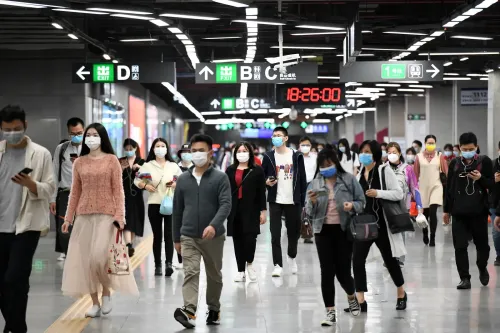
Communist Party community service centres across several Chinese cities, originally established for local administrative functions, are now serving an unintended purpose: sheltering jobless white-collar workers. The facilities offer free internet access, air conditioning, power outlets, and quiet environments — amenities that unemployed individuals can no longer afford at cafes or paid co-working spaces after losing their incomes.
The trend reflects the mounting financial pressure on urban workers who lack a steady income. As one report noted, free public facilities have become an increasingly practical lifeline for those navigating China's tightening labour market.
Structural Pressures Behind the Job Market Decline
The pattern is symptomatic of deeper structural shifts in China's white-collar employment landscape. Slowing economic growth, aggressive corporate cost-cutting, and the rapid adoption of Artificial Intelligence (AI) in sectors such as marketing, administration, and other office-based functions have collectively eroded job availability. Extended job searches have become the norm rather than the exception for many urban graduates and mid-career professionals.
This comes amid broader concerns about China's economic trajectory. The convergence of AI-driven displacement and macroeconomic deceleration is squeezing a segment of the workforce that once represented the country's aspirational middle class.
Northeast China: A Region at Breaking Point
The crisis is especially acute in Northeast China, a region that was once the country's industrial heartland. According to a report in Japan Forward, the area is grappling with shrinking opportunities, vanishing communities, and a pervasive sense of economic despair.
Dalian, cited as emblematic of the region's decline, reflects what the report described as 'the broader struggles of a society caught between past promises and present realities. Factories that once symbolised prosperity now stand silent, while families wrestle with financial strain and fading hope.'
The same report noted that the situation 'has reached a breaking point. Once a proud industrial hub, the region is now filled with unemployed, bankrupt, indebted, and depressed citizens who struggle to afford basic medical treatment. Making money has become painfully difficult, and the streets are dominated by middle-aged and elderly residents.'
Youth Migration and Rising Social Tensions
Young people in northeast China are reportedly either relocating to southern China in search of opportunity or abandoning the job search altogether. Social tensions are visibly rising — reports cite incidents such as fights breaking out over queue-cutting, which analysts interpret as a barometer of growing frustration and anxiety among residents.
Historically, the northeast was China's most industrialised and politically significant region, closely tied to the planned economy. Its decline accelerated after market reforms, with a governance culture shaped by rigid central planning persisting long after liberalisation. Strict family planning enforcement in the region compounded the problem by triggering demographic decline, while corruption and political failures further eroded public trust.
A Warning Sign for the Broader Economy
Critics and analysts argue that northeast China's trajectory may foreshadow national-level risks. The Japan Forward report warned: 'Northeast China exemplifies the collapse of an industrial base under rigid political control, failed reforms, demographic decline, and economic stagnation. The region's present may foreshadow the future of the entire country if systemic issues remain unresolved.'
Whether Beijing can reverse these structural trends — particularly as AI reshapes labour demand and demographic pressures intensify — will likely determine the scale of China's employment crisis in the years ahead.
Point of View
Demographic collapse, youth exodus — mirrors patterns seen in post-industrial regions globally, yet China's political system offers fewer corrective feedback loops. If AI-driven displacement accelerates in administrative and marketing roles, the white-collar buffer that absorbed graduates from the manufacturing transition may itself hollow out, with no equivalent absorber waiting in the wings.
NationPress
11 Oct 2026
Frequently Asked Questions
Why are unemployed people in China using Communist Party centres?
Unemployed workers in China are using Communist Party community service centres because they offer free internet, air conditioning, and quiet workspaces at no cost. After losing their jobs, many cannot afford cafes or co-working spaces, and some use these centres to job-hunt while concealing their unemployment from family members.
What is driving China's white-collar job market decline?
China's white-collar job market is under pressure from slowing economic growth, corporate cost-cutting, and the rapid adoption of Artificial Intelligence in sectors like marketing and administration. These structural shifts have made extended job searches increasingly common among urban professionals.
How bad is the unemployment situation in northeast China?
Northeast China, once the country's industrial heartland, is reportedly at a breaking point, with rising unemployment, bankrupt businesses, youth migration to southern China, and growing social tensions. The city of Dalian is cited as emblematic of the region's broader economic and demographic decline.
What role did past policies play in northeast China's decline?
Strict family planning enforcement in northeast China accelerated demographic decline, while a governance culture rooted in central planning persisted after market reforms. Widespread corruption and political failures further eroded public trust and undermined economic recovery efforts.
Could northeast China's crisis spread to the rest of the country?
Analysts cited in reports warn that northeast China's combination of industrial collapse, demographic decline, and economic stagnation could foreshadow challenges for the broader Chinese economy if systemic issues remain unresolved. The accelerating adoption of AI in office-based roles adds a new layer of risk nationwide.