China's Taiwan maritime coercion grows 'more intrusive': Report
Synopsis
China has quietly shifted from military exercises to a standing institutional framework of maritime pressure around Taiwan — stopping foreign commercial ships, deploying research vessels suspected of seabed mapping, and explicitly targeting Japan-Philippines security cooperation. The Diplomat's analysis suggests this is no longer episodic coercion; it is a permanent new normal in the Taiwan Strait.
Key Takeaways
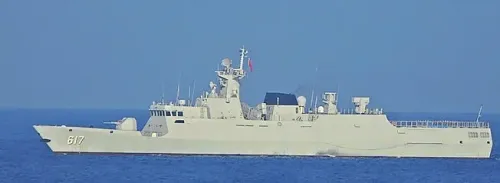
At least 7 Chinese research vessels have been suspected of military-application activities near Taiwan since 6 June .
China's Ministry of Transport conducted its first special maritime operation east of Taiwan between 6–10 June , stopping and questioning commercial ships.
Foreign vessels from Singapore, Benin, and Liberia reportedly received compliance orders from Chinese Coast Guard — a first for enforcement at this scale.
Global Times declared on 4 July that patrols had entered 'a new phase' moving to a 'systematic, institutionalized' framework.
Beijing claims the patrols were triggered by Japan–Philippines talks on maritime boundary delimitation east of Taiwan.
Analysts say the moves are designed to isolate Taiwan and deter US-ally cooperation in any future conflict scenario.
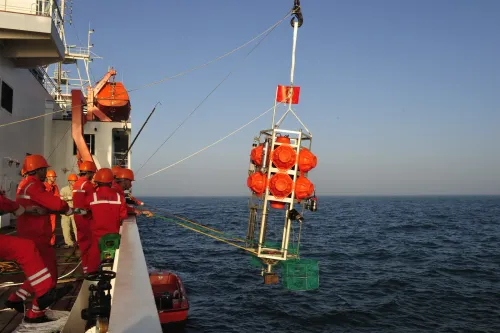
Chinese research vessels operating in waters around Taiwan have drawn fresh scrutiny, with a new report arguing that their activities are increasingly difficult to characterise as purely scientific. Beijing has maintained that the vessels are engaged in routine marine scientific research, but publicly available tracking data suggests they may be systematically mapping the seabed — potentially laying the groundwork for future naval operations.
Key Developments Since June 6
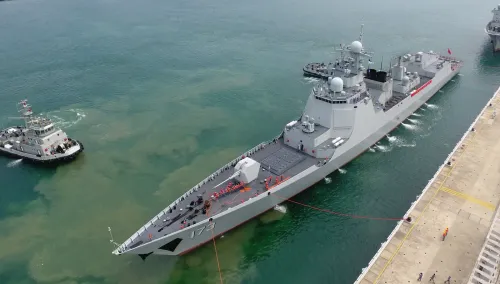
According to a report by online magazine The Diplomat, at least seven Chinese research vessels have come under suspicion of carrying out activities with military applications since 6 June. The report argues that, taken together, these deployments reflect the emergence of what it calls an increasingly 'intrusive form of coercion.'
'Since Beijing announced special maritime operations on June 6, its forces have grown more assertive — pushing patrols into new waters, rotating formations to regularise presence, and deploying research vessels that can conduct military reconnaissance. This all points to a new form of coercion taking shape,' the report stated.
Systematic Inspections of Commercial Vessels
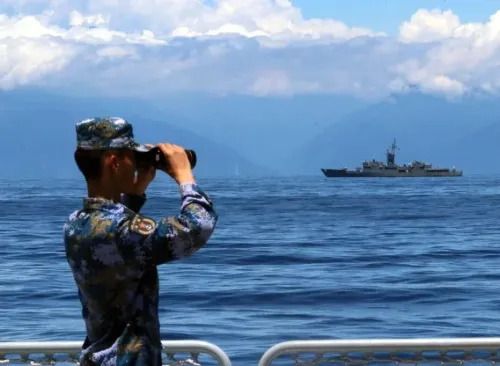
Between 6 June and 10 June, China's Ministry of Transport carried out its first special operation in waters east of Taiwan, halting commercial vessels and requesting information on their points of origin and destination. Critically, this time enforcement was actually carried out — a departure from past exercises where mandatory inspections were announced but never implemented.
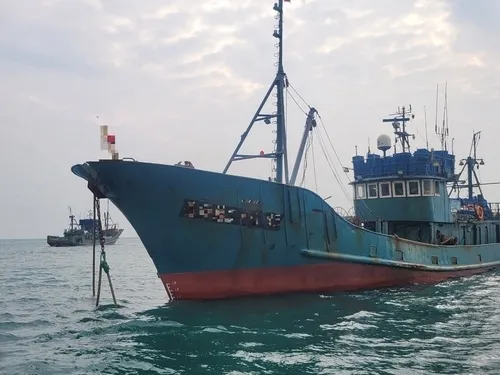
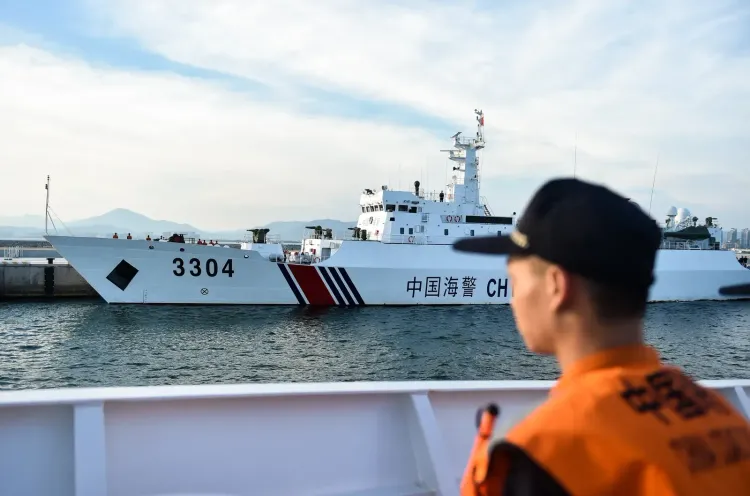
Chinese Coast Guard ships conducted inspections en masse through radio communications with all transiting commercial vessels. Even foreign commercial vessels — reportedly including three ships from Singapore, Benin, and Liberia — received radio messages from Chinese authorities directing them to comply, according to The Diplomat.
A 'New Phase' Declared by Beijing
On 4 July, Global Times — widely regarded as a mouthpiece for the Chinese Communist Party (CCP) — announced that China's maritime patrols had entered 'a new phase,' shifting towards 'a more systematic, institutionalized, and long-term framework' away from 'isolated military exercises or patrols.' Analysts note that such language in state media typically signals official policy intent rather than editorial commentary.
Strategic Calculus: Isolating Taiwan and Deterring US Allies
The report asserts that these moves effectively narrow Taiwan's room for manoeuvre, fitting into China's broader strategy of gradually isolating the island from international support. More notably, Beijing has claimed the patrols were launched in direct response to talks between Japan and the Philippines on delimiting maritime boundaries east of Taiwan.
'Beijing hopes to deter strategic cooperation between two US allies, one located north and the other to the south of the island, that may each play critical roles during a conflict over Taiwan,' the report noted. This connects to a broader pattern of Chinese pressure designed to fracture the informal security architecture underpinning Taiwan's defence posture.
What This Means Going Forward
The regularisation of these patrols — moving from episodic exercises to a standing institutional framework — marks a significant escalation in Beijing's coercive toolkit. Observers watching the Taiwan Strait will be focused on whether other nations heed Chinese radio directives and whether multilateral pushback from Washington, Tokyo, and Manila materialises in the weeks ahead.
Point of View
Which is harder to respond to diplomatically and easier to entrench over time. The fact that foreign commercial ships from third countries actually complied with Chinese Coast Guard radio directives is a significant precedent: it tests and potentially establishes de facto Chinese jurisdiction in international waters. If that precedent holds unchallenged, the strategic cost to Taiwan — and to US credibility in the region — compounds quietly but decisively.
NationPress
19 Sept 2026
Frequently Asked Questions
What is China doing near Taiwan that has raised alarm?
China has deployed at least seven research vessels near Taiwan suspected of conducting military reconnaissance, including possible seabed mapping, since 6 June. Its Coast Guard has also begun stopping and questioning commercial ships — including foreign vessels — in waters east of Taiwan, in what analysts describe as an increasingly intrusive form of coercion.
What was different about China's June 2026 maritime operations near Taiwan?
For the first time, China actually enforced mandatory inspections of commercial vessels transiting waters east of Taiwan, rather than merely announcing them. Even ships from Singapore, Benin, and Liberia reportedly received and responded to Chinese Coast Guard compliance orders — a significant escalation over past exercises.
Why is China targeting the waters east of Taiwan specifically?
According to The Diplomat report, Beijing is partly responding to Japan–Philippines talks on delimiting maritime boundaries east of Taiwan. China reportedly wants to deter security cooperation between the two US allies, which could each play a strategic role in any future Taiwan conflict.
What did Global Times say about China's new patrol framework?
On 4 July, Global Times — a state media outlet aligned with the Chinese Communist Party — declared that China's maritime patrols had entered 'a new phase,' transitioning to a 'systematic, institutionalized, and long-term framework' rather than isolated exercises. Analysts treat such state-media language as a signal of official policy direction.
How does this affect Taiwan's strategic position?
The regularisation of Chinese maritime patrols and enforcement actions narrows Taiwan's room for manoeuvre and fits China's broader strategy of gradually isolating the island from international support. A sustained institutional presence is harder to challenge diplomatically than a one-off exercise, putting pressure on the US, Japan, and the Philippines to respond collectively.