China's PBOC adds 23 tonnes of gold in September 2026, holdings hit 2,410 tonnes
Synopsis
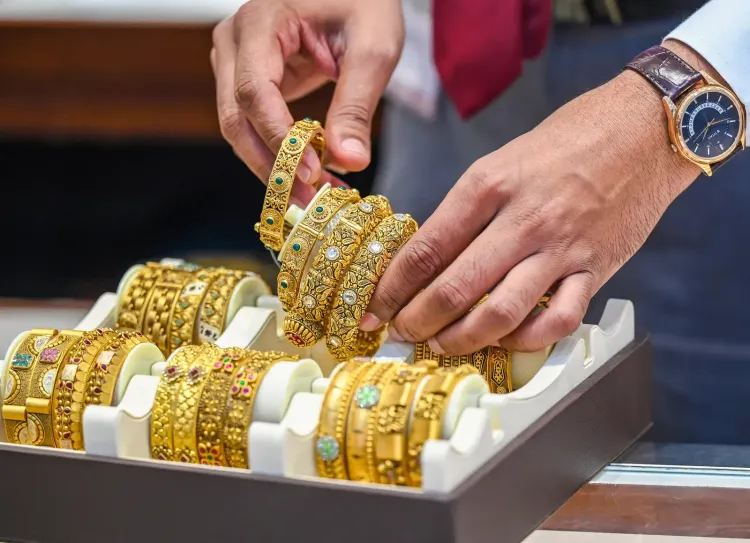
China's central bank has now bought gold for 23 straight months, with September 2026 marking its largest single-month purchase in nearly three years. At 2,410 tonnes and counting, the PBOC's gold build-up is the clearest financial signal yet that Beijing is stress-testing its reserves against the kind of sanctions that froze Russia's assets in 2022.
Key Takeaways
The PBOC added 23 tonnes of gold in September 2026 , its largest monthly purchase in nearly three years.
China's buying streak has now extended to 23 consecutive months , with total holdings at approximately 2,410 tonnes .
The strategy is partly a response to the freezing of Russian reserves by Western governments after 2022 .
The World Gold Council recorded net central bank gold purchases of 39 tonnes in August and 23 tonnes in July 2026, reflecting a global trend.
Domestic factors — including property market stress and financial volatility — are also driving Chinese household demand for gold.
Gold's limitations include zero yield , price volatility, and far lower liquidity than US Treasury markets.
The People's Bank of China (PBOC) reportedly added 23 tonnes of gold in September 2026 — its largest single-month purchase in nearly three years — extending the country's buying streak to 23 consecutive months. China's total gold reserves have now risen to approximately 2,410 tonnes, underscoring Beijing's accelerating shift away from dollar-dominated assets amid heightened geopolitical tensions.
The Sanctions Lesson From Russia
Beijing's gold accumulation strategy is widely seen as a direct response to the freezing of Russian foreign exchange reserves by Western governments following Moscow's invasion of Ukraine in 2022. That episode demonstrated that dollar- and euro-denominated assets held abroad can be rendered inaccessible through sanctions. Gold stored domestically, by contrast, carries no foreign issuer's liability and is far less exposed to such restrictions.
Analysts note, however, that this does not signal an imminent break from the dollar. Rather, Beijing appears to be systematically reducing its dependence on a global financial architecture in which Washington and its allies retain considerable leverage — a strategy of hedging rather than decoupling.
A Broader Central Bank Trend
China's build-up reflects a wider shift in reserve management globally. Data from the World Gold Council (WGC) showed net central bank purchases of approximately 39 tonnes in August 2026, following 23 tonnes in July 2026. Reserve managers across emerging markets increasingly view bullion as a diversification tool, particularly amid expectations of a more multipolar monetary order in which the dollar's dominance faces structural, if gradual, erosion.
Domestic Demand Adds Momentum
China's appetite for gold is not solely driven by state policy. Persistent concerns over the property market and volatility in domestic financial assets have pushed households and private investors toward gold as an alternative store of value. Beijing has also moved to strengthen its gold-trading infrastructure — including through Hong Kong — in a broader effort to expand China's footprint in international bullion markets.
The Limits of Gold as a Reserve Asset
Despite the strategic rationale, gold carries meaningful constraints. It generates no yield, can suffer sharp price corrections, and cannot replicate the liquidity depth of US Treasury markets. A strengthening dollar or rising real interest rates can weigh heavily on bullion prices, meaning excessive concentration in gold introduces its own risks to any reserve portfolio.
As geopolitical fault lines deepen and the debate over dollar dependency intensifies, Beijing's gold strategy is likely to remain a closely watched indicator of how major economies are repositioning their reserve buffers for an uncertain decade ahead.
Point of View
Via Russia, that foreign exchange reserves are only as safe as the political relationship behind them. Beijing has absorbed that lesson methodically. What mainstream coverage underplays is the compounding effect: as more central banks diversify into gold simultaneously, they are collectively nudging the multipolar monetary system they claim to merely anticipate into existence. The risk, which Beijing's own planners surely weigh, is that gold's lack of yield and limited liquidity make it a poor substitute for US Treasuries at scale — meaning this is a risk-reduction strategy with a ceiling, not a blueprint for dollar replacement.
NationPress
19 Oct 2026
Frequently Asked Questions
How much gold did China buy in September 2026?
The People's Bank of China reportedly added 23 tonnes of gold in September 2026, its largest monthly purchase in nearly three years. This extended China's consecutive buying streak to 23 months, bringing total reported holdings to approximately 2,410 tonnes.
Why is China buying so much gold?
Beijing is reportedly diversifying reserves away from dollar- and euro-denominated assets, partly in response to the freezing of Russian foreign exchange reserves by Western governments after 2022. Gold stored domestically carries no foreign issuer's liability and is less vulnerable to sanctions.
Is China abandoning the US dollar?
Not according to current assessments. Analysts suggest Beijing is reducing dependence on a dollar-dominated financial system rather than abandoning it outright. The strategy is characterised as hedging, not decoupling.
Are other central banks also buying gold?
Yes. World Gold Council data showed net central bank gold purchases of approximately 39 tonnes in August 2026 and 23 tonnes in July 2026, reflecting a broad global trend among reserve managers seeking diversification amid expectations of a more multipolar monetary order.
What are the risks of holding too much gold in reserve?
Gold generates no interest income, can suffer sharp price corrections, and lacks the liquidity depth of US Treasury markets. A stronger dollar or rising real interest rates can weaken bullion prices, making excessive reliance on gold a risk in itself.