China's pharma dominance fuels API supply chain and quality concerns
Synopsis
A new report flags China's near-monopoly on active pharmaceutical ingredients as a strategic vulnerability — not just an economic one. With GLP-1 drug demand surging globally and quality inspection failures surfacing at some facilities, the world's dependence on Chinese pharma is increasingly a public health and national security question, not just a trade one.
Key Takeaways
China is one of the world's largest producers of active pharmaceutical ingredients (APIs) , supplying medicines sold across North America , Europe , and Asia .
A Maldives Insight report warns of supply-chain concentration risks and strategic dependence on a single country.
Recent inspections at some Chinese facilities identified deficiencies in documentation , manufacturing processes , and quality assurance systems .
Concerns have been raised over GLP-1 drugs — used for diabetes and obesity — as a flashpoint for over-reliance on Chinese output.
Critics argue Beijing views pharmaceuticals as a tool of geopolitical influence , not just industrial growth.
Post- Covid-19 , the US , Europe , and Japan have been promoting domestic manufacturing and diversified sourcing of essential medicines.
China's expanding grip on global pharmaceutical manufacturing — particularly in active pharmaceutical ingredients (APIs) and critical medical supplies — is raising mounting concerns about supply-chain concentration and strategic dependence on a single country, according to a report by Maldives Insight.
The report, cited in New Delhi on 10 November 2026, warns that Beijing's industrial footprint in pharma now reaches across North America, Europe, and Asia, with Chinese producers supplying thousands of ingredients used in medicines worldwide.
Scale of China's Pharmaceutical Footprint
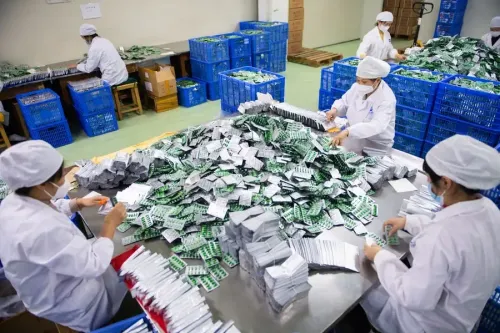
China has built itself into one of the world's largest producers of APIs, backed by government support, large-scale industrial clusters, and comparatively lower production costs. The country supplies raw and processed ingredients to manufacturers across multiple continents, making it a linchpin in global drug supply chains.
A recent concern highlighted in the report involves GLP-1 drugs — used to treat diabetes and obesity — where rising global demand has amplified the risks of over-reliance on Chinese pharmaceutical output. As the report notes, 'A medicine may be designed by a company in the United States, tested in Europe, manufactured in Asia and distributed globally. In such a system, any disruption at a critical link can create shortages affecting millions of patients.'
Quality Control and Regulatory Gaps
Beyond supply concentration, concerns over quality control and regulatory compliance persist. Recent inspections at certain Chinese manufacturing facilities have reportedly identified deficiencies in documentation, manufacturing processes, and quality assurance systems, according to the report.
'While such findings do not represent the entire Chinese pharmaceutical industry, they highlight the challenges regulators face in monitoring complex global supply chains that span multiple countries and thousands of facilities,' the report said.
Some Chinese manufacturers have allegedly failed to meet established production standards, with concerns raised periodically about the quality of certain APIs and medical devices exported to overseas markets.
Strategic Ambitions Beyond Commerce
Critics argue that Beijing's deeper objective extends beyond commercial success. While China formally positions pharmaceuticals, biotechnology, and healthcare innovation as cornerstones of its long-term industrial strategy, the sector is also seen as providing leverage in areas linked to public health and national security. Though the rapid rise of China's pharmaceutical sector is often framed as an economic or innovation story, analysts say the strategic overlay cannot be ignored.
How Countries Are Responding
The Covid-19 pandemic served as a turning point, exposing the fragility of single-source supply chains when borders closed and demand for medicines surged simultaneously. Since then, policymakers in the United States, Europe, Japan, and several other nations have actively promoted domestic pharmaceutical manufacturing and pushed for diversified sourcing strategies for essential medicines.
This comes amid a broader global reckoning over critical supply chains — from semiconductors to rare earths — where dependence on a single geography has repeatedly been tested. The pharmaceutical sector, given its direct link to public health, is seen as among the most sensitive.
What Lies Ahead
As geopolitical tensions continue to shape trade and industrial policy, pressure is mounting on pharmaceutical companies and national governments to accelerate supply chain diversification. Industry observers say that without structural reforms — including investment in domestic API manufacturing and strengthened regulatory oversight of imported ingredients — the vulnerabilities identified in the report are likely to persist and deepen.
Point of View
But the more uncomfortable question is why the rest of the world allowed this concentration to deepen for so long. Post-Covid rhetoric about diversification has not been matched by investment speed — domestic API manufacturing in the US, Europe, and India remains far short of replacing Chinese capacity. India, itself a major generic drug exporter heavily dependent on Chinese APIs, sits in a particularly precarious position: it is simultaneously a victim of this supply chain vulnerability and a potential beneficiary if it can capture redirected orders. The window for strategic repositioning is real, but it is narrowing.
NationPress
10 Nov 2026
Frequently Asked Questions
Why is China's dominance in pharmaceutical manufacturing a concern?
China's dominance in producing active pharmaceutical ingredients (APIs) means that disruptions — whether from geopolitical tensions, pandemics, or regulatory failures — can cause medicine shortages across multiple continents simultaneously. A Maldives Insight report warns this concentration creates both supply-chain and national security risks for importing countries.
What quality issues have been found at Chinese pharma facilities?
Recent inspections at some Chinese manufacturing facilities have reportedly identified deficiencies in documentation, manufacturing processes, and quality assurance systems. The report notes these findings do not reflect the entire industry but underscore the difficulty regulators face in overseeing global supply chains spanning thousands of facilities.
What are GLP-1 drugs and why are they linked to this concern?
GLP-1 drugs are medicines used to treat diabetes and obesity, and their global demand has surged in recent years. The Maldives Insight report highlights them as a specific example of how over-reliance on Chinese pharmaceutical manufacturing can create supply vulnerabilities for high-demand drug categories.
How are governments responding to pharmaceutical supply chain risks?
Since the Covid-19 pandemic, policymakers in the United States, Europe, Japan, and other nations have been promoting domestic pharmaceutical manufacturing and diversified sourcing strategies for essential medicines. The goal is to reduce single-country dependence, particularly on China, for critical drug ingredients.
Does China view its pharmaceutical sector as a strategic tool?
According to the Maldives Insight report, critics argue that Beijing's objectives go beyond commercial gain — the pharmaceutical and biotech sector is seen as central to China's long-term industrial strategy and as a source of geopolitical influence in areas tied to public health and national security.