Two Chinese nationals jailed for filming Korean, US air bases in South Korea
Synopsis
In a legal first, a South Korean court has convicted two Chinese nationals — both high school students at the time — of general treason for photographing fighter jets at joint US-South Korean air bases. The case exposes a gap in military perimeter security and raises pointed questions about intelligence-gathering activity near allied installations, with a related aircraft-carrier filming case still pending in Busan.
Key Takeaways
The Suwon District Court convicted two Chinese nationals of general treason on Thursday for illegally filming fighter jets at South Korean and US military facilities.
An 18-year-old received an indeterminate sentence of 1½ to 2 years ; a 20-year-old received a fixed two-year term.
This is the first time a foreigner has been convicted of general treason under the South Korean Criminal Act .
The pair photographed military assets at four bases — Suwon, Osan, Pyeongtaek, and Cheongju — and three international airports between late 2024 and March last year .
A separate case involving Chinese nationals allegedly filming a US aircraft carrier in Busan is still awaiting a verdict.
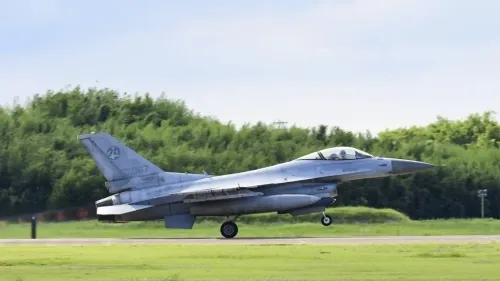
A South Korean court on Thursday sentenced two Chinese nationals to prison for illegally photographing fighter jets at South Korean and US military air bases and attempting to intercept air traffic control communications — marking the first conviction of a foreigner for general treason under South Korea's Criminal Act.
The Verdicts
The Suwon District Court handed an 18-year-old Chinese high school student an indeterminate prison term of 1½ to 2 years under juvenile law, while a 20-year-old Chinese man received a fixed two-year sentence. Both were convicted on charges of general treason. The court additionally ordered the confiscation of their cameras and all other equipment used in the operation.
What They Did
According to court records, the two defendants made multiple visits to South Korea between the second half of 2024 and March of last year, during which they photographed hundreds of detailed images of fighter jets taking off and landing at major air bases. They were found to have accessed four military facilities — in Suwon, Osan, Pyeongtaek, and Cheongju — as well as three major international airports: Incheon, Gimpo, and Jeju. Police arrested them in March last year after a local resident reported suspicious filming activity near Suwon Air Base.
Why the Court Called It a National Security Threat
The court found the defendants guilty on all charges, stating that their actions constituted acts of treason capable of infringing upon South Korea's military interests. The bench noted that the photographs exposed aircraft deployment status and the primary operational missions of the targeted air bases, which it said 'seriously undermined national security.' The court added that stern punishment was warranted given the sensitivity of the intelligence gathered.
A Historic Legal Precedent
The convictions are legally significant: this is the first time a foreigner has been found guilty of general treason under the South Korean Criminal Act. The case has drawn attention to vulnerabilities in perimeter security around joint US-South Korean military installations, particularly as geopolitical tensions on the Korean Peninsula remain elevated. Notably, both defendants were high school students at the time of the offences.
A Separate Case Still Pending
In a parallel development in Busan, other Chinese nationals have been indicted for allegedly filming a US aircraft carrier. A verdict in that case has not yet been delivered. Together, the two cases suggest a broader pattern of alleged intelligence-gathering activity targeting US and South Korean military assets, though investigators have not publicly attributed the operations to any state actor.
With sentencing now concluded in the Suwon case, attention will shift to whether South Korea moves to tighten surveillance laws around military zones and how the verdicts affect diplomatic relations with Beijing.
Point of View
But the more unsettling detail is how easily two high school students reportedly accessed four sensitive military installations across South Korea over several months before a civilian tip-off — not counter-intelligence — triggered their arrest. That gap in perimeter awareness is the story mainstream coverage is underplaying. With a second case involving a US aircraft carrier still pending in Busan, the pattern raises questions that go beyond individual bad actors: if student-age operatives can gather this volume of deployment intelligence, the vulnerability is structural, not incidental. South Korea and its US ally will need to answer why civilian proximity to active air bases remains this permissive.
NationPress
26 Sept 2026
Frequently Asked Questions
What did the two Chinese nationals do in South Korea?
They made multiple visits to South Korea between late 2024 and March of last year, photographing hundreds of images of fighter jets at four military air bases — in Suwon, Osan, Pyeongtaek, and Cheongju — as well as three international airports. They also allegedly attempted to intercept air traffic control communications.
What sentences did the Suwon District Court hand down?
The court sentenced the 18-year-old to an indeterminate term of 1½ to 2 years under juvenile law and the 20-year-old to a fixed two-year prison term. Both were convicted of general treason under South Korea's Criminal Act.
Why is this case legally significant?
It is the first time a foreigner has been convicted of general treason under the South Korean Criminal Act. The court ruled that the defendants' actions constituted treason capable of infringing on South Korea's military interests and seriously undermining national security.
How were the two suspects caught?
They were arrested in March last year after a local resident reported them for suspiciously filming fighter jets taking off and landing near Suwon Air Base. Police then investigated and uncovered the full scope of their activities across multiple military and airport locations.
Is there a related espionage case still ongoing in South Korea?
Yes. In Busan, separate Chinese nationals have been indicted for allegedly filming a US aircraft carrier. A verdict in that case has not yet been delivered, and it is being treated as a distinct legal proceeding.