How CIA Deception Led to Successful Rescue of Downed US Airman in Iran
Synopsis
In a daring operation, the CIA's use of deception and advanced intelligence allowed for the successful rescue of a downed US airman in Iran, leaving Iranian forces bewildered and embarrassed. Discover the intricate details of this high-stakes mission.
Key Takeaways
Intelligence and deception were key in locating the downed US airman.
The operation involved advanced technologies and human assets.
Iranian forces were misled during the search efforts.
The mission demonstrated the importance of real-time intelligence in modern warfare.
Successful operations can shape military outcomes significantly.
Washington, April 7 (NationPress) The CIA employed deceptive strategies and state-of-the-art intelligence methods to track a downed US pilot deep within Iranian territory, significantly contributing to a perilous rescue operation that US officials claimed left Iranian military forces feeling "confused" and "humiliated."
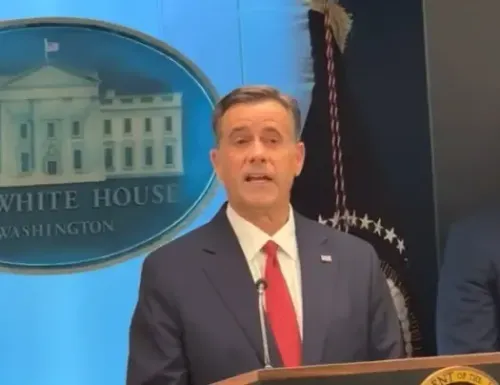
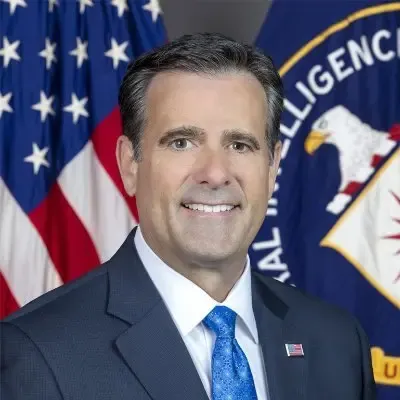
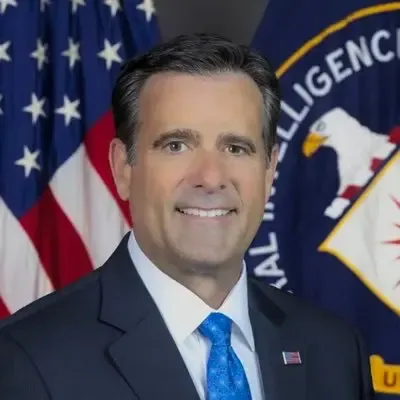
During a news briefing at the White House, CIA Director John Ratcliffe explained that the agency's efforts were twofold: to locate the pilot and to mislead Iranian forces that were actively searching for him.
“Our priority was to find the downed aviator swiftly, while simultaneously keeping our adversaries misdirected,” he stated.
Ratcliffe elaborated that the CIA utilized "human assets and advanced technologies" to locate the missing officer, likening the task to "searching for a single grain of sand in a vast desert."
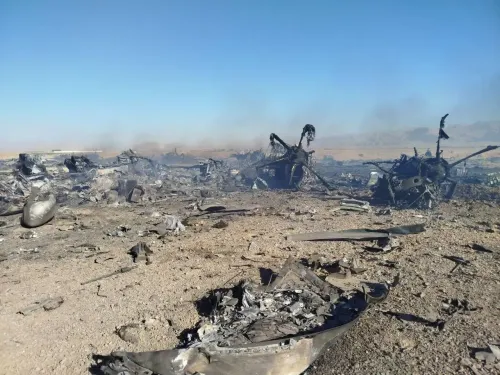
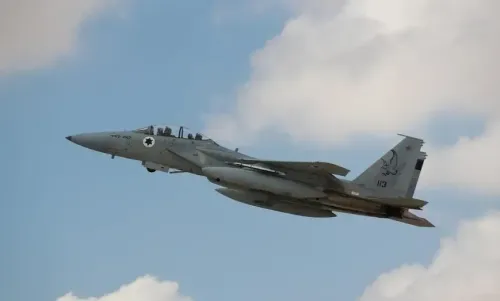
The airman had become stranded in mountainous regions after an F-15 fighter jet crashed in Iran and remained hidden as Iranian forces scoured the area for him.
The CIA confirmed his whereabouts on Saturday.
“We accomplished our primary goal by verifying that one of America’s finest was alive and concealed in a mountain crevice,” Ratcliffe remarked.
This confirmation initiated the final stage of the rescue.
US officials disclosed that the agency also orchestrated a deception campaign to divert attention away from the Iranian forces.
“The CIA executed a deception operation to throw off the Iranians, who were desperately searching for our pilot,” Ratcliffe noted.
Defence Secretary Pete Hegseth added that the operation involved coordinated strikes, intelligence assistance, and the collaboration of special operations teams.
“These are not standard operations… they are conducted deep within enemy territory,” he emphasized.
The rescue mission unfolded over more than two days. One pilot was retrieved earlier, while the second, who sustained injuries, successfully evaded capture before being located and extracted.
Ratcliffe underscored the importance of intelligence in contemporary warfare.
“Seamless military operations… hinge on impeccable intelligence,” he said.
He noted that Iranian forces were unable to impede the operation and were left feeling embarrassed.
“Our intelligence indicates that the Iranians experienced embarrassment and, ultimately, humiliation due to the success of this bold rescue operation,” he said.
Officials indicated that the mission integrated surveillance, deception, and swift execution to achieve its goals without any American casualties.
This operation comes as the US intensifies military pressure on Iran while simultaneously pursuing diplomatic avenues. Intelligence and covert capabilities remain crucial to that strategy.
Such missions illustrate how modern conflicts depend not solely on firepower but also on real-time intelligence, surveillance, and electronic warfare.
For nations like India, which closely monitor developments in West Asia, this incident highlights the increasing significance of intelligence-driven operations in determining military outcomes in the region.
Point of View
It’s essential to acknowledge the complexities of modern warfare, particularly how intelligence operations can decisively influence outcomes on the battlefield. The CIA's strategic deception not only ensured the successful recovery of an airman but also highlighted the evolving nature of military engagements today.
NationPress
10 Oct 2026
Frequently Asked Questions
What tactics did the CIA use in the rescue?
The CIA employed deception tactics and advanced intelligence technologies to locate the downed airman while misleading Iranian forces.
How long did the rescue operation take?
The rescue operation unfolded over more than two days.
What was the outcome for the Iranian forces?
Iranian forces were left confused and humiliated by the success of the CIA's operation.
Why is intelligence important in military operations?
Intelligence is crucial as it supports military operations, ensuring they are executed flawlessly and effectively.
How does this incident affect US-Iran relations?
The operation underscores the US's military strategy towards Iran, combining pressure with ongoing diplomatic efforts.