US Air Force Executes Complex Rescue Mission in Iran: Trump
Synopsis
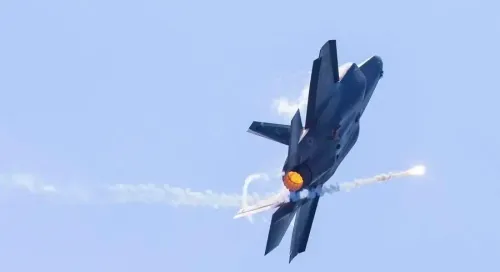
In an extraordinary display of military coordination, the US air force successfully executed a complex rescue operation in Iran, retrieving two airmen after their F-15 jet was downed. President Trump detailed the high-stakes mission involving over 100 aircraft and significant risks faced by the personnel.
Key Takeaways
Successful Rescue: Two airmen rescued after F-15 crash in Iran.
Complex Operation: The mission involved over 100 aircraft and advanced tactics.
High Stakes: Rescuers faced heavy enemy fire during operations.
No Loss of Life: All personnel recovered safely with no fatalities.
Long-standing Tensions: The operation underscores ongoing US-Iran tensions.
Washington, April 6 (NationPress) A significant US air operation, involving over 100 aircraft, successfully rescued two airmen stranded in Iran during one of the most intricate combat search-and-rescue missions in recent history, according to President Donald Trump.
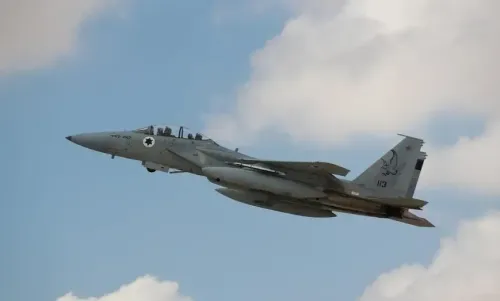
An F-15 fighter jet crashed late Thursday amid Operation Epic Fury, causing both crew members to eject over Iranian territory. One was found and rescued within hours, while the second, injured and separated by several miles, managed to evade capture for nearly two days before being saved in a larger follow-up mission.
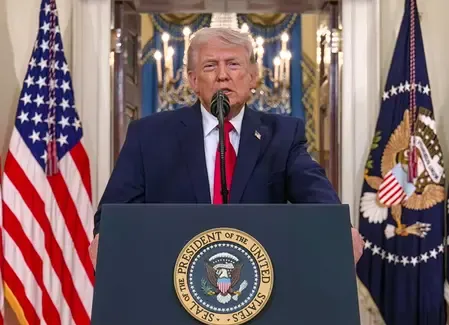
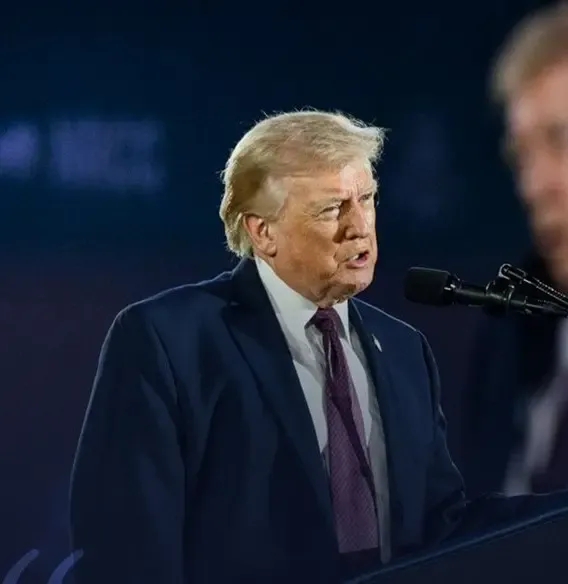
“Within hours, our armed forces dispatched 21 military aircraft into hostile airspace… at times encountering extremely heavy enemy fire,” Trump informed reporters during a packed White House press conference.
Joint Chiefs Chairman Dan Caine stated that both crew members were “isolated behind enemy lines” after ejection, prompting an immediate rescue operation to ensure their safe return.
The first pilot was successfully recovered in daylight after US aircraft crossed into Iranian airspace and engaged hostile forces. The second airman, a weapons systems officer, landed far from the crash site, injured and encircled by enemy personnel.
Trump noted that he “sustained significant injuries and was stranded in an area filled with terrorists,” necessitating his navigation through challenging terrain while avoiding capture.
The scale of the second rescue mission expanded significantly. Trump remarked that it involved “155 aircraft, including four bombers, 64 fighters, 48 refueling tankers, and 13 rescue aircraft,” alongside deception tactics to mislead Iranian forces searching for the downed officer.
CIA Director John Ratcliffe emphasized that the operation relied on speed and precision, calling it “a race against the clock” and likening the search to “locating a single grain of sand in the middle of a desert.”
Ratcliffe mentioned that the CIA utilized “human assets and advanced technologies” while executing a deception campaign to confuse Iranian search efforts.
Once the second airman’s location was confirmed, US forces initiated a nighttime rescue under heavy threat. Defense Secretary Pete Hegseth described the missions as “high risk, high stakes… conducted deep within enemy territory.”
He revealed that the downed airman sent a brief message after activating his beacon: “God is good.”
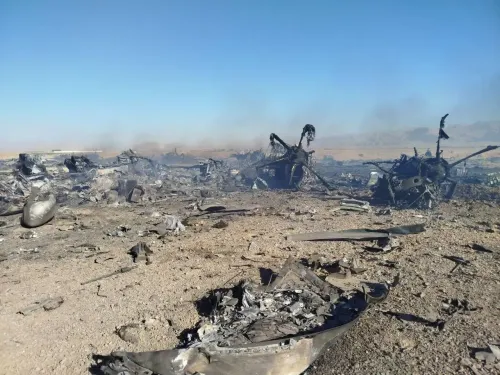
Caine stated that rescue aircraft, including A-10 support planes and drones, engaged enemy forces while helicopters maneuvered to extract the airman. One aircraft was hit and later abandoned in allied territory, while helicopters involved in the initial rescue also came under fire, resulting in minor injuries.
Despite the dangers, all personnel were recovered without loss of life. “No American lives were lost,” Hegseth confirmed.
Trump noted that some military officials had voiced opposition to the mission due to the inherent risks. “There were military personnel who said, you just don’t do this,” he remarked, acknowledging the potential for “hundreds of casualties.”
He also criticized a media leak that disclosed one airman was still missing, stating it alerted Iranian authorities and initiated a broader search. “The entire country of Iran knew that there was a pilot… fighting for his life,” he said.
Officials indicated that the extensive campaign over Iran has involved more than 10,000 combat flights and over 13,000 strikes in recent weeks. Trump characterized the scale as “unprecedented” and “unmatched.”
The downing of the F-15 marked the first loss of a manned aircraft in the ongoing operation.
The United States has historically adhered to a doctrine of retrieving personnel behind enemy lines, a principle reinforced in conflicts from Vietnam to Iraq and Afghanistan. Such missions rank among the most complicated in warfare, necessitating coordination across air, ground, and intelligence units.
Tensions between the United States and Iran have persisted for decades, fueled by disagreements over nuclear ambitions, regional dominance, and military confrontations.
Point of View
It is crucial to highlight the bravery of the US armed forces during this complex rescue operation in Iran. The successful retrieval of two airmen under such dangerous conditions showcases the dedication and strategic acumen of military personnel while also emphasizing the ongoing tensions in the region that necessitate such high-stakes missions.
NationPress
7 Oct 2026
Frequently Asked Questions
What was the operation called?
The operation was named Operation Epic Fury.
How many aircraft were involved in the rescue?
Over 100 aircraft were involved in the rescue mission, with the second mission expanding to 155 aircraft.
Did any American lives get lost during the operation?
No American lives were lost during the rescue missions.
Why was the rescue mission deemed high risk?
The mission was considered high risk due to the presence of heavy enemy fire and the need to operate deep within hostile territory.
What triggered the immediate rescue operation?
The ejection of both crew members over enemy territory triggered the immediate rescue operation.