Jay Clayton DNI nomination: China, AI and economic security in focus
Synopsis
Trump's pick for America's top intelligence post, Jay Clayton, used his Senate confirmation hearing to reframe national security around economic competition — arguing that China's economic challenge, AI, and semiconductor controls are now as central to the intelligence brief as military threats. If confirmed, he would oversee 18 agencies at a moment of profound strategic realignment.
Key Takeaways
Jay Clayton , Trump's nominee for Director of National Intelligence , appeared before the Senate Select Committee on Intelligence on Wednesday, 16 July .
Clayton argued that 'national security and economic security are synonymous' , calling for intelligence agencies to prioritise China's economic challenge and AI .
He named Russia , China , and Iran as America's principal strategic adversaries and cited semiconductor export controls as a key national security tool.
Clayton described AI as 'a game changer' that is simultaneously an opportunity and a threat for the intelligence community.
If confirmed, Clayton would oversee all 18 US intelligence agencies , with a mandate that extends deep into economic and technological competition.
India is noted as a key US strategic partner in semiconductors, AI, and supply-chain resilience under recent bilateral initiatives.
President Donald Trump's nominee to head the US intelligence community, Jay Clayton, told the Senate Select Committee on Intelligence on Wednesday that economic security and national security are indistinguishable, calling on America's spy agencies to sharpen their focus on China's economic challenge, artificial intelligence, and emerging technologies. The confirmation hearing for the post of Director of National Intelligence (DNI) placed economic competition at the centre of the intelligence agenda in a way rarely seen before.
Economic Security as National Security
Clayton made the case that the traditional boundaries between financial markets and geopolitical threats have collapsed. 'National security and economic security are synonymous,' he told lawmakers. 'Our financial infrastructure is essential to our security as a nation.'
He argued that intelligence assessments must increasingly account for economic and technological competition alongside conventional military threats. 'Understanding the economic consequences of actions is an essential part of intelligence,' Clayton said, adding that markets and public behaviour are interlinked in ways that adversaries actively exploit.
China, Russia and Iran Named as Principal Adversaries
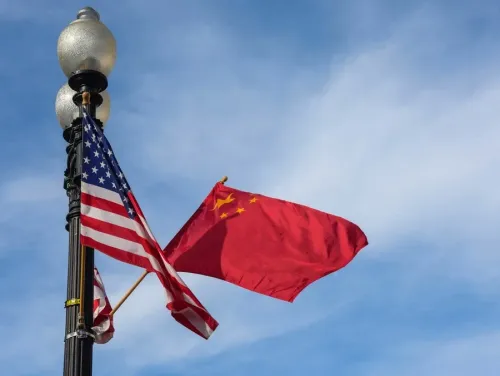
Responding to questions from Committee Chairman Tom Cotton, Clayton agreed that economic competition has become a primary front in strategic rivalry. He identified Russia, China, and Iran as America's principal strategic adversaries, and argued that economic tools are now as consequential as military capabilities.
'Our adversaries not only look at kinetic and other what I would call traditional ways to harm Americans, they look at economic ways to harm Americans,' he said. He cited semiconductor export controls as a concrete example of where commercial and national security interests converge, recalling cases involving attempts to divert restricted chips to China.
AI: 'A Game Changer' With Dual Edges
Artificial intelligence featured prominently throughout the hearing. Clayton described AI as 'a game changer' and cautioned that it presents both opportunities and risks for intelligence agencies. 'AI is not only an opportunity but a threat. When something's both an opportunity and a threat, you better get your arms around it,' he said.
He called for intelligence agencies to work in close coordination with departments responsible for commerce and technology to manage the dual-use risks that AI and semiconductors present. This comes as the broader US policy establishment increasingly treats technological leadership as a pillar of national power.
Clayton's Background and Senate Introduction
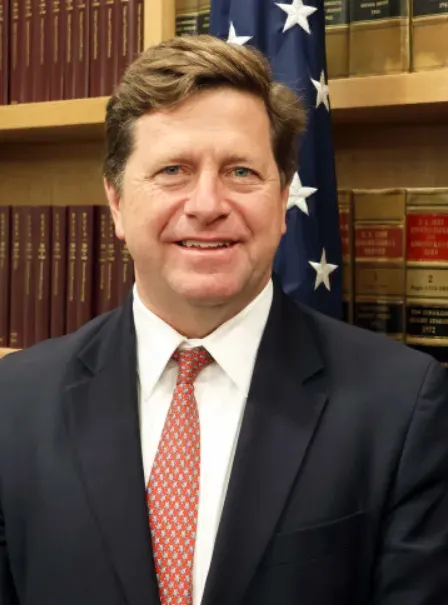
Clayton currently serves as the US Attorney for the Southern District of New York and previously chaired the Securities and Exchange Commission (SEC). Republican Senator Mike Rounds, who introduced Clayton to the committee, said the nominee's background spans law enforcement, cyber threats, illicit finance, and economic competition with China — experience he described as directly relevant to the evolving intelligence brief.
Rounds noted that Clayton's work had given him valuable exposure to 'cyber threats from state and non-state actors, illicit finance, economic competition with China, and the rapid adoption of artificial intelligence by both our adversaries and our own intelligence community.'
India's Role and What Confirmation Would Mean
The hearing's emphasis on supply-chain security and critical technologies carries implications for US allies. India has emerged as a key strategic partner for Washington in semiconductors, advanced manufacturing, AI, and resilient supply chains under recent bilateral initiatives — a relationship that a Clayton-led intelligence community would likely seek to deepen.
If confirmed by the Senate, Clayton would oversee all 18 agencies of the US intelligence community at a moment when technological leadership, economic resilience, and supply-chain security are being treated as core national security priorities, not peripheral concerns.
Point of View
A boundary that has historically kept agencies focused. The semiconductor angle is telling: export controls are already a de facto intelligence instrument, and Clayton's SEC background makes him unusually suited to operationalise that overlap. The deeper question is whether an intelligence community built for Cold War-era military threat assessment can genuinely pivot to economic competition without losing core competencies — or becoming a tool of industrial policy by another name.
NationPress
15 Oct 2026
Frequently Asked Questions
Who is Jay Clayton and why is he nominated as DNI?
Jay Clayton is the current US Attorney for the Southern District of New York and a former chairman of the Securities and Exchange Commission (SEC). President Donald Trump nominated him to serve as Director of National Intelligence, citing his experience with cyber threats, financial markets, sanctions enforcement, and economic competition with China.
What did Jay Clayton say about China at the confirmation hearing?
Clayton identified China as one of America's principal strategic adversaries and argued that economic competition with China must become a central focus of US intelligence assessments. He cited semiconductor export controls and attempts to divert restricted chips to China as examples of where commercial and national security interests overlap.
Why did Clayton call AI 'a game changer' for intelligence agencies?
Clayton used the phrase to convey that artificial intelligence presents both significant opportunities and serious risks for the intelligence community. He warned that adversaries are adopting AI rapidly and called for intelligence agencies to coordinate closely with commerce and technology departments to manage its dual-use risks.
What would Clayton oversee if confirmed as DNI?
If confirmed by the Senate, Jay Clayton would lead and coordinate all 18 agencies of the US intelligence community. His mandate would span traditional military intelligence, cyber threats, economic competition, AI, and supply-chain security.
How does this hearing affect India?
India is identified as a key US strategic partner in semiconductors, advanced manufacturing, AI, and resilient supply chains. A Clayton-led intelligence community, with its emphasis on economic security and trusted-ally partnerships, would likely reinforce and potentially expand that bilateral relationship.