India-Denmark ties: Rasmussen calls India key green partner
Synopsis
Denmark wants to upgrade its six-year-old Green Strategic Partnership with India. At the 5th Joint Commission in New Delhi, Danish FM Lars Lokke Rasmussen called India key to a sustainable, rule-based world, quoted Jaishankar's own words back to him, and pushed for a new joint action plan. He also hinted at 'outstanding questions' still to be resolved.
Key Takeaways
Danish Foreign Minister Lars Lokke Rasmussen called India a key partner in the global green transition on 28 November 2026 .
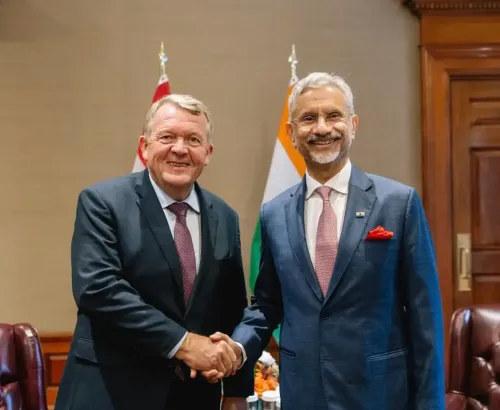
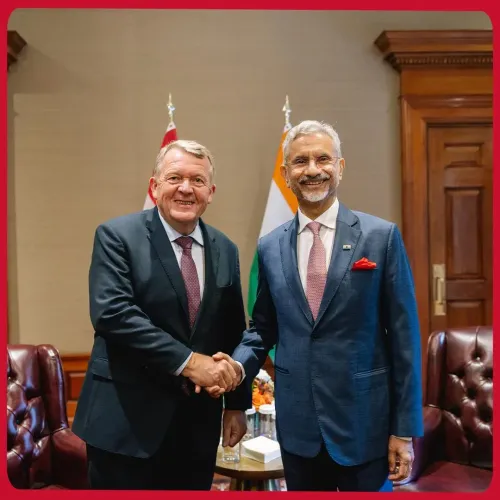
He made the remarks at the 5th India-Denmark Joint Commission with EAM S Jaishankar in New Delhi .
Rasmussen described the Green Strategic Partnership as a central pillar of bilateral ties and sought to evaluate its past six years .
He called for a new joint action plan to take the partnership to the next level.
Both sides back a multilateral system that reflects today's world, not the one of 80 years ago .
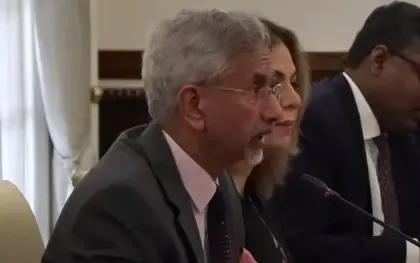
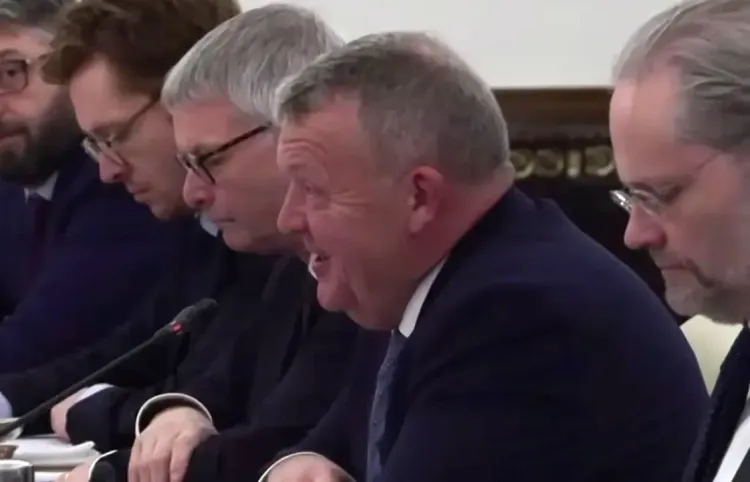
Danish Foreign Minister Lars Lokke Rasmussen on Saturday, 28 November 2026, called India a key international partner in the global green transition and in shaping a sustainable, secure and rule-based world. He spoke in New Delhi at the 5th India-Denmark Joint Commission meeting with External Affairs Minister S Jaishankar. Rasmussen credited the Green Strategic Partnership (GSP) with driving significant progress in bilateral ties and pressed for a new joint action plan for the next phase of cooperation.
Green Strategic Partnership at the Centre of Ties
In his opening remarks, Rasmussen described the GSP as a central pillar of India-Denmark relations and a practical framework for cooperation across sectors.
“In recent years, especially through the Green Strategic Partnership, which is a central pillar and a practical framework for cooperation across sectors, our ties have made significant progress. From my perspective, the Danish perspective, India is a key international partner, not least in the global green transition and in shaping a sustainable, secure and rule-based world,” he said.
Notably, Copenhagen has framed its engagement with New Delhi largely through a climate and clean-energy lens. That sets the GSP apart from India's more defence- or trade-heavy partnerships with other European capitals.
Echoing Jaishankar's Copenhagen Remarks
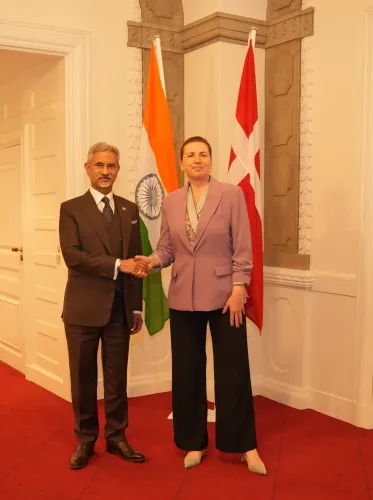
Rasmussen repeatedly invoked remarks Jaishankar made during his visit to Copenhagen last year. He recalled the External Affairs Minister's description of the relationship as one built on trust, strength and openness.
“As you said yourself in an interview with Danish media when you visited Copenhagen last year, and I quote you, ‘We have a very trusting, very strong, and very open relationship,’ and I subscribe to that,” the Danish Foreign Minister said.
He also cited Jaishankar's call for countries and regional groupings to work together amid global instability. “Again, let me refer to your words in Copenhagen because you put it very well. You said, ‘The more uncertain the world is, the more unstable the world is. We need countries, and we need regions, and we need groupings who will add to stability, who will work with each other.’ And that's our outset as well,” Rasmussen said.
Push for a New Joint Action Plan
The Danish minister described the meeting as a chance to review the GSP's record and chart its future. “So I think today's meeting is a timely opportunity to evaluate the past six years of the GSP and lay the foundation for what comes next. I hope we can use this opportunity to align our priorities, address any outstanding questions, and agree on a new joint action plan to pave the way for taking our partnership to the next level,” he added.
His mention of “outstanding questions” suggests that some issues remain unresolved between the two sides, though he did not specify them.
Shared Call for Reformed Multilateralism
Rasmussen also stressed both nations' commitment to a rules-based order and called for strengthening multilateral institutions.
“I also value our ongoing dialogue on regional and global developments. Both our countries want a multilateral system rooted in international law that meets the challenges of today and reflects the world as it is, not as it was 80 years ago. And this is indeed challenged by a lot of uncertainty,” he noted.
His reference to a world order shaped “80 years ago” aligns with India's long-standing demand for reform of global institutions, including the UN Security Council.
What Comes Next
The focus now shifts to whether the two sides can agree on a fresh joint action plan to succeed the current GSP framework. An agreement would set the agenda for the partnership's next phase, with clean energy and climate cooperation expected to remain at its core.
Point of View
And Denmark's echo of India's call for multilateral reform is diplomatically valuable. The real test of the next action plan is whether green rhetoric turns into concrete investment, technology transfer and measurable clean-energy capacity. Without that, a strategic partnership risks becoming a branding exercise. New Delhi should push for timelines and deliverables, not just declarations.
NationPress
28 Nov 2026
Frequently Asked Questions
What did the Danish Foreign Minister say about India?
Danish Foreign Minister Lars Lokke Rasmussen called India a key international partner in the global green transition and in shaping a sustainable, secure and rule-based world. He said this at the 5th India-Denmark Joint Commission in New Delhi on 28 November 2026.
What is the India-Denmark Green Strategic Partnership?
The Green Strategic Partnership (GSP) is the framework guiding India-Denmark cooperation across sectors, with a focus on green growth. Rasmussen described it as a central pillar of bilateral ties that has been in place for about six years.
What is the outcome Denmark is seeking from the Joint Commission?
Denmark wants to agree on a new joint action plan to take the partnership to the next level. Rasmussen said the meeting was a chance to evaluate the GSP, align priorities and address outstanding questions.
Who represented India at the 5th India-Denmark Joint Commission?
External Affairs Minister S Jaishankar represented India at the meeting in New Delhi. Rasmussen repeatedly cited Jaishankar's remarks from his Copenhagen visit last year.
What did Rasmussen say about multilateralism?
Rasmussen said both countries want a multilateral system rooted in international law that reflects the world as it is, not as it was 80 years ago. He added that this goal is challenged by considerable global uncertainty.