DR Congo's 180-day Ebola plan seeks $1.3 billion as cases hit 6,342
Synopsis
The DRC's Ebola outbreak — caused by the Bundibugyo virus — has become the country's fastest-growing on record, with 6,342 cases and 3,072 deaths across 60 health zones. A new 180-day plan backed by the WHO and Africa CDC now needs $1.3 billion to close the gaps that are letting the virus kill people in communities before they ever reach a health facility.
Key Takeaways
The DRC and partners launched an updated 180-day Ebola response plan on 5 September , requiring $1.3 billion in funding.
The outbreak has recorded 6,342 cases and 3,072 deaths as of 2 September , caused by the Bundibugyo virus .
The virus has spread to 60 health zones across six provinces , making it the fastest-growing Ebola outbreak in DRC history.
A large share of deaths are occurring in communities among people never identified as contacts, signalling critical gaps in surveillance.
The outbreak was officially declared in May ; the WHO and Africa CDC are co-leading the international response.
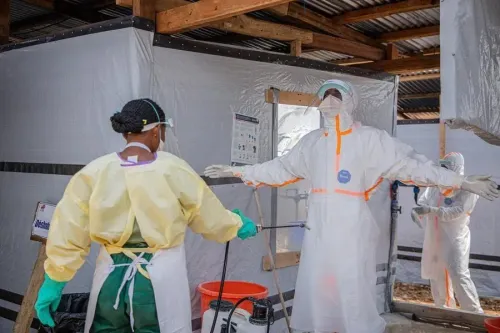
The Democratic Republic of the Congo (DRC) and its international partners on 5 September launched an updated 180-day multisectoral Ebola response plan, with full implementation estimated to require $1.3 billion in funding. The plan, developed with support from the World Health Organization (WHO), the Africa Centres for Disease Control and Prevention (Africa CDC), and other partners, is designed to serve as the operational roadmap for containing the outbreak over the next six months.
Scale of the Outbreak
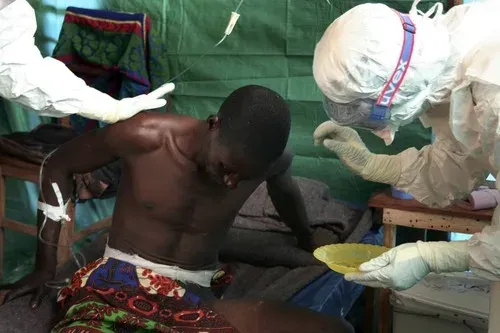
According to the WHO Regional Office for Africa, the outbreak — caused by the Bundibugyo virus — had reached 6,342 reported cases and 3,072 deaths as of 2 September. It has now spread across 60 health zones in six provinces, making it the fastest-growing Ebola outbreak ever recorded in the DRC since the disease was first identified in the country.
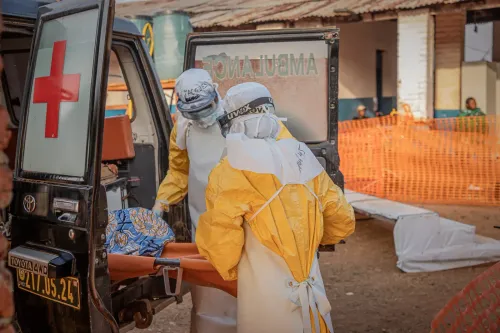
Health authorities have flagged a particularly alarming pattern: a large proportion of deaths are occurring in communities, often among individuals who had not been previously identified as contacts and who died before reaching any health facility. This points to critical gaps in contact tracing and early case detection.
What Officials Said
Anne Ancia, acting WHO representative in the DRC, issued an urgent call for action. 'Every case detected too late, every contact missed, and every delay in mobilising resources translates into lives lost,' she said, stressing the need for rapid and coordinated intervention at a larger scale.
DRC Health Minister Roger Kamba underlined that containing the outbreak demanded a whole-of-government approach. 'The government is fully mobilised to protect every Congolese,' Kamba said, noting that the response must extend beyond the health sector to involve communities, government agencies, partners, and donors.
Damien Mama, United Nations resident coordinator in the DRC, called for the Ebola response to be integrated into the broader humanitarian effort, backed by 'sufficient, flexible and predictable funding.'
Funding Gap and Response Architecture
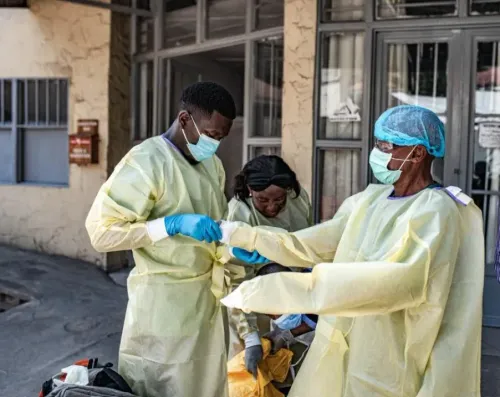
The revised plan carries a price tag of $1.3 billion — a figure that reflects the scale of multisectoral mobilisation required, spanning surveillance, community engagement, healthcare worker protection, and logistics. The Africa CDC pledged continued support for national response efforts, including resource mobilisation and greater community involvement.
Notably, the outbreak was officially declared only in May, yet has already outpaced the trajectory of all previous DRC Ebola outbreaks in terms of speed of spread. This comes amid longstanding concerns about healthcare infrastructure gaps and humanitarian access challenges in the country's conflict-affected eastern provinces.
What Happens Next
The 180-day plan now enters implementation phase, with partners and donors expected to commit funding against specific response pillars. The WHO and Africa CDC will coordinate resource mobilisation and partner alignment. Without rapid financing, health officials warn that community transmission chains — already difficult to break — will widen further, pushing both case counts and mortality higher in the weeks ahead.
Point of View
Exploiting weak contact-tracing networks and humanitarian access gaps in conflict-affected provinces. The fact that deaths are clustering in communities — outside health facilities — is the most damning data point: it means the surveillance perimeter is not holding. Six months and $1.3 billion may contain this, but only if donors act faster than the virus moves.
NationPress
20 Oct 2026
Frequently Asked Questions
What is the DRC's 180-day Ebola response plan?
It is an updated multisectoral operational roadmap launched on 5 September by the DRC and partners including the WHO and Africa CDC, designed to intensify the response to the ongoing Ebola outbreak over six months. Full implementation of the plan is estimated to cost $1.3 billion.
How serious is the current Ebola outbreak in the DRC?
As of 2 September, the outbreak had recorded 6,342 cases and 3,072 deaths across 60 health zones in six provinces. It is the fastest-growing Ebola outbreak ever documented in the DRC, officially declared in May.
Which Ebola virus strain is responsible for the current outbreak?
The outbreak is caused by the Bundibugyo virus, a strain of Ebola. Health authorities note that a significant proportion of deaths are occurring in communities among individuals not previously identified as contacts.
Why are health officials particularly alarmed by community deaths?
Officials are concerned because many victims are dying in communities without ever reaching a health facility or being flagged as contacts, indicating serious gaps in surveillance and contact tracing that make the outbreak harder to contain.
Who is funding and coordinating the Ebola response?
The response is coordinated by the DRC government with support from the WHO, Africa CDC, and UN agencies. The Africa CDC has pledged resource mobilisation and community engagement support, while UN resident coordinator Damien Mama has called for flexible and predictable donor funding.