US gas prices hit $4.45 as Secy Duffy backs Trump's Iran policy
Synopsis
With US gasoline at $4.45 a gallon and Americans cutting back on spending, Transportation Secretary Sean Duffy went on ABC News to defend Trump's Iran policy — pinning relief hopes entirely on the Strait of Hormuz reopening. The catch: energy analysts say full normalisation could take months even after the strait clears.
Key Takeaways
US Transportation Secretary Sean Duffy defended President Trump's Iran policy in an ABC News interview on 3 May 2025 .
Average US gasoline prices have climbed to $4.45 per gallon , prompting Americans to cut back on driving and household expenses.
Duffy said prices would fall "immediately" once the Strait of Hormuz reopens, but acknowledged a recovery "tail" would take time.
He cited US domestic energy production and recent tax refunds as buffers against consumer pain.
Spirit Airlines shutdown was attributed to pre-existing financial troubles, not solely the Iran conflict.
Energy analysts warn that full supply normalisation could take months even under favourable conditions.
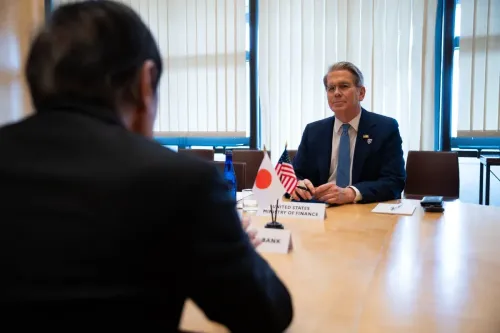
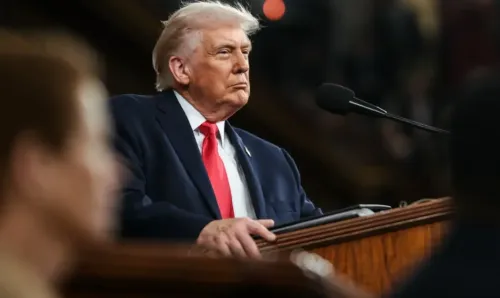
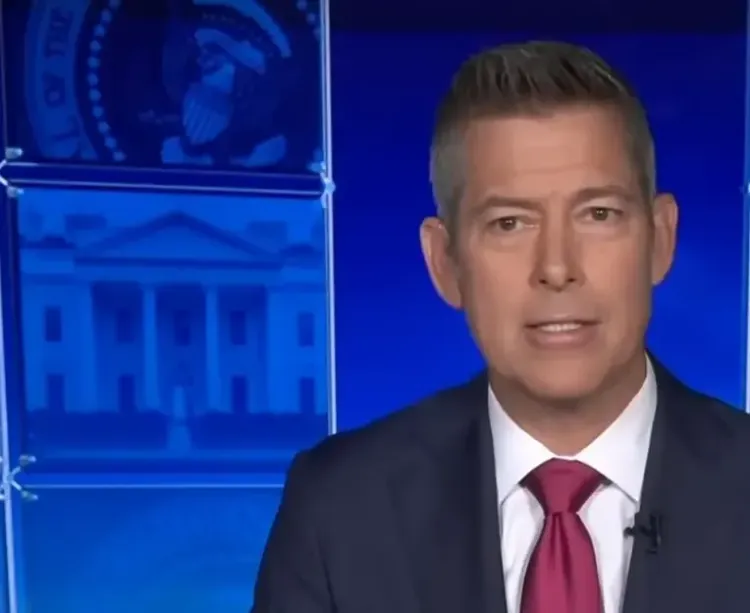
US Transportation Secretary Sean Duffy on Sunday, 3 May 2025, defended President Donald Trump's handling of the ongoing Iran conflict, even as average US gasoline prices climbed to $4.45 per gallon, straining American households and deepening economic concerns. Speaking in an interview to ABC News, Duffy acknowledged the energy cost surge but expressed confidence that prices would fall once supply routes stabilise.
Duffy's Defence of Trump's Iran Policy
The Transportation Secretary framed the crisis squarely within national security terms, backing Trump's decision to confront Iran. "We can't have a nuclear Iran," he said, describing Tehran as "the most destabilising force in the world for 40 years". Duffy praised Trump's approach as "bold action" aimed at ensuring "the world and America is safer".
Strait of Hormuz: The Critical Chokepoint
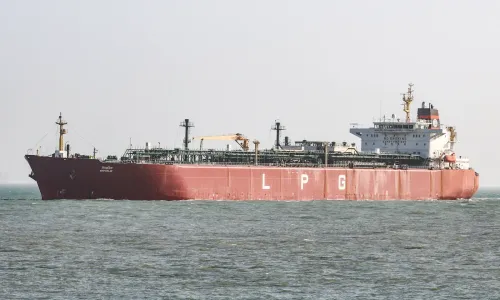
Central to the fuel price crisis is the Strait of Hormuz, a critical global oil transit route disrupted by the conflict. Duffy indicated that relief would be swift once the waterway reopens. "Once the Strait opens, you'll see prices come down, come down immediately," he said. However, he cautioned that full recovery would not be instantaneous. "There's going to be a tail to that. It's going to take time to get back to where we were before this conflict began," he added. Energy analysts note that even under favourable conditions, full normalisation of global supply could take months.
US Energy Dominance and Consumer Relief
Pressed on the immediate economic pain facing consumers, Duffy pointed to domestic energy production capacity. "In America, we're not going to have supply shortages because we produce so much here," he said, underscoring what he described as US "energy dominance". He also linked recent tax measures to household relief, noting that Trump "wanted to make sure that Americans got a big tax refund this tax season". Despite the domestic production argument, many Americans have already begun cutting back on driving and discretionary household spending as prices remain elevated.
Spirit Airlines Collapse: War Not the Sole Cause
Duffy also addressed the shutdown of budget carrier Spirit Airlines, rejecting claims that the Iran conflict alone triggered its collapse. "They were bleeding money," he said, noting the airline had already filed for bankruptcy and faced long-standing financial difficulties. He added that the administration had coordinated with other carriers to minimise disruption, describing it as "a unified American approach to helping passengers and employees of Spirit navigate this crisis".
What Comes Next
Energy analysts say the reopening of the Strait of Hormuz remains the single most critical variable for easing global supply constraints. With US gasoline prices at elevated levels and the Iran conflict showing no immediate signs of resolution, economic pressure on American consumers is likely to persist in the near term. The administration's ability to translate its "energy dominance" argument into tangible price relief will be closely watched in the weeks ahead.
Point of View
Rerouting inertia, and refinery lag can keep pump prices elevated for months after a waterway technically reopens. More telling is what Duffy did not say: there is no timeline for the conflict's resolution, no independent verification mechanism for the jobs or tax-relief claims, and no acknowledgment that $4.45-a-gallon gasoline is already compressing consumer spending in ways that downstream data will reflect within weeks.
NationPress
14 Sept 2026
Frequently Asked Questions
Why are US gasoline prices rising amid the Iran conflict?
US gasoline prices have climbed to $4.45 per gallon because the ongoing Iran conflict has disrupted oil flows through the Strait of Hormuz, a critical global oil transit chokepoint. Reduced supply through this route has tightened global energy markets and pushed pump prices higher.
What did Sean Duffy say about when gas prices will fall?
Duffy said prices would come down "immediately" once the Strait of Hormuz reopens and oil supply flows resume. However, he also cautioned that full recovery would take time, saying "there's going to be a tail to that."
Why did Spirit Airlines shut down?
According to Duffy, Spirit Airlines shut down primarily due to long-standing financial troubles and a prior bankruptcy filing, not solely because of the Iran conflict. He said the airline had been "bleeding money" well before the current crisis.
How is the Trump administration trying to protect American consumers from high fuel costs?
The administration has pointed to strong domestic energy production capacity as a shield against supply shortages, and has also cited recent tax refunds as a fiscal buffer for households. Duffy argued that US "energy dominance" insulates Americans from the worst supply shocks.
How long could it take for fuel prices to normalise?
Energy analysts say that even if the Strait of Hormuz reopens under favourable conditions, full normalisation of global oil supply and retail fuel prices could take several months, due to shipping, insurance, and refinery lag factors.