Trump: Iran deal will push oil prices lower, Hormuz reopens
Synopsis
At the G7 in France, Trump declared oil prices are already 'plummeting' after the Iran agreement, with the Strait of Hormuz set to reopen for commercial shipping. For India — one of the world's largest crude importers — a sustained price drop would be a significant economic tailwind, but it all hinges on whether the deal holds.
Key Takeaways
US President Donald Trump announced on 17 June that the Iran agreement would push global oil prices lower.
Trump said oil peaked at $115–$120 a barrel , well below feared levels of $350 .
The Strait of Hormuz is set to reopen for commercial shipping, stabilising global energy supply.
Trump projected US gasoline prices falling below $3 per gallon in the near term.
India , which imports the bulk of its crude oil from the Gulf, is closely monitoring the situation for energy security and inflation implications.
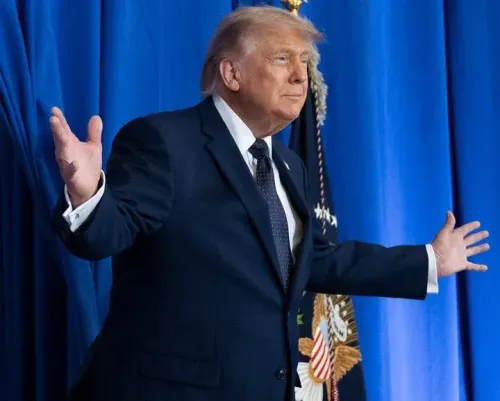
US President Donald Trump on Wednesday, 17 June declared that a newly reached agreement with Iran would drive global oil prices lower and bolster the world economy, pointing to the reopening of the Strait of Hormuz — one of the most critical energy shipping lanes on the planet — as the central driver of market stabilisation.
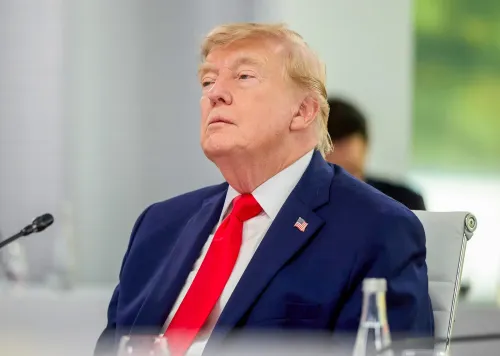
Trump made the remarks at a press conference following the G7 summit in Évian, France, where he said energy markets had already responded positively to the deal and to easing tensions across the Gulf.
What Trump Said
'Oil prices are plummeting,' Trump told reporters, framing the agreement as a decisive break from fears of a protracted conflict that had threatened global supply chains. He noted that worst-case scenarios had not materialised: 'The oil never went to $350 a barrel,' he said. 'It went to $115, $120.'
Trump tied the Strait's reopening directly to commercial shipping stability. 'If we keep bombing, those ships won't be going,' he said, underscoring the waterway's role in keeping global crude flows intact.
Impact on Fuel Costs and Inflation
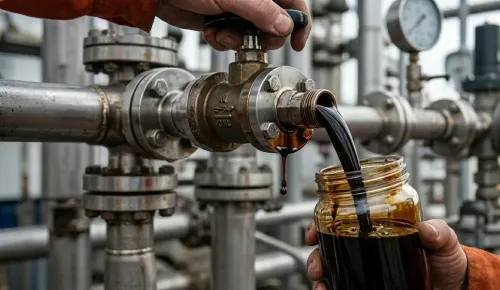
The President predicted that lower crude prices would cascade through to consumers and businesses, reducing operating costs and helping ease inflationary pressures. On domestic US fuel prices, he said: 'We're hitting in the threes now for gasoline, and that'll come down a lot lower.' He argued that cheaper energy is 'the biggest thing' for broad economic relief.
Why This Matters for India
The developments carry particular significance for major oil-importing nations, with India among the most closely watching. India sources the bulk of its crude oil requirements from Gulf producers, and any sustained disruption to the Strait of Hormuz — through which an estimated 20% of global oil trade passes — would directly affect domestic fuel prices and inflation management. Stable passage through the waterway is widely regarded as a cornerstone of India's energy security calculus.
This comes amid a broader pattern of Gulf tensions periodically rattling oil markets over the past several years, each episode prompting emergency reviews of India's strategic petroleum reserves and import diversification strategy.
Market Reaction and What Comes Next
Energy markets reacted positively to the announcement, according to Trump, with prices easing on reduced conflict risk. Analysts will now watch whether the Iran agreement holds and whether commercial shipping through the Strait normalises in the coming weeks. Any reversal — diplomatic or military — could quickly unwind the price relief Trump is projecting.
Point of View
And markets know it. For India, the calculus is stark: every dollar off crude is meaningful for the current account and retail inflation, but betting energy policy on Gulf stability has burned New Delhi before. The real question mainstream coverage is glossing over is what the agreement actually commits Iran to, and what the enforcement mechanism looks like — without that, 'oil prices are plummeting' is a press conference, not a policy.
NationPress
26 Sept 2026
Frequently Asked Questions
What did Trump say about the Iran deal and oil prices?
Trump said the agreement reached with Iran would help drive global oil prices lower by ensuring the reopening of the Strait of Hormuz. Speaking at the G7 summit in France on 17 June, he said oil prices were already 'plummeting' and that worst-case scenarios of $350 per barrel had not materialised.
What is the Strait of Hormuz and why does it matter?
The Strait of Hormuz is a narrow waterway between Iran and Oman through which an estimated 20% of global oil trade passes. Any disruption to shipping there can cause immediate spikes in global crude prices, making its stability critical for energy-importing nations including India.
How does the Iran deal affect India?
India imports the bulk of its crude oil from Gulf producers and is highly sensitive to Strait of Hormuz disruptions. A sustained easing of tensions and lower oil prices would reduce India's import bill, ease domestic fuel prices, and help manage inflation.
What did Trump say about US gasoline prices?
Trump said US gasoline prices had already fallen to around $3 per gallon and predicted they would drop further as lower crude costs work through to consumers and businesses.
What are the risks to Trump's oil price prediction?
The price relief depends on the Iran agreement holding and commercial shipping through the Strait of Hormuz normalising. Any diplomatic breakdown or renewed military activity could quickly reverse the gains Trump is projecting.