Durand Line dispute deepens Pakistan-Afghanistan tensions in 2026
Synopsis
Pakistani airstrikes on Afghan soil — justified by Islamabad as targeting TTP militants — have pushed the Pak-Afghan frontier to its most volatile point in years. With the Durand Line border closed for nearly a year, over 1,100 civilians documented as casualties by UNAMA, and the Taliban warning of retaliation, a century-old colonial boundary continues to drive one of South Asia's most intractable conflicts.
Key Takeaways
Pakistani airstrikes targeting alleged TTP positions inside Afghanistan have triggered renewed Taliban warnings of retaliation.
UNAMA has documented over 1,100 civilian deaths and injuries from cross-border armed violence in Afghanistan so far in 2026 .
Key border crossings Torkham and Chaman have been closed for nearly a year , disrupting bilateral trade and worsening commodity shortages in Afghanistan.
The Durand Line , drawn in 1893 by British official Sir Mortimer Durand , has never been recognised by any Afghan government as a legitimate international border.
In July 1949 , Afghanistan's parliament declared all Durand Line agreements void, calling it an 'imaginary line.' Pakistan's former ISI chief Lt.
Faiz Hameed was subsequently court-martialled; Imran Khan remains in custody on corruption-related convictions.
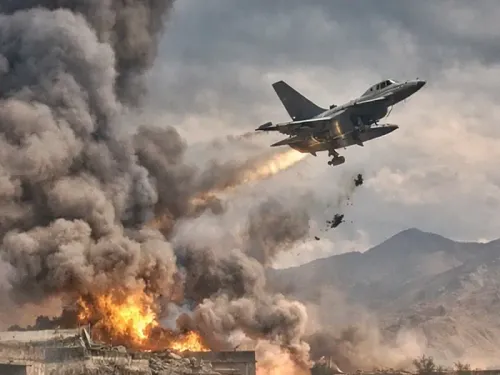
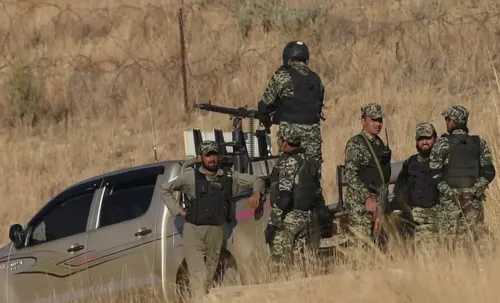
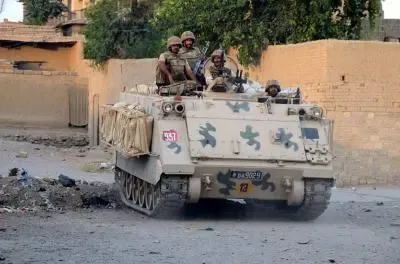
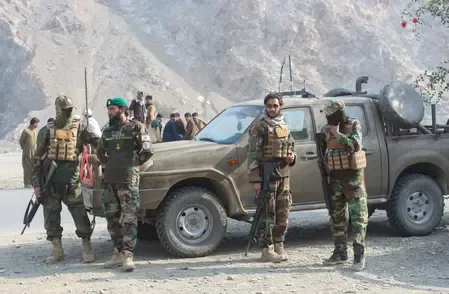
Pakistani airstrikes targeting alleged Tehrik-e-Taliban Pakistan (TTP) hideouts inside Afghanistan have sharply escalated tensions along the Durand Line, with the Taliban administration in Kabul warning it will 'respond appropriately' after the latest cross-border bombing. The strikes come alongside reported aerial bombardment within Pakistan's own territory — specifically in Balochistan — as Islamabad battles a separatist insurgency on its western flank.
The United Nations Assistance Mission in Afghanistan (UNAMA) has documented more than 1,100 civilian deaths and injuries in Afghanistan from cross-border armed violence so far this year, according to a report by Afghan broadcaster TOLO News published late Monday.
The Durand Line at the Heart of the Dispute
The Durand Line — a roughly 2,600-km colonial-era boundary drawn in 1893 by British official Sir Mortimer Durand — demarcates the border between present-day Pakistan and Afghanistan. It stretches from the China border in the east to Iran in the west. Successive Afghan governments have refused to recognise it as a legitimate international frontier, arguing it arbitrarily divides Pashtun tribes between two states.
Kabul's position is that the then-Afghan ruler, Emir Abdur Rahman Khan, was coerced into accepting the boundary. In July 1949, Afghanistan's parliament formally declared all Durand Line agreements void, calling it an 'imaginary line.' Pakistan, for its part, insists the boundary is a legally inherited international border, accepted at its independence in 1947.
TTP Allegations and the Border Standoff
Islamabad accuses the Afghan Taliban of harbouring TTP militants on Afghan soil, using that territory as a launchpad for attacks inside Pakistan. Kabul flatly denies this, asserting that Pakistan's security problems are internal. The dispute over TTP sheltering has become the defining flashpoint in the current cycle of escalation.
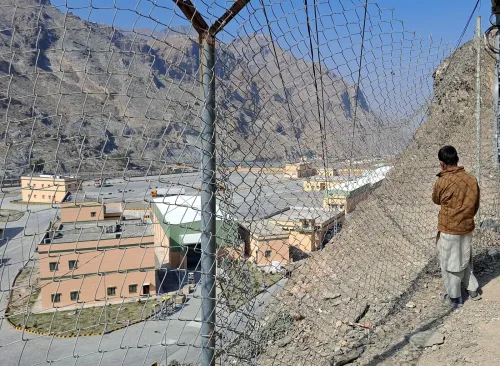
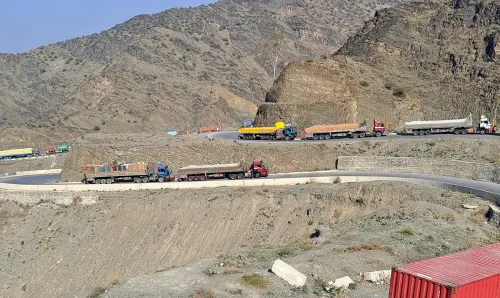
Following earlier rounds of Pakistani airstrikes, the Taliban responded with heavy retaliatory attacks along the frontier. The border has remained closed for almost a year as a result, with key crossings including Torkham and Chaman shut down. The closure has stranded trucks carrying food and commercial goods, reportedly worsening commodity shortages in Afghanistan and squeezing Pakistan's exporters.
A Disputed Frontier with Deep Historical Roots
The ethnic dimension of the conflict is significant. In Khyber Pakhtunkhwa (KP) — Pakistan's third-largest province by population, accounting for approximately 16.9% of the national total — Pashtuns are the dominant group. Pashtun communities also span northern Balochistan and urban centres such as Karachi, Sindh, and Punjab.
Historical grievances trace back to the 1970s and 1980s, when Afghanistan accused Pakistan of actively backing Afghan Islamist groups opposed to successive Kabul governments, from President Daoud Khan through to Mohammad Najibullah — particularly during the Soviet occupation. Pakistan's role as a frontline state aligned with the United States and its support for the Mujahideen deepened existing mistrust.
Pakistan-Taliban Relations: From Optimism to Rupture
When the Taliban first seized Kabul in 1996, Pakistan was one of only three countries — alongside Saudi Arabia and the UAE — to officially recognise the regime. Those ties soured quickly, and after the 9/11 attacks in 2001, Islamabad abandoned open Taliban support to join the US-led war on terror.
Following the Taliban's return to power in August 2021 after the US military withdrawal, then-ISI Director-General Lt. Gen. Faiz Hameed was photographed in Kabul — an image widely read as signalling alignment between the two governments under the Imran Khan administration. That optimism proved short-lived. Relations deteriorated rapidly over the Durand Line and the TTP issue. Imran Khan subsequently remained incarcerated on corruption-related convictions, while Lt. Gen. Hameed was arrested and court-martialled on charges that reportedly included involvement in politics, violations of the Official Secrets Act, abuse of authority, and links to controversial military decisions.
What Comes Next
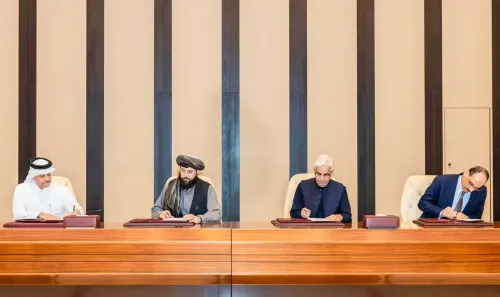
With the Durand Line border closed, key trade routes severed, and civilian casualties accumulating on both sides of the frontier, the risk of a broader military confrontation cannot be dismissed. The Taliban's warning to 'respond appropriately' — echoing language used before previous retaliatory clashes — signals that the current standoff is unlikely to de-escalate without third-party mediation or diplomatic engagement, neither of which is currently visible on the horizon.
Point of View
Another targeting alleged TTP sanctuaries across the Afghan border — expose a strategic overextension that Islamabad has yet to publicly acknowledge. Blaming Kabul for the TTP problem is politically expedient, but it sidesteps the role Pakistan's own decades-long proxy politics played in creating the conditions for militant entrenchment. The Taliban's refusal to act against TTP is partly ideological solidarity, but it is also a calculated pressure point — the one lever Kabul holds over Islamabad. Meanwhile, the Durand Line, a 130-year-old colonial artefact, continues to do what it was never designed to prevent: generate conflict. Without a framework that addresses the Pashtun ethnic dimension alongside the security grievance, each airstrike will produce the next retaliatory skirmish.
NationPress
22 Sept 2026
Frequently Asked Questions
What is the Durand Line and why is it disputed?
The Durand Line is a roughly 2,600-km boundary drawn in 1893 by British official Sir Mortimer Durand, separating present-day Pakistan from Afghanistan. Afghanistan has never recognised it as a legitimate international border, arguing it was accepted under duress and that it arbitrarily divides Pashtun tribes; Afghanistan's parliament declared all related agreements void in July 1949.
Why is Pakistan conducting airstrikes inside Afghanistan?
Pakistan says the strikes target Tehrik-e-Taliban Pakistan (TTP) militants it alleges are operating from Afghan soil with the knowledge of the Taliban administration. Kabul denies sheltering TTP and insists Pakistan's security problems are internal.
How many civilians have been killed or injured in cross-border violence?
According to the United Nations Assistance Mission in Afghanistan (UNAMA), more than 1,100 civilian deaths and injuries from cross-border armed violence have been documented in Afghanistan so far in 2026.
How has the border closure affected trade between Pakistan and Afghanistan?
Key crossings including Torkham and Chaman have been closed for nearly a year following retaliatory Taliban attacks after earlier Pakistani airstrikes. The shutdown has stranded trucks carrying food and goods, reportedly worsening commodity shortages inside Afghanistan and hurting Pakistani exporters.
What is the Tehrik-e-Taliban Pakistan (TTP)?
The TTP is a militant organisation that carries out attacks inside Pakistan and is designated a terrorist group by Islamabad. Pakistan accuses the Afghan Taliban of providing the TTP shelter and operational space on Afghan territory, a charge the Taliban administration denies.