Jaishankar at Jeju Forum 2026: Five steps for global cooperation
Synopsis
At the Jeju Forum in Seoul, Jaishankar didn't just invoke ancient Indian philosophy — he laid out a concrete five-point blueprint for a fractured world order. From de-risking supply chains to empowering the Global South, his remarks signal India's intent to position itself as an architect of reformed multilateralism, not merely a participant.
Key Takeaways
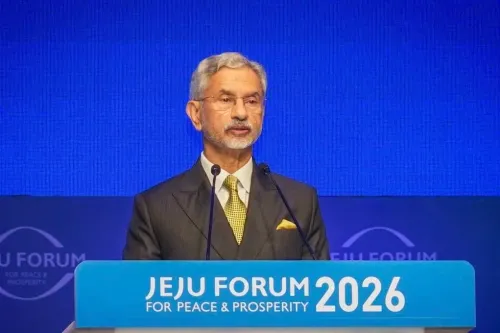
Jaishankar addressed the Jeju Forum for Peace and Prosperity 2026 in Seoul on 25 June 2026 .
He invoked 'Vasudhaiva Kutumbakam' — the world is a family — as a guiding principle for global cooperation.
Jaishankar outlined a five-step framework : de-risk supply chains, forge new partnerships, raise awareness of confrontation costs, empower the Global South , and provide global goods through shared endeavours.
He cited UNCLOS as a model for collectively upholding international law.
Jaishankar called for reformed multilateralism , warning the world cannot rely on a few powers to uphold global norms.
He highlighted complementarities in shipbuilding, digital, health, infrastructure, and defence as pillars for deeper India-South Korea cooperation.
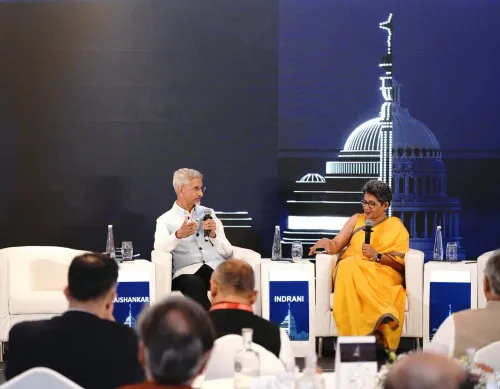
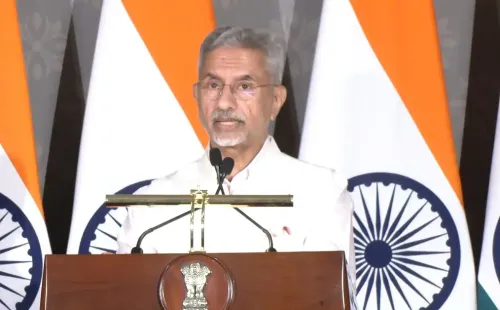
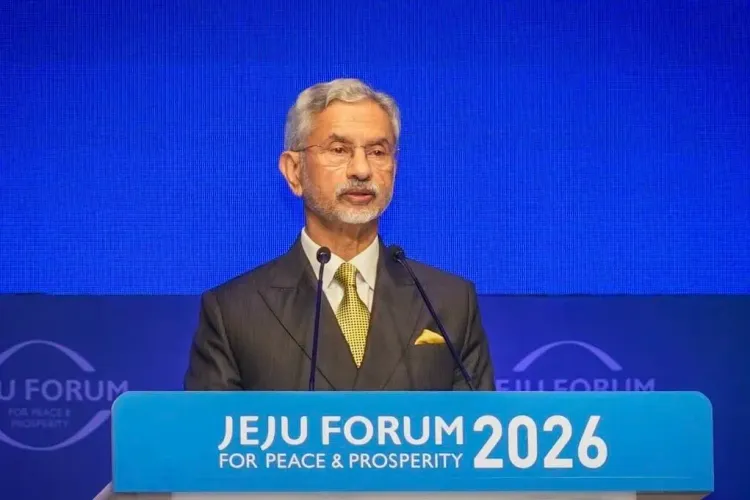
External Affairs Minister S. Jaishankar on Thursday, 25 June 2026, called for a fundamental reinvention of international cooperation, invoking India's ancient philosophy of 'Vasudhaiva Kutumbakam' — the world is a family — while addressing the Jeju Forum for Peace and Prosperity 2026 in Seoul, South Korea. Speaking at one of Asia's premier multilateral dialogue platforms, Jaishankar argued that global challenges have made cooperation not merely desirable but unavoidable.
The Case for Cooperation
'Paradoxically, the challenges we confront have only further strengthened the centripetal side. Whether it is pandemics like Covid, acts of terrorism, or the impact of extreme climate events, these cannot be contained within political jurisdictions. International cooperation is a must,' Jaishankar said. He acknowledged that national instincts remain dominant in decision-making, making deliberate openness toward the world all the more necessary. 'Much of the current turbulence we see is about societies that challenge that belief,' he added, referring to the principle of global kinship.
Five Steps to Reinvent Global Order
Jaishankar outlined a five-point framework for rebuilding cooperation in an increasingly fragmented world. First, he called for de-risking the international economy by diversifying production and supply chains, stressing that resilience and redundancy are essential to limit economic coercion. Second, he advocated forging new partnerships among influential nations through agenda-specific cooperation to stabilise the global order.
Third, he emphasised the need to raise awareness of the costs of narrow thinking and confrontation, while collectively upholding international law — citing the United Nations Convention on the Law of the Sea (UNCLOS) as a model framework. Fourth, he stressed the importance of empowering the Global South by expanding its capacity and opportunities, arguing this would also generate new drivers of global growth. Fifth, he called for the provision of global goods through shared endeavours, warning that the world cannot rely on a handful of powers to uphold rules and norms.
On Multipolarity and Multilateralism
'As the interests of a few are openly prioritised, the costs to the many are less considered. This can only be countered by cooperation on more issues with greater players. At the end of the day, we will see whether multipolarity really delivers,' Jaishankar said. He concluded with a pointed call for reformed multilateralism, stating: 'The world must take more control over its own future.'
India-South Korea Partnership
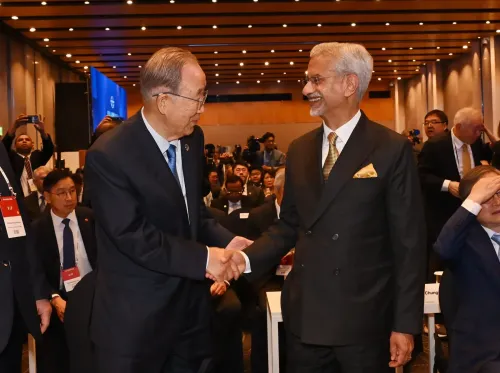
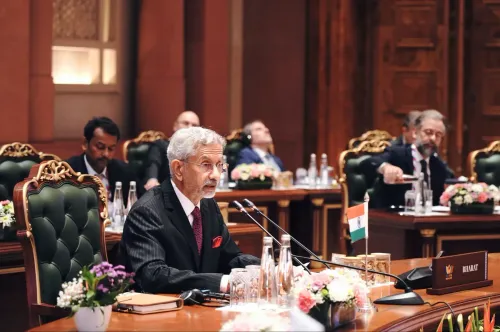
Jaishankar noted that the five-point framework makes a compelling case for deeper India-South Korea bilateral ties. He pointed to complementarities in shipbuilding, digital technology, health, infrastructure, and defence as areas ripe for expanded cooperation. He said these themes were central to his bilateral meetings in Seoul on 24 June, the day before his Jeju Forum address. The remarks signal a continued push to elevate the Special Strategic Partnership between the two nations beyond trade into strategic and technological domains.
Point of View
Without naming either. Invoking UNCLOS while calling out 'economic coercion' and the 'interests of a few' sends a clear signal about India's reading of the Indo-Pacific. The Global South empowerment plank also fits a pattern: India is actively cultivating a leadership identity among developing nations, and Seoul is a useful stage given South Korea's own anxieties about supply chain dependence. The question is whether this vision translates into binding commitments or remains a compelling speech circuit.
NationPress
25 Jun 2026
Frequently Asked Questions
What did Jaishankar say at the Jeju Forum 2026?
External Affairs Minister S. Jaishankar called for a reinvention of international cooperation at the Jeju Forum for Peace and Prosperity 2026 in Seoul on 25 June 2026. He outlined a five-step framework covering supply chain diversification, new multilateral partnerships, upholding international law, empowering the Global South, and providing global goods through shared endeavours.
What is 'Vasudhaiva Kutumbakam' and why did Jaishankar invoke it?
'Vasudhaiva Kutumbakam' is an ancient Indian philosophical concept meaning 'the world is a family.' Jaishankar invoked it to argue that cultivating openness toward the world is essential, especially as national instincts dominate decision-making and global challenges like pandemics, terrorism, and climate change cannot be contained within borders.
What is Jaishankar's five-step plan for global cooperation?
Jaishankar's five steps are: de-risk the international economy by diversifying supply chains; forge new partnerships among influential nations; raise awareness of the costs of confrontation while protecting international law; empower the Global South with greater capacity; and deliver global goods through common endeavours.
What did Jaishankar say about India-South Korea ties?
Jaishankar said India and South Korea have complementarities in shipbuilding, digital technology, health, infrastructure, and defence that are 'waiting to be exploited.' He noted these themes were central to his bilateral meetings in Seoul on 24 June 2026, signalling intent to deepen the Special Strategic Partnership.
What is the Jeju Forum for Peace and Prosperity?
The Jeju Forum for Peace and Prosperity is a major multilateral dialogue platform held in South Korea, bringing together global leaders, diplomats, and policymakers to discuss international security, cooperation, and development. The 2026 edition was held in Seoul.