Jaishankar's 6-nation tour from July 5: Gulf, UN, Brussels on agenda
Synopsis
Jaishankar's ten-day, six-nation tour starting 5 July is more than a diplomatic sweep — it is India operating on three strategic fronts at once: deepening Gulf ties, formally launching a UN Security Council campaign for 2028-29, and moving to implement the newly concluded India-EU Free Trade Agreement at the Brussels TTC meeting.
Key Takeaways
Jaishankar begins a six-nation tour on 5 July 2026 , covering Qatar, Bahrain, Kuwait, Oman, New York, and Brussels.
The Gulf leg (5–10 July) focuses on bilateral relations and regional issues with four countries.
On 13 July in New York , Jaishankar will launch India's official campaign for a UN Security Council non-permanent seat for 2028–29 .
On 14–15 July in Brussels , he will attend the 3rd India-EU Trade and Technology Council (TTC) meeting alongside ministers Piyush Goyal and Ashwini Vaishnaw .
The TTC meeting is designed to support implementation of the recently concluded India-EU Free Trade Agreement (FTA) .
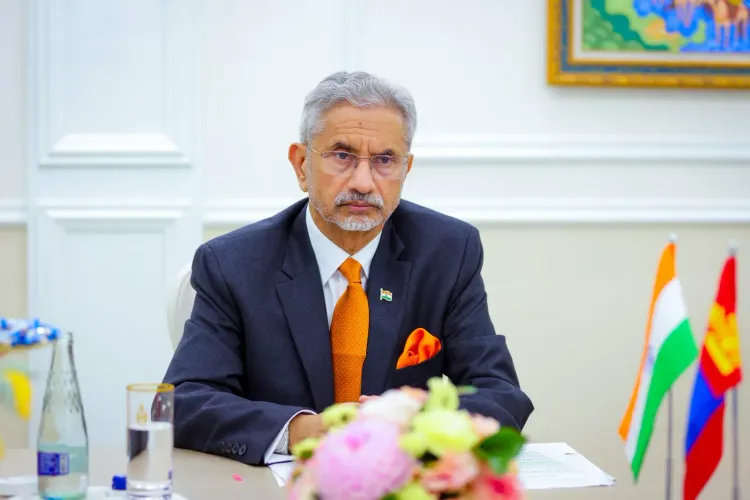
External Affairs Minister Dr S. Jaishankar will embark on a six-nation, ten-day diplomatic tour beginning 5 July 2026, covering Qatar, Bahrain, Kuwait, Oman, New York, and Brussels, the Ministry of External Affairs (MEA) announced on Saturday, 4 July. The wide-ranging itinerary spans Gulf diplomacy, a high-stakes United Nations campaign launch, and a landmark India-EU trade council meeting — making it one of the most consequential foreign-policy trips of the year.
Gulf Leg: Bilateral Meetings Across Four Countries
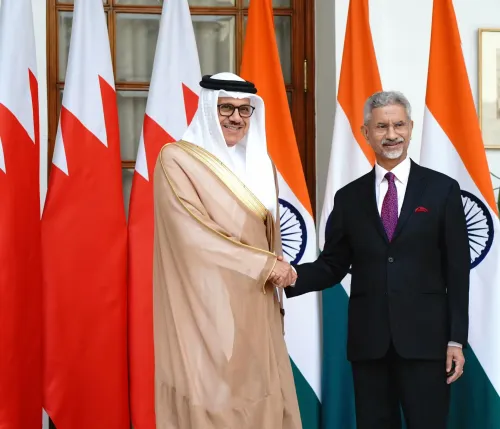
From 5 to 10 July, Jaishankar will travel through Qatar, Bahrain, Kuwait, and Oman, meeting counterparts and national leadership in each country. According to the MEA, the visits will focus on 'enhancing bilateral relations with the four countries and also provide an opportunity to exchange views on regional developments and issues of mutual interest.' The Gulf region hosts millions of Indian workers and is a critical source of remittances, energy imports, and strategic partnerships for India.
New York Stop: India Launches UN Security Council Bid
On 13 July, Jaishankar will travel to New York to formally launch India's official campaign for a non-permanent seat on the UN Security Council for the 2028–29 tenure. This marks a significant diplomatic milestone, as India seeks to build global support for its candidacy at the world's most powerful multilateral body. India previously held a non-permanent UNSC seat in 2021–22, and this campaign signals New Delhi's continued push for a larger role in global governance.
Brussels: 3rd India-EU Trade and Technology Council
On 14–15 July, Jaishankar will attend the 3rd India-EU Trade and Technology Council (TTC) meeting in Brussels, where he will also interact with his EU and Belgian counterparts. Union Commerce and Industry Minister Piyush Goyal and Union Minister for Railways, Electronics and Information Technology Ashwini Vaishnaw will also travel to Brussels for the TTC meeting.
The session is expected to complement the recently concluded India-EU Free Trade Agreement (FTA) and facilitate its implementation. Speaking on the sidelines of the 17th Toy Biz International B2B Expo, Goyal said, 'Our effort is that it becomes a supplement to the free trade agreement which we have finalised and will help us to smooth the edges and make it easier to implement and benefit from the FTA going forward.' The TTC dialogue is also expected to strengthen cooperation in trade, technology, and resilient supply chains.
What This Signals for Indian Foreign Policy
This tour reflects India's multi-directional diplomatic posture — simultaneously deepening Gulf ties, advancing multilateral ambitions at the UN, and cementing the newly forged economic architecture with Europe. Notably, the Brussels visit comes at a moment when the India-EU FTA — years in the making — has just been concluded, giving the TTC meeting added urgency as both sides move toward implementation. With geopolitical realignments accelerating globally, India is clearly leveraging this window to consolidate partnerships across three distinct strategic theatres.
Point of View
The UN, and Brussels is a statement of intent: India is not choosing between strategic theatres, it is working all of them simultaneously. The UNSC campaign launch is the headline, but the Brussels stop may carry longer-term weight — the India-EU FTA has been concluded on paper, and the TTC is now the arena where its practical value will be determined. Gulf diplomacy, meanwhile, remains perennially undercovered relative to its strategic importance; with energy security and the Indian diaspora both in play, these bilateral meetings deserve more scrutiny than they typically receive.
NationPress
4 Jul 2026
Frequently Asked Questions
Which countries will Jaishankar visit on his July 2026 tour?
Jaishankar will visit Qatar, Bahrain, Kuwait, Oman, New York, and Brussels between 5 and 15 July 2026. The Gulf leg runs from 5 to 10 July, followed by New York on 13 July and Brussels on 14–15 July.
What is India's UN Security Council campaign that Jaishankar will launch in New York?
India is formally launching its candidacy for a non-permanent seat on the UN Security Council for the 2028–29 tenure. The campaign will be officially kicked off by Jaishankar in New York on 13 July 2026, building on India's previous UNSC membership in 2021–22.
What is the India-EU Trade and Technology Council (TTC) meeting about?
The 3rd India-EU TTC meeting in Brussels on 14–15 July is aimed at strengthening cooperation in trade, technology, and resilient supply chains. It is specifically intended to complement and facilitate the implementation of the recently concluded India-EU Free Trade Agreement.
Who else is travelling to Brussels for the TTC meeting?
Union Commerce and Industry Minister Piyush Goyal and Union Minister for Railways, Electronics and Information Technology Ashwini Vaishnaw will also travel to Brussels to attend the 3rd India-EU TTC meeting alongside Jaishankar.
Why is the Gulf leg of Jaishankar's visit significant?
The Gulf region is strategically vital for India, hosting a large Indian diaspora, serving as a major source of remittances, and supplying a significant share of India's energy imports. The bilateral meetings with Qatar, Bahrain, Kuwait, and Oman are aimed at deepening these ties and discussing regional developments.