Ebola in DRC: 4,000 deaths as Africa CDC warns case drop may mask spread
Synopsis
Africa CDC is warning that the apparent dip in DRC Ebola cases may be a surveillance mirage, not a real decline — with only 23% of contacts being traced, nearly 80% of new cases appearing outside known contact lists, and violence killing both responders and public health advocates. Nearly 4,000 people are dead, and the epidemic is still spreading across 45 active health zones.
Key Takeaways
Africa CDC warned on 1 October 2026 that falling Ebola case counts in the DRC may reflect surveillance disruptions, not genuine containment.
The outbreak has recorded 8,224 confirmed cases and 3,982 deaths as of 29 September , with a case fatality rate of 48.4 per cent .
Active transmission continues across 45 health zones in 63 affected zones spanning seven provinces .
Contact tracing is critically underpowered: only 14 contacts identified per case against a benchmark of 60 , with 80 per cent of new cases outside known contact lists.
A doctor died of Ebola in Kisangani on 24 September ; the hospital was closed for 21 days after more than 10 staff tested positive.
Violence against response workers and community resistance in North Kivu continue to hamper the outbreak response.
The Africa Centres for Disease Control and Prevention (Africa CDC) cautioned on Thursday, 1 October 2026, that a recent fall in reported Ebola cases in the Democratic Republic of the Congo (DRC) may reflect breakdowns in disease surveillance rather than genuine progress, even as the outbreak has killed nearly 4,000 people. The warning underlines how fragile the response remains across one of Africa's most complex emergencies.
Scale of the Outbreak
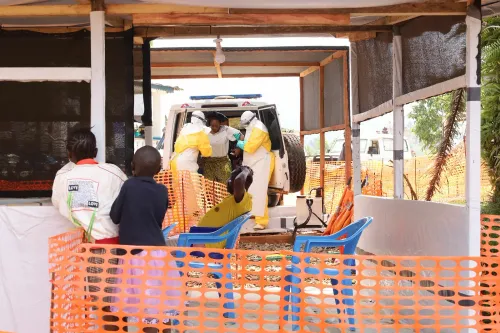
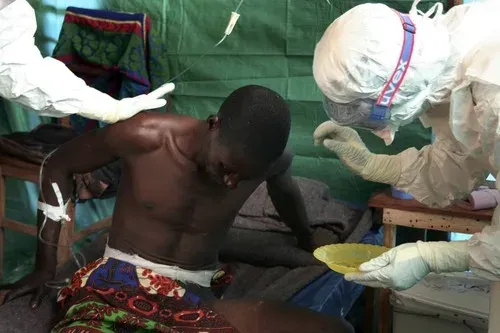
As of 29 September, the DRC's health authorities recorded 8,224 confirmed cases and 3,982 deaths, yielding a staggering case fatality rate of 48.4 per cent. Since its detection in mid-May, the outbreak has expanded from three health zones to 63 health zones spanning seven provinces, with 45 zones still registering active transmission.
Why the Drop in Cases Is Not a Victory Signal
Speaking at an online press briefing, Africa CDC official Wessam Mankoula cautioned against reading the most recent weekly decline as a sign of control. 'Falling in this curve doesn't mean that the outbreak is totally under control,' Mankoula said. The agency noted that insecurity and community resistance in multiple areas have disrupted surveillance and response operations, raising the possibility that many infections are going undetected. The epidemic curve has largely plateaued over the past four to five weeks, but officials say that plateau itself does not indicate containment.
Contact Tracing Gaps Remain Severe
Contact tracing — a cornerstone of Ebola containment — is running well below required benchmarks. Mankoula said that an average of only about 14 contacts are being identified per confirmed case, against an expected level of around 60. Only roughly 23 per cent of estimated contacts are being followed up, and nearly 80 per cent of new cases are emerging outside known contact lists. 'This is also one of the reasons... we cannot confidently say the outbreak is under control at this stage,' Mankoula said.
Violence and Healthcare Worker Deaths Compound the Crisis
The response is being further destabilised by security incidents. In Butembo, North Kivu Province, a local ruling-party official was beaten to death following a radio appearance on Sunday, with his party linking the attack to his public support for Ebola prevention efforts. In neighbouring Beni territory, an armed attack on a checkpoint also used by Ebola response teams left at least one person dead and several others injured on Saturday, according to local reports. Meanwhile, in Kisangani, capital of Tshopo Province, a doctor died of Ebola on 24 September. Provincial Health Minister Simon Bokongo said on Tuesday that the hospital where the doctor worked had been temporarily closed for 21 days after more than 10 staff members tested positive, with over 123 contacts identified.
Diverging Trends Across Provinces
The outbreak is not moving uniformly. Over the latest three-week period, reported cases in Ituri Province — the longtime epicentre — declined by about 32 per cent compared with the preceding three weeks. However, North Kivu Province continued to record an increase, illustrating how suppression in one area can be offset by resurgence in another. Mankoula stressed that building community trust is essential: 'This outbreak cannot be controlled without building community trust,' the official said, calling for secure access to affected communities and stronger local engagement.
With contact tracing severely under-capacity, violence threatening response personnel, and surveillance gaps obscuring the true case count, the path to containing this outbreak remains uncertain at best.
Point of View
The world may be watching a managed narrative rather than a managed outbreak. The DRC has fought multiple Ebola emergencies, and each time the lesson has been the same — community trust is not a soft consideration, it is the operational precondition for everything else. That lesson is evidently still unlearnt in parts of North Kivu, and the cost is being measured in lives.
NationPress
2 Oct 2026
Frequently Asked Questions
How many people have died in the DRC Ebola outbreak?
As of 29 September 2026, the DRC recorded 3,982 deaths from 8,224 confirmed cases, according to the country's health authorities. The case fatality rate stands at 48.4 per cent.
Why did Africa CDC warn that falling Ebola cases may be misleading?
Africa CDC official Wessam Mankoula said insecurity and community resistance have disrupted surveillance and response activities, meaning some cases may simply be going undetected rather than not occurring. Nearly 80 per cent of new cases are being identified outside known contact lists, indicating major gaps in tracking transmission chains.
How far has the Ebola outbreak spread in the DRC?
The outbreak has expanded from three health zones in mid-May 2026 to 63 health zones across seven provinces, with 45 zones still reporting active transmission as of 1 October 2026.
What is the state of contact tracing in the DRC Ebola outbreak?
Contact tracing is severely underpowered. Only about 14 contacts are being identified per confirmed case, against an expected benchmark of around 60. Roughly 23 per cent of estimated contacts are being followed up.
Are healthcare workers at risk in the DRC Ebola outbreak?
Yes. A doctor died of Ebola in Kisangani on 24 September 2026, and more than 10 staff at the same hospital tested positive. Provincial Health Minister Simon Bokongo confirmed the hospital was temporarily closed for 21 days, with over 123 contacts identified.