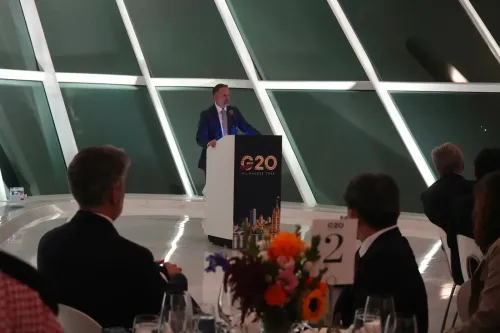
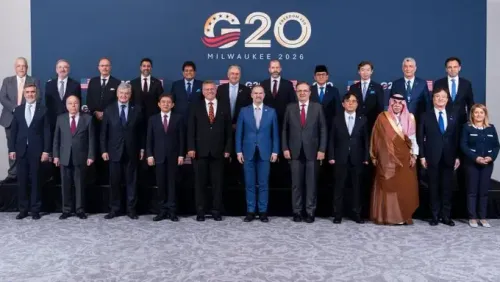
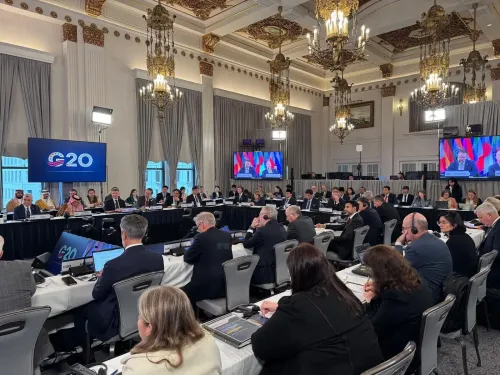
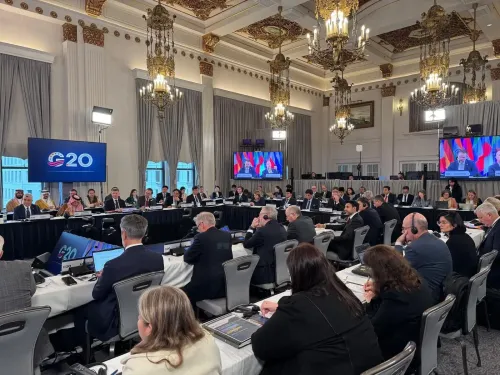
G20 trade ministers debate MFN reform at Milwaukee meet
Synopsis
For the first time in recent memory, G20 trade ministers have put the Most-Favoured Nation rule — the bedrock of global trade since 1947 — formally up for debate. Milwaukee produced no deal, but the range of reform proposals tabled signals that the non-discrimination principle underpinning the WTO is under genuine pressure from both advanced and developing economies.
Key Takeaways
G20 trade ministers met in Milwaukee on 30 September–1 October 2026 and formally debated reforming the Most-Favoured Nation (MFN) principle.
The US presidency argued MFN had failed to promote reciprocity and could block responses to unfair trade practices.
Proposals included targeted MFN changes , expanded exceptions, 'closed' plurilateral agreements , and review of GATT Article XXIV .
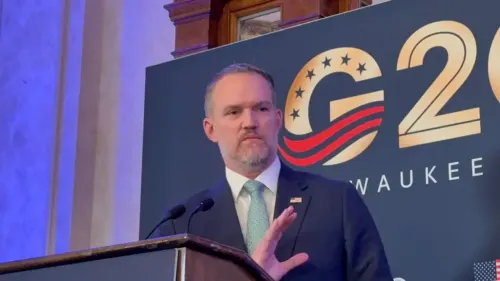
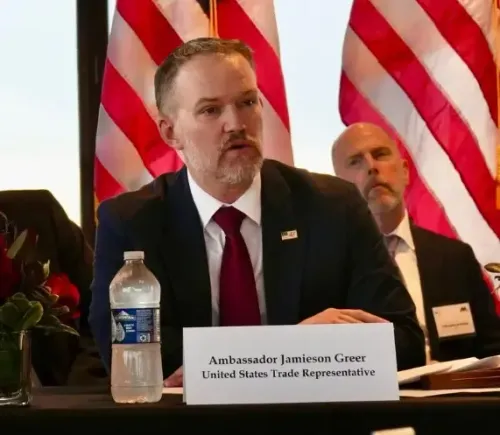
US Trade Representative Jamieson Greer welcomed growing member interest in revisiting MFN.
No agreement was reached; the chair's statement described Milwaukee as 'the beginning' of a 'serious and necessary deliberation.' The meeting also addressed food weaponisation, excess industrial capacity, and forced labour in supply chains.
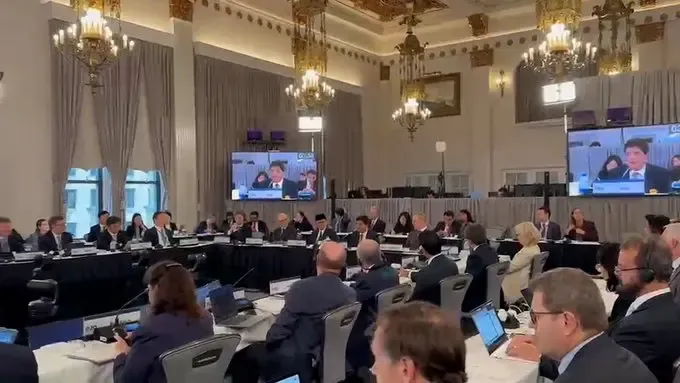
G20 trade ministers convened in Milwaukee on 30 September–1 October 2026 and opened a potentially far-reaching debate over revising the Most-Favoured Nation (MFN) principle — the cornerstone of the multilateral trading system — with a growing number of member economies signalling willingness to explore treating trading partners differently under specific circumstances. The Milwaukee meeting, held under the US G20 presidency, marks the first structured multilateral deliberation on MFN reform in recent memory.
What the MFN Debate Is About
Under the MFN principle, World Trade Organization (WTO) members are generally required to extend any trade advantage granted to one member to all other WTO members, subject to permitted exceptions. The rule has underpinned global commerce for decades, but critics argue it has not kept pace with contemporary trade realities.
The US presidency argued that the MFN principle had failed to promote reciprocity and balance, and could prevent countries from negotiating arrangements designed to address what they regard as unfair trade practices. Many G20 members, however, continued to describe MFN as a foundational pillar of the multilateral trading system, reflecting the deep divisions on the issue.
Key Proposals Discussed
Despite those divisions, the Milwaukee discussions moved well beyond a general philosophical review. Several concrete reform pathways were put on the table:
Some members expressed willingness to consider targeted changes to MFN to achieve rebalancing, expanding the exceptions to unconditional MFN, and issuing legal interpretations that could permit greater use of existing exceptions. Reviewing Article XXIV of the General Agreement on Tariffs and Trade (GATT) was also among the possibilities discussed.
Another proposal involved so-called 'closed' plurilateral agreements — an arrangement under which countries undertaking stronger commitments would receive MFN treatment, while the benefits of an agreement would accrue only to participating countries. Several members also proposed making trade remedies faster, more automatic, and more directly targeted at the source of trade distortions.
The reasons cited by members for differential treatment included economic security, an unlevel playing field, value-based standards, and the development of high-standard marketplaces.
What the US Said
US Trade Representative Jamieson Greer said after the ministerial that the discussions indicated growing interest in examining the principle. 'I'm encouraged that members across the development spectrum indicated that they see merit in considering how the MFN principle might be improved to address today's global trade environment,' Greer said.
Notably, the chair's statement described the Milwaukee discussions as the beginning rather than the conclusion of the process. 'Overall, the wide range of views expressed by G20 members underscored that these sessions marked the beginning of a serious and necessary deliberation about MFN reform,' it stated.
Broader Agenda at Milwaukee
The MFN debate formed part of a wider examination of the international trading system at the Milwaukee ministerial. The other three priorities taken up by ministers were: the weaponisation of food through coercive trade measures, structural excess capacity and production, and eliminating forced labour in global supply chains.
No agreement to change the MFN principle emerged from Milwaukee; instead, the meeting recorded a range of proposals and divergent views that could form the basis for further deliberations. The United States holds the G20 presidency in 2026, with the chair's statement noting that Washington looks forward to the United Kingdom assuming the presidency in 2027.
With the G20 trade track now formally engaged on MFN reform, the direction of future talks — and India's positioning on them — will be closely watched by emerging economies that have historically benefited from the principle's non-discrimination guarantee.
Point of View
And any formalised weakening — however incremental — would reshape the legal geography of global trade. The US push for 'rebalancing' language is transparently aimed at institutionalising the kind of selective tariff discrimination it has already deployed unilaterally; the danger is that multilateralising that logic gives every country cover to do the same. For India, which has benefited from MFN access in goods exports while selectively using its own trade remedy toolkit, the stakes are high: a world of closed plurilaterals would reward the largest trading blocs and marginalise mid-size economies that lack the leverage to join or shape those clubs.
NationPress
3 Oct 2026
Frequently Asked Questions
What is the Most-Favoured Nation (MFN) principle and why is it under debate?
The MFN principle requires WTO members to extend any trade advantage granted to one member to all other members, ensuring non-discrimination in global commerce. It is under debate at the G20 because the US and a growing number of members argue it has failed to promote reciprocity and may prevent responses to unfair trade practices.
What reforms did G20 members propose at the Milwaukee meeting?
Members proposed targeted changes to MFN to achieve rebalancing, expanding exceptions to unconditional MFN, legal reinterpretations of existing exceptions, review of GATT Article XXIV, and 'closed' plurilateral agreements where benefits accrue only to participating countries. Several members also called for faster and more automatic trade remedies.
Did the G20 agree to change the MFN principle at Milwaukee?
No agreement was reached. The chair's statement described the Milwaukee discussions as 'the beginning of a serious and necessary deliberation,' with a wide range of divergent views recorded for further consideration.
What did US Trade Representative Jamieson Greer say about MFN reform?
Greer said he was encouraged that members 'across the development spectrum' indicated they see merit in considering how the MFN principle might be improved to address today's global trade environment, signalling US satisfaction with the direction of the debate.
What else was discussed at the Milwaukee G20 trade ministers meeting?
Beyond MFN, the three other priorities were the weaponisation of food through coercive trade measures, structural excess capacity and production, and eliminating forced labour in global supply chains. The US holds the G20 presidency in 2026, with the UK set to assume it in 2027.