Hiroshima marks 81st atomic bombing anniversary amid nuclear fears
Synopsis
Eighty-one years after the bomb fell, Hiroshima’s memorial is no longer just a ritual of grief — it is a live policy battleground. With 128 local assemblies from 36 prefectures pushing back against a reported government move to revise Japan’s Three Non-Nuclear Principles, the anniversary has exposed a widening fracture between Japan’s pacifist identity and its ruling bloc’s security calculus.
Key Takeaways
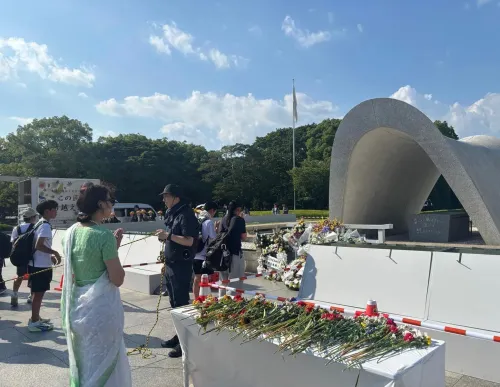
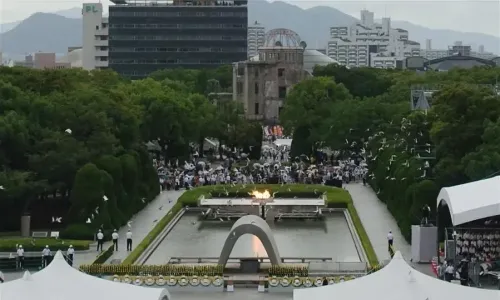
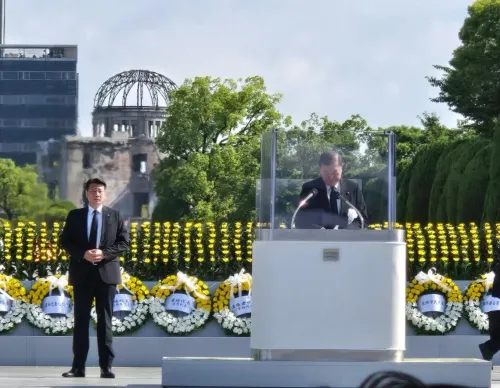
Hiroshima observed the 81st anniversary of the US atomic bombing on 6 August 2026 at Peace Memorial Park .
Mayor Kazumi Matsui delivered the Peace Declaration , warning against normalising the use of force and calling for multilateral nuclear disarmament.
A moment of silence was held at 8:15 am local time , marking the exact moment the bomb detonated in 1945 , killing around 140,000 people by year-end.
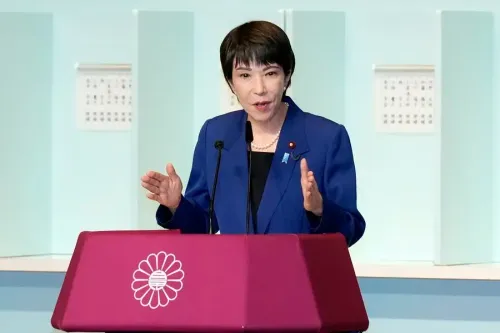
Reports indicate the government of PM Sanae Takaichi is considering revising Japan’s Three Non-Nuclear Principles .
At least 128 local assemblies from 36 prefectures have submitted petitions to the Diet urging the government to uphold the principles — a record high , according to Tokyo Shimbun.
Hiroshima on Thursday, 6 August 2026 observed the 81st anniversary of the US atomic bombing of the city, with the annual memorial ceremony drawing renewed attention to nuclear risks as global tensions continue to mount. The commemoration at Peace Memorial Park came amid deepening debate within Japan over its own long-standing nuclear non-proliferation commitments.
Peace Declaration and Key Warnings
Hiroshima Mayor Kazumi Matsui delivered the Peace Declaration, urging the international community to pursue nuclear disarmament through multilateral frameworks. He warned that minimising the human cost of nuclear weapons and accepting force as a tool of statecraft could set off cycles of violent retaliation. 'Downplaying the inhumanity of nuclear weapons and accepting the use of force to pursue one’s own prosperity risks cycles of violent retaliation that could ultimately result in another Hiroshima or Nagasaki,' Matsui said.
A moment of silence was observed at 8:15 am local time — the exact moment the bomb detonated over the city on 6 August 1945, killing approximately 140,000 people by the end of that year. Three days later, a second atomic bomb struck Nagasaki in southwestern Japan, making Japan the only nation in history to have suffered nuclear attacks.
Ageing Survivors, Younger Responsibility
As the population of hibakusha (atomic bombing survivors) continues to shrink, Matsui called on younger generations to carry forward the push for nuclear abolition and build broad societal consensus. The appeal reflects a growing institutional concern that first-hand testimony — long central to Japan’s anti-nuclear identity — will soon be lost entirely.
Japan’s Three Non-Nuclear Principles Under Pressure
Japan has historically upheld the Three Non-Nuclear Principles, which bar the country from possessing, producing, or permitting the introduction of nuclear weapons into its territory. However, calls to revise these principles have reportedly grown within Japan’s ruling bloc in recent years.
According to reports, the government of Prime Minister Sanae Takaichi — who took office in October last year — has been considering revising the principle that prohibits the introduction of nuclear weapons into Japan. The reported move has triggered concern across multiple sectors of Japanese society.
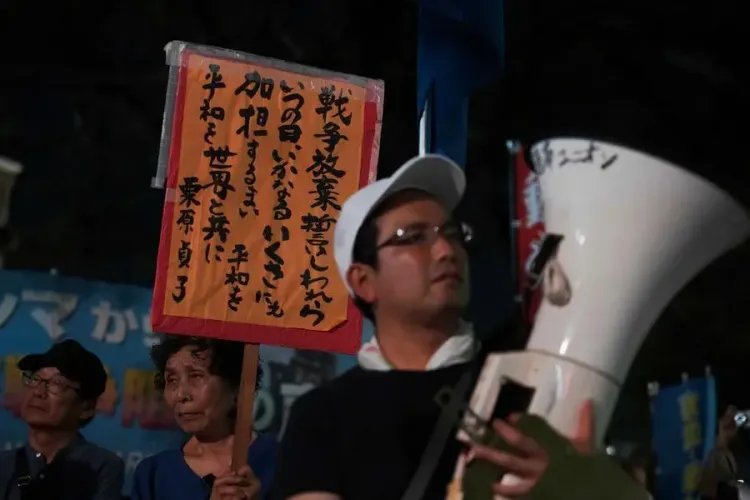
Tokyo Shimbun reported on Wednesday that at least 128 local assemblies from 36 prefectures across Japan have submitted written opinions to the Diet — Japan’s parliament — urging the government to uphold the Three Non-Nuclear Principles. The figure reportedly marks a record high, reflecting the depth of public unease over the possible policy shift.
Broader Context
This year’s ceremony arrives at a moment of heightened global nuclear anxiety, with multiple flashpoints — from Eastern Europe to the Indo-Pacific — keeping disarmament advocates on edge. Notably, the Hiroshima anniversary has in recent years become not only a site of mourning but also a platform for live geopolitical debate, as the gap between survivor memory and policy reality widens. How Japan navigates the tension between its pacifist constitution and evolving security pressures will be closely watched in the months ahead.
Point of View
Institutionalised pushback against the Takaichi government’s reported security pivot. Japan’s pacifist identity has always been under quiet pressure; what is new is how openly the ruling bloc is now willing to test it. The annual Hiroshima ceremony, once a moment of solemn consensus, is increasingly a mirror of a nation genuinely divided over what its wartime past should demand of its future.
NationPress
20 Sept 2026
Frequently Asked Questions
What happened at Hiroshima’s 81st atomic bombing anniversary ceremony?
Hiroshima held its annual memorial at Peace Memorial Park on 6 August 2026, observing a moment of silence at 8:15 am — the exact time the bomb detonated in 1945. Mayor Kazumi Matsui delivered the Peace Declaration, calling for multilateral nuclear disarmament and warning against downplaying the inhumanity of nuclear weapons.
How many people died in the Hiroshima atomic bombing?
Approximately 140,000 people died in Hiroshima by the end of 1945 following the US atomic bombing on 6 August 1945. Three days later, a second bomb struck Nagasaki, making Japan the only country to have suffered nuclear attacks.
What are Japan’s Three Non-Nuclear Principles?
Japan’s Three Non-Nuclear Principles prohibit the country from possessing, producing, or permitting the introduction of nuclear weapons into its territory. Japan adopted these principles as a cornerstone of its post-war pacifist policy, given its unique status as the only nation to have faced nuclear attacks.
Why is there debate over Japan’s nuclear principles now?
Reports indicate that the government of Prime Minister Sanae Takaichi, who took office in October last year, is considering revising the principle barring the introduction of nuclear weapons into Japan. The reported move has prompted at least 128 local assemblies from 36 prefectures to petition the Diet to uphold the existing principles — a record high, according to Tokyo Shimbun.
What did Hiroshima Mayor Kazumi Matsui say in the Peace Declaration?
Mayor Matsui warned that minimising the inhumanity of nuclear weapons and accepting force as a means of advancing national interests risks triggering cycles of violent retaliation that could lead to another Hiroshima or Nagasaki. He also called on younger generations to lead efforts toward nuclear abolition as the survivor population continues to decline.