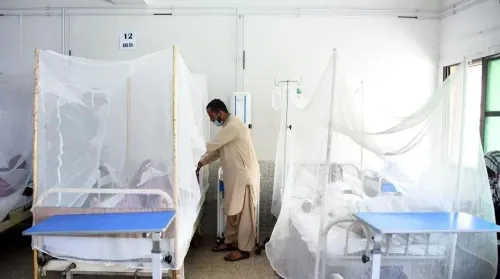
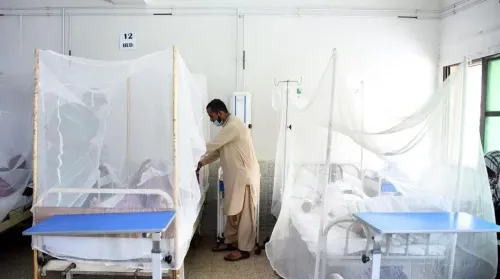
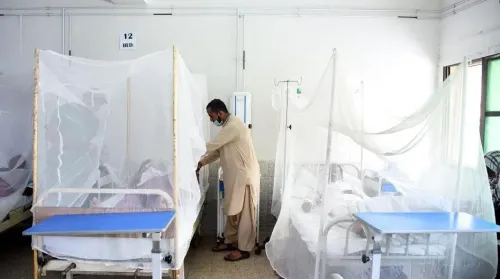
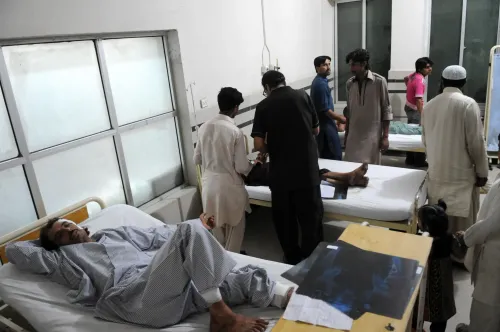
HIV and Hepatitis C surge exposes Pakistan's failing healthcare system
Synopsis
Pakistan spends just 0.8% of GDP on public health for 250 million people — and it shows. The country now reportedly carries the world's highest Hepatitis C burden and one of the fastest-growing HIV epidemics in the WHO Eastern Mediterranean region, driven not by a lack of policy but by a near-total failure to enforce it.
Key Takeaways
Pakistan's public health expenditure stands at just 0.8% of GDP , according to the Pakistan Economic Survey 2025-26 .
Pakistan has one of the fastest-growing HIV epidemics in the WHO Eastern Mediterranean region , even as global cases have fallen since 2010 .
The country reportedly carries the world's highest Hepatitis C (HCV) burden , linked to unsafe injections and poorly screened blood.
Dr Naazir Mahmood of a private university in Karachi highlights a stark urban divide in Sindh : world-class private hospitals alongside severely under-resourced public facilities.
Existing programmes such as the Lady Health Worker scheme remain underfunded and insufficiently supported.
Analysts argue meaningful reform requires accountable data systems and regulators empowered to enforce consequences.
Unsafe injections, poorly screened blood, inadequate sterilisation, and weak regulatory enforcement are driving a sharp rise in HIV and Hepatitis C cases across Pakistan, according to an analysis published in The News International. The findings paint a stark picture of a public health system that has long prioritised form over function — regulations exist, but enforcement remains elusive.
Public Spending That Tells Its Own Story
The Pakistan Economic Survey 2025-26 places public health expenditure at just 0.8 per cent of GDP in a nation of more than 250 million people. Dr Naazir Mahmood, Dean of the Faculty of Liberal Arts at a private university in Karachi, argues that this figure is not merely a statistic — it reflects what the state actually values. Even as global HIV infections have fallen substantially since 2010, Pakistan has emerged as one of the fastest-growing HIV epidemics in the WHO Eastern Mediterranean region, according to her assessment.
The Twin Epidemics and Their Common Thread
Pakistan reportedly now carries the world's highest Hepatitis C virus (HCV) burden. Dr Mahmood identifies a clear common thread linking both crises: blood-borne transmission through unsafe injections, inadequately screened blood supplies, and poor sterilisation practices. These are not isolated failures — they are systemic, she argues, rooted in weak regulation that has persisted despite repeated government crackdowns and policy commitments.
The Karachi Paradox: Excellence and Failure Side by Side
Dr Mahmood draws on her own experience in Karachi to illustrate what she calls the 'extraordinary coexistence of medical excellence and public-health failure.' She writes: 'Karachi has superb doctors, sophisticated private hospitals, and specialists capable of providing treatment comparable with that available internationally. Yet travel beyond the protected islands occupied by the affluent and another Sindh appears. In poorer districts, the citizen encounters overcrowded facilities, shortages, unregulated practitioners, unsafe water and sanitation problems that turn ordinary illness into a recurring hazard. This is why health inequality cannot be understood merely by counting hospitals.'
This two-tier reality, she contends, means that geography and income — not just illness — determine survival in Sindh.
Malnutrition, Sanitation, and the Wider Crisis
Beyond infectious disease, Dr Mahmood points to malnutrition as both a cause and consequence of systemic failure. Poor sanitation, inadequate breastfeeding support, deficient diets, frequent infections, poverty, and limited access to primary healthcare compound one another. 'A malnourished child is therefore not simply evidence of an empty kitchen,' she writes. 'The child may also be evidence of a broken water system, an absent health worker, an undereducated mother and a dysfunctional local government.'
What Pakistan Needs to Turn the Tide
Dr Mahmood acknowledges that some infrastructure for reform already exists — notably Pakistan's Lady Health Worker programme — but argues it is chronically underfunded and under-supported. Her prescription is specific: safe syringes, screened blood, functioning primary healthcare, properly funded community health workers, clean drinking water, sewerage, nutrition programmes, vaccination, family planning, and breastfeeding support. Crucially, she stresses the need for 'data that cannot be hidden, regulators who actually regulate and officials who face consequences when systems fail.' The difficulty, she notes, 'lies less in discovering what ought to be done than in ensuring that somebody actually does it.'
Without structural accountability, analysts warn, Pakistan's twin epidemics are unlikely to reverse course regardless of the programmes announced.
Point of View
Regulatory frameworks, and epidemic response committees for decades, yet HIV is accelerating and HCV burden is the highest on earth. The real accountability gap is not in diagnosis but in consequence: no official faces meaningful repercussions when systems fail. Until that changes, each new report will read much like the last.
NationPress
23 Sept 2026
Frequently Asked Questions
Why are HIV cases rising in Pakistan despite global declines?
Pakistan has one of the fastest-growing HIV epidemics in the WHO Eastern Mediterranean region, driven primarily by unsafe injections, poorly screened blood transfusions, and weak regulatory enforcement — even as new HIV infections have fallen substantially worldwide since 2010.
Why does Pakistan have the world's highest Hepatitis C burden?
Pakistan's Hepatitis C crisis is reportedly linked to the same systemic failures driving HIV: unsafe injection practices, inadequately screened blood supplies, and poor sterilisation standards in healthcare settings. Weak regulation means these practices persist despite existing policy frameworks.
How much does Pakistan spend on public health?
According to the Pakistan Economic Survey 2025-26, public health expenditure stands at just 0.8% of GDP — a figure analysts describe as critically low for a country of more than 250 million people.
What reforms does the analysis recommend for Pakistan's healthcare?
Dr Naazir Mahmood calls for safe syringes, screened blood supplies, functioning primary healthcare, properly funded Lady Health Workers, clean drinking water, sewerage, nutrition programmes, vaccination, and family planning support. She also emphasises the need for transparent data systems and regulators empowered to hold officials accountable.
What is the Lady Health Worker programme and why does it matter?
Pakistan's Lady Health Worker programme is a community-based primary healthcare initiative that Dr Mahmood identifies as an existing infrastructure asset with reform potential. However, she argues it remains chronically underfunded and under-supported, limiting its ability to address the country's public health gaps.