Houthi attacks force Pakistan to balance Saudi defence pact with Iran ties
Synopsis
Pakistan signed the Mecca Joint Defence Agreement with Saudi Arabia and Turkey in August, but Houthi attacks are now forcing Islamabad into a corner — honouring the pact risks alienating Iran, a neighbour Pakistan cannot afford to lose. With USD 8 billion in Saudi financial support on the line and Iranian lawmakers already voicing alarm, Pakistan's foreign policy is under its sharpest regional stress test in years.
Key Takeaways
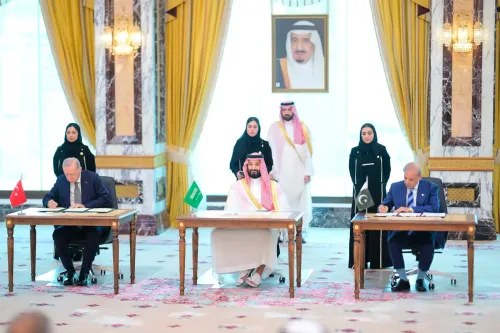
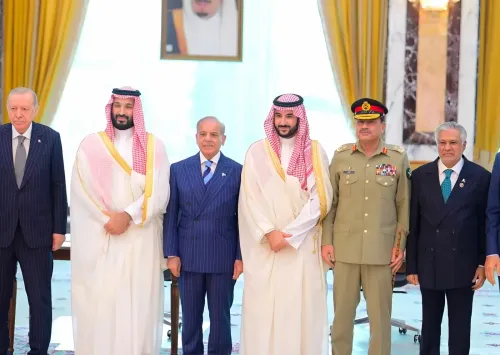
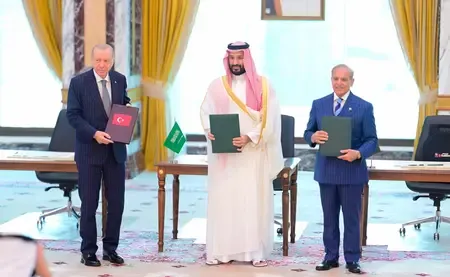
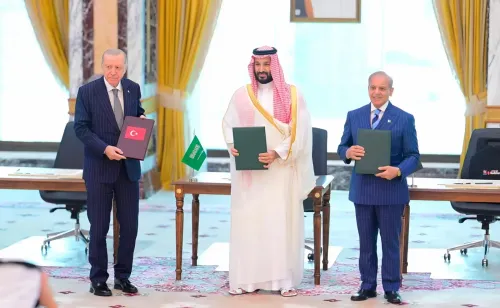
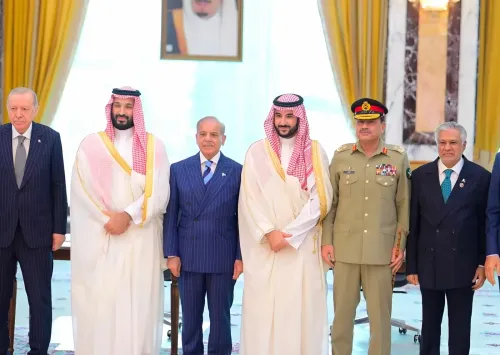
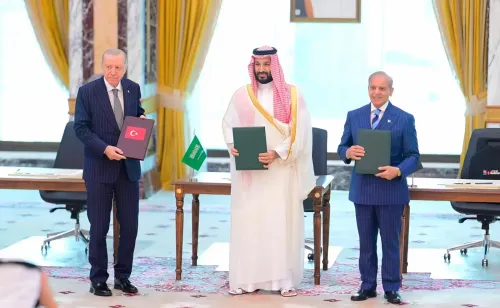
Pakistan , Saudi Arabia , and Turkey signed the Mecca Joint Defence Agreement on 7 August , treating an attack on one as an attack on all.
Pakistan has deployed a 'substantial' number of military forces inside Saudi Arabia but says its troops will not enter Yemen for offensive action.
Saudi Arabia has pledged USD 3 billion in fresh financial assistance and an extension of an existing USD 5 billion deposit to Pakistan .
Iranian Foreign Ministry spokesperson Esmaeil Baqaei expressed concern over reports of Pakistani troop deployment, calling it a 'rumour' he hoped would not prove true.
President Asif Ali Zardari and Prime Minister Shehbaz Sharif both sought to reassure Tehran that the pact is 'defensive and not directed against any country.' Experts warn deeper Pakistani military involvement against Iran-backed Houthis could have major consequences both at home and across the border.
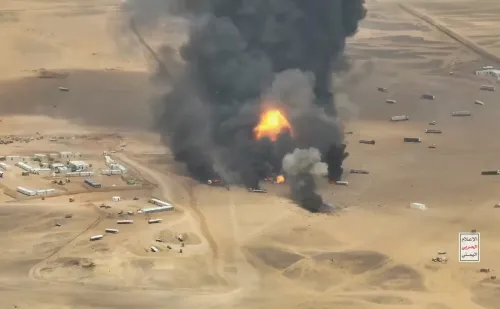
Pakistan is facing mounting pressure to honour its military commitments to Saudi Arabia as Houthi attacks on the kingdom intensify, even as experts caution that deeper military involvement risks straining Islamabad's fragile relationship with Iran. The dilemma, detailed in a geopolitical analysis, underscores the increasingly difficult tightrope Pakistan must walk in the volatile Middle East.
The Mecca Joint Defence Agreement
On 7 August, Saudi Arabia, Pakistan, and Turkey signed the Mecca Joint Defence Agreement, under which an attack on any one signatory is treated as an attack on all three. Pakistan's Ministry of Foreign Affairs described the pact as a shared commitment to 'further strengthen collective security and to promote peace, security, and stability in the region and beyond.' The agreement formalised what had previously been an informal but well-understood security alignment between the three Muslim-majority states.
Pakistan's Strategic Dilemma
'Islamabad's dilemma brings together two relationships it has strong reasons to preserve — a defence and financial partnership with Riyadh, and cooperation with Tehran on border security, trade, energy and regional diplomacy,' according to a recent analysis of the situation.
Umer Karim, a doctoral researcher at the University of Birmingham, articulated the bind bluntly. 'Pakistan cannot stay idle as it has committed itself to Saudi Arabia's defence,' he was quoted as saying, while noting that defending the kingdom against Iran-backed Houthis could undermine Islamabad's parallel efforts to deepen ties with Tehran and facilitate diplomatic talks between Iran and the United States.
Iran's Displeasure and Pakistan's Reassurances
Iranian lawmakers have openly criticised Pakistan's growing military alignment with Riyadh. Earlier this month, Iranian Foreign Ministry spokesperson Esmaeil Baqaei voiced concern over reports of a possible deployment of Pakistani soldiers, adding that he hoped the reports were only a 'rumour.'
Pakistani leadership moved quickly to offer reassurances. President Asif Ali Zardari maintained that the agreement was 'defensive and not directed against any country,' while Prime Minister Shehbaz Sharif reaffirmed Pakistan's commitment to Saudi security the following day. Notably, Pakistan's Foreign Ministry has clarified that its forces are deployed to defend Saudi Arabia and will not enter Yemen to conduct offensive operations against the Houthis.
Financial Stakes for Islamabad
The calculus is not purely military. Saudi Arabia has pledged an additional USD 3 billion in financial assistance to Pakistan, alongside an extension of an existing USD 5 billion deposit — support that is critical for a country under persistent pressure on its external finances. Walking away from, or diluting, its Saudi commitment could put that financial lifeline at risk.
What Comes Next
On Friday, Pakistan's Foreign Ministry confirmed that Islamabad has deployed a 'substantial' number of military forces and resources inside Saudi Arabia. With Houthi attacks showing no sign of abating and Iranian lawmakers watching closely, the pressure on Islamabad to define — and defend — the limits of its military role is only set to grow.
Point of View
Energy dependencies, and a shared stake in Afghan stability. What mainstream coverage misses is that Pakistan's 'defensive only' carve-out may not hold if Houthi attacks escalate and Riyadh demands more. The real question is whether Islamabad has the diplomatic bandwidth to manage both relationships simultaneously — or whether the Mecca pact has already foreclosed that option.
NationPress
16 Oct 2026
Frequently Asked Questions
What is the Mecca Joint Defence Agreement?
The Mecca Joint Defence Agreement is a trilateral security pact signed on 7 August by Saudi Arabia, Pakistan, and Turkey, under which an armed attack on any one signatory is treated as an attack on all three. Pakistan's Foreign Ministry described it as a commitment to collective security, peace, and regional stability.
Why is the agreement putting Pakistan in a difficult position?
The pact commits Pakistan to defending Saudi Arabia, but Houthi attacks on the kingdom are backed by Iran — a neighbour with which Pakistan maintains critical ties on border security, trade, energy, and diplomacy. Deeper Pakistani military involvement against the Houthis risks damaging those ties with Tehran, according to analysts.
How has Iran reacted to Pakistan's military deployment in Saudi Arabia?
Iranian lawmakers have criticised Pakistan's growing military alignment with Riyadh. Iranian Foreign Ministry spokesperson Esmaeil Baqaei this month voiced concern over reports of Pakistani troop deployment, saying he hoped the reports were only a 'rumour.' Pakistan's president and prime minister subsequently offered reassurances that the pact is not directed against any country.
What financial support does Saudi Arabia provide to Pakistan?
Saudi Arabia has pledged an additional USD 3 billion in financial assistance to Pakistan, alongside an extension of an existing USD 5 billion deposit. This support is significant for Pakistan, which faces persistent pressure on its external finances.
Will Pakistani troops enter Yemen to fight the Houthis?
No — Pakistan's Foreign Ministry has explicitly stated that its forces are deployed to defend Saudi Arabia and will not enter Yemen to carry out offensive operations against the Houthis. Islamabad has described its role as purely defensive under the terms of the Mecca Joint Defence Agreement.