Houthis claim 10 districts seized in Yemen, threaten Saudi Aramco and airports
Synopsis
Houthi forces claim to have seized 10 districts and 7,100 sq km in Yemen's Taiz and Lahj provinces, pushing to within 70 km of Aden after government troops withdrew from the Bab al-Mandeb Strait. With Aramco now named as 'a primary target' and Saudi airspace declared unsafe, the conflict has entered a potentially destabilising new phase with direct implications for global energy security.
Key Takeaways
Houthi military spokesperson Yahya Sarea claimed the seizure of 10 districts covering 7,100 sq km across Taiz and Lahj provinces on 17 November 2026 .
The group claims to have defeated 12 military divisions comprising 60 brigades of Saudi-backed government forces; claims are unverified.
A Houthi military source named Saudi Aramco as 'a primary target' and warned that Saudi airspace was unsafe beyond Mecca and Medina .
Saudi airstrikes on a factory in Hodeidah reportedly killed at least 7 people and wounded 9 , with further casualties among rescue personnel.
Government forces' withdrawal from Bab al-Mandeb positions has reportedly left Houthi fighters roughly 70 km from Aden .
Yemen's civil war has been ongoing since 2014 , with the Saudi-led coalition intervening since 2015 .
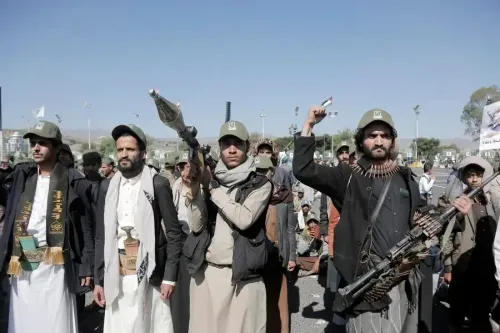
Yemen's Houthi group announced on Tuesday, 17 November 2026 that it had seized 10 districts spanning roughly 7,100 square kilometres across the southwestern provinces of Taiz and Lahj, in what it described as a sweeping offensive against government forces backed by the Saudi-led coalition. The group simultaneously threatened to escalate strikes on Saudi oil facilities and airports, naming Aramco as 'a primary target.'
Key Developments on the Ground
In a televised statement broadcast by the Houthi-run al-Masirah TV, Houthi military spokesperson Yahya Sarea claimed that the operation, conducted following weeks of fierce fighting near the strategic Bab al-Mandeb Strait, had defeated 12 military divisions comprising 60 brigades of government forces. The claims could not be independently verified.
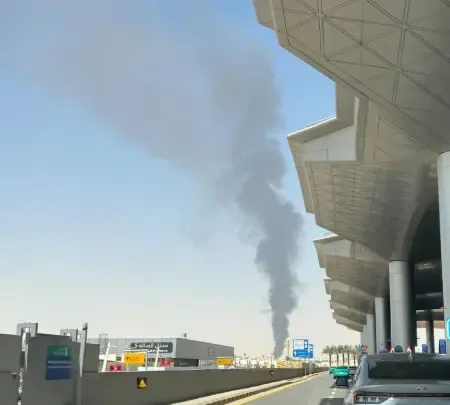
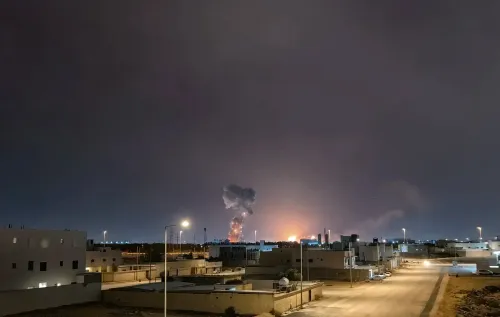
A separate Houthi military source, speaking through the Sanaa-based, Houthi-run Saba news agency, warned that Saudi airspace was unsafe everywhere except over Mecca and Medina, urged civilians to avoid Saudi airports and facilities, and explicitly identified Saudi Aramco as a primary target. Spokesperson Sarea vowed to continue deep strikes inside Saudi Arabia until the coalition ends its military campaign and lifts restrictions on Houthi-controlled areas.
Reported Civilian Casualties in Hodeidah and Sanaa
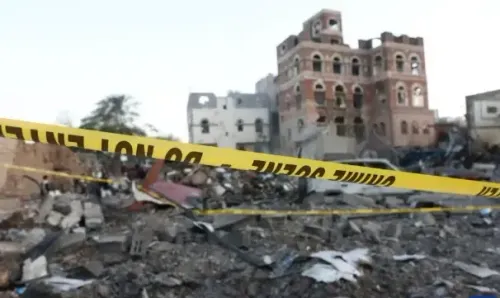
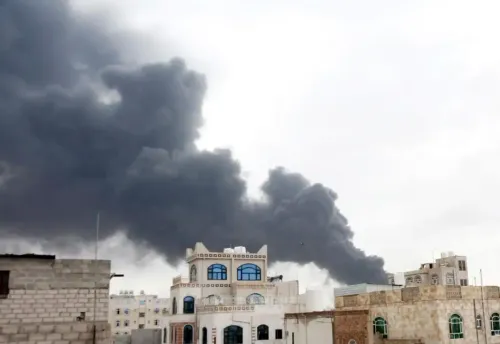
Al-Masirah TV reported that Saudi airstrikes hit the Al-Khawlani sponge factory in an industrial zone north of the Red Sea port city of Hodeidah, killing at least seven people and wounding nine others, according to a preliminary toll. Subsequent strikes on the same facility reportedly caused additional casualties among rescue and civil defence personnel. Two further airstrikes were said to have targeted Houthi-controlled Kamaran Island off Hodeidah's coast.
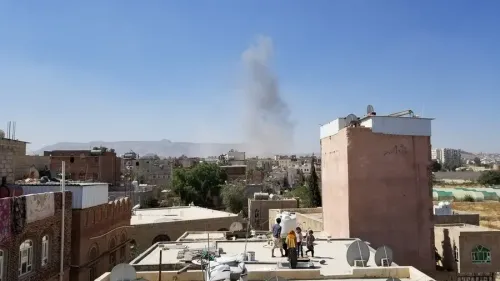
Earlier on Tuesday, the broadcaster said at least nine people were injured in what it described as Saudi airstrikes on a footwear and textile factory in Sanaa, destroying the facility and causing extensive material damage. All casualty figures from Houthi sources could not be independently verified.
Strategic Setback Near Bab al-Mandeb
The claimed territorial gains follow a significant setback for Saudi-backed government forces, which recently withdrew from positions overlooking the Bab al-Mandeb Strait — a critical chokepoint linking the Red Sea and the Gulf of Aden and one of the world's busiest shipping lanes. The withdrawal has reportedly left Houthi forces approximately 70 km from Aden, the southern port city serving as the internationally recognised government's primary base. The development has heightened fears of a potential Houthi advance toward the city.
Background: A Decade of Conflict
Yemen has been engulfed in conflict since late 2014, when the Houthis seized Sanaa and large swathes of the country's north. The Saudi-led coalition intervened militarily in 2015 in support of the internationally recognised Yemeni government, triggering what the United Nations has repeatedly described as one of the world's worst humanitarian crises. This is not the first time the Houthis have threatened Saudi energy infrastructure — previous threats have rattled oil markets and prompted heightened security measures around Aramco installations. The latest territorial claims, if confirmed, would represent one of the more significant shifts in front lines in recent months.
What Comes Next
The threat to Aramco and Saudi airports could draw a sharp response from Riyadh and intensify coalition air operations. Any verified Houthi advance toward Aden would mark a major escalation, potentially destabilising the fragile political arrangements underpinning the internationally recognised government. Regional observers and international stakeholders will be watching whether the coalition's air campaign is recalibrated in response to the reported territorial losses.
Point of View
Which after a decade has failed to restore government control. Naming Aramco as a 'primary target' is a calculated escalation designed to internationalise the pressure on Riyadh and rattle energy markets. The withdrawal from Bab al-Mandeb is the more consequential development for India and global trade: any Houthi control over that chokepoint amplifies the already-elevated threat to Red Sea shipping. What mainstream coverage underplays is that Aden's vulnerability is not new — the city has been a contested symbol rather than a secure base for years, and that structural weakness is now being exposed at a moment when international attention is stretched thin.
NationPress
17 Nov 2026
Frequently Asked Questions
What territory have the Houthis claimed to seize in Yemen?
The Houthis claim to have seized 10 districts covering approximately 7,100 square kilometres across the southwestern provinces of Taiz and Lahj, following weeks of fighting near the Bab al-Mandeb Strait. The claims were announced on 17 November 2026 and could not be independently verified.
Why are Houthis threatening Saudi Aramco and airports?
A Houthi military source named Saudi Aramco as 'a primary target' and warned that Saudi airspace was unsafe everywhere except over Mecca and Medina, as leverage to pressure the Saudi-led coalition to end its military campaign and lift restrictions on Houthi-controlled areas of Yemen. Such threats against Saudi energy infrastructure have been used by the Houthis periodically throughout the decade-long conflict.
How significant is the reported Houthi advance toward Aden?
Government forces' withdrawal from positions overlooking the Bab al-Mandeb Strait has reportedly left Houthi fighters roughly 70 km from Aden, the southern port city that serves as the main base for the internationally recognised Yemeni government. A verified advance of that scale would represent one of the most significant strategic shifts in the conflict in recent years.
What casualties have been reported in the latest Yemen fighting?
Al-Masirah TV reported that Saudi airstrikes on the Al-Khawlani sponge factory in Hodeidah killed at least seven people and wounded nine, with further casualties among rescue personnel. At least nine more were reportedly injured in a strike on a Sanaa factory. All figures come from Houthi-run sources and could not be independently verified.
How long has the Yemen conflict been going on?
Yemen has been in conflict since late 2014, when the Houthis seized Sanaa and much of the country's north. The Saudi-led coalition intervened militarily in 2015 to support the internationally recognised government, making this a decade-long war that the United Nations has described as one of the world's gravest humanitarian crises.