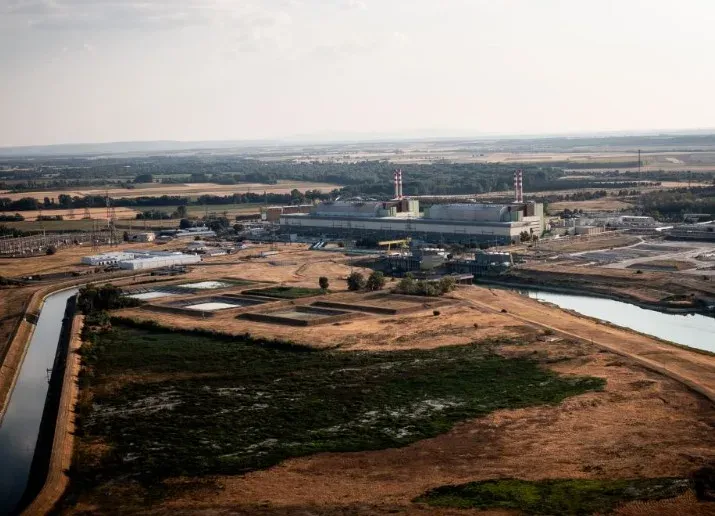
Paks nuclear plant faces shutdown as Danube drought hits Hungary
Synopsis
Hungary's Paks nuclear plant — responsible for nearly half the country's electricity — is on the brink of its first-ever complete shutdown, forced not by a reactor fault but by a drought-stricken Danube that can no longer supply adequate cooling water. With 40°C heat forecast and 300 companies already pledging voluntary cutbacks, the next five days will test whether Europe's energy infrastructure is truly prepared for climate-driven crises.
Key Takeaways
Prime Minister Peter Magyar declared Hungary is entering its 'most critical five days' as the Danube River hits record-low levels.
The last operating turbine at the Paks nuclear power plant is expected to shut down Sunday night or Monday , potentially for over a month.
Paks generates nearly half of Hungary's domestic electricity from its 2,000 MW capacity — a full closure would be the first in its 44-year history .
Temperatures are forecast to exceed 40 degrees Celsius ; a government decree effective Saturday enables mandatory industrial consumption cuts if needed.
Nearly 300 companies , including MOL , Audi , and Gedeon Richter , have pledged voluntary demand reductions for Monday .
Decorative lighting on Budapest's Parliament, Buda Castle , and the Chain Bridge was turned off on Sunday evening to conserve power.
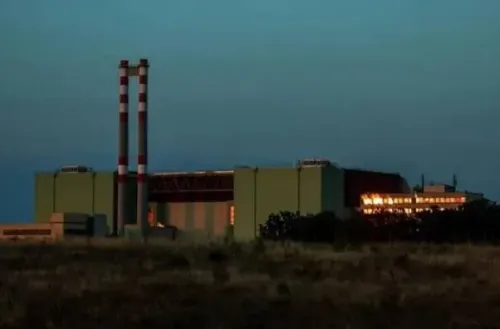
Hungary is entering what Prime Minister Peter Magyar has called its 'most critical five days' as dangerously low water levels on the Danube River push the Paks nuclear power plant toward a complete shutdown — an event that would be the first in the facility's 44-year history. Magyar warned on Sunday that the last operational turbine at the 2,000 MW plant could be switched off as early as Sunday night or Monday, with a full outage potentially lasting more than a month.
Why the Plant Is Being Shut Down
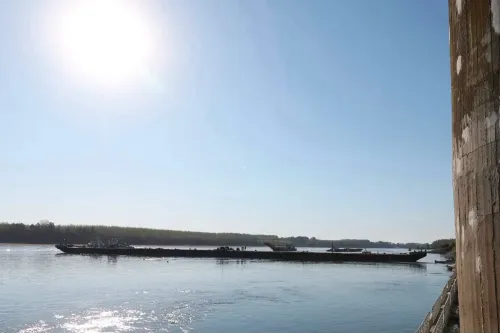
Nuclear safety regulations require the Paks plant to maintain minimum river water levels for cooling operations. Record-low levels on the Danube, driven by an extreme heatwave with temperatures forecast to exceed 40 degrees Celsius, have made continued safe operation untenable. Magyar explained this on social media ahead of his television address, stressing that nuclear safety remains fully guaranteed throughout the process.
Around 50 water management specialists have been deployed alongside plant personnel to sustain cooling operations for as long as safely possible. Paks currently accounts for nearly half of Hungary's domestic electricity generation, making its shutdown a significant stress test for the national grid.
Emergency Measures Activated
The Hungarian government has moved swiftly to stabilise the grid. A decree that took effect on Saturday empowers authorities to impose mandatory consumption cutbacks on large industrial consumers if voluntary measures prove insufficient. So far, Magyar noted, businesses and citizens have responded without enforcement being required.
Major corporations — including MOL, Audi, and Gedeon Richter — have pledged substantial demand reductions. Nearly 300 companies committed to voluntary cutbacks for Monday, joined by state-owned enterprises, most local councils, civil society organisations, and religious institutions.
Iconic Landmarks Go Dark
As a visible conservation signal, decorative lighting on Budapest's most recognisable landmarks was switched off on Sunday evening, including the Hungarian Parliament, Buda Castle, and the Chain Bridge. The symbolic blackout underscores the severity of the crisis and the government's appeal for public solidarity.
Additional steps include suspending most rail freight operations between 5:00 pm and 10:00 pm from Monday, bringing reserve power units to standby, and maximising electricity imports from neighbouring countries.
What Comes Next
'If Hungary can get through these most critical five days, temperatures are expected to drop by 5 to 7 degrees Celsius,' Magyar said, indicating that the acute phase of the crisis has a defined horizon. He emphasised that restrictions on household consumption remain an absolute last resort. Should the plant remain offline for a month or longer, Hungary's dependence on electricity imports and the resilience of its emergency demand-management framework will face a prolonged test — one without precedent in the country's post-Cold War energy history.
Point of View
Not through storms or flooding, but through the slow erosion of river flows needed for cooling. Paks was built in a different hydrological era. The fact that a single five-day heatwave can bring half a country's electricity generation to a halt reveals how brittle the assumption of 'stable river cooling' has become. The voluntary corporate response is encouraging, but the structural question — whether Paks can be retrofitted for lower-water operation, or whether Hungary needs a fundamentally different generation mix — is one that emergency decrees cannot answer.
NationPress
17 Sept 2026
Frequently Asked Questions
Why is the Paks nuclear plant being shut down?
The Paks plant is being shut down because record-low water levels on the Danube River, caused by an extreme heatwave, have made it impossible to maintain the minimum cooling water supply required by nuclear safety regulations. Prime Minister Peter Magyar confirmed the last operating turbine is expected to go offline Sunday night or Monday.
How much of Hungary's electricity does Paks generate?
Paks accounts for nearly half of Hungary's domestic electricity generation, operating at a capacity of 2,000 MW. A full shutdown would be the first in the plant's 44-year history, creating a significant shortfall that Hungary plans to offset through imports and demand reduction.
What emergency measures has the Hungarian government introduced?
A government decree effective Saturday allows authorities to impose mandatory consumption cuts on large industrial consumers if voluntary measures fall short. Additional steps include halting most rail freight between 5:00 pm and 10:00 pm from Monday, activating reserve power units, and maximising electricity imports.
Which companies have pledged to reduce electricity consumption?
Nearly 300 companies committed to voluntary demand reductions for Monday, including MOL, Audi, and Gedeon Richter. State-owned firms, most local councils, civil society groups, and churches have also pledged cuts.
How long could the Paks shutdown last?
Prime Minister Magyar warned the plant could remain offline for more than a month. He indicated that if Hungary navigates the next five critical days, temperatures are expected to fall by 5 to 7 degrees Celsius, easing pressure on the grid — but the plant's return to service depends on the Danube recovering sufficient water levels.