Paks nuclear plant restarts Unit 3 turbine as Danube levels recover
Synopsis
Hungary's Paks nuclear plant — which supplies roughly half the country's electricity — came within one turbine of a near-total shutdown as the Danube hit record lows. Emergency barges and a submerged weir raised river levels by 15 cm, buying enough cooling capacity to restart operations. Full 2,000 MW output is now targeted by Wednesday, but the episode exposes a structural vulnerability that drought alone can trigger a national energy crisis.
Key Takeaways
Paks Nuclear Power Plant restarted Turbine 6 of Unit 3 after record-low Danube water levels had forced deep output cuts.
At the crisis peak in late July , only one turbine of the plant's eight remained in operation.
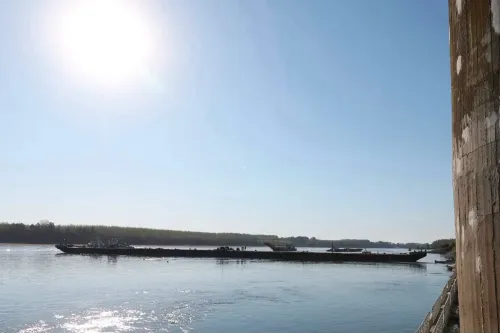
Emergency measures — a submerged weir and two 80-metre barges sunk across the Danube — raised water levels at the plant by 15 centimetres .
Prime Minister Peter Magyar said full nominal capacity of 2,000 megawatts is expected to be restored by Wednesday .
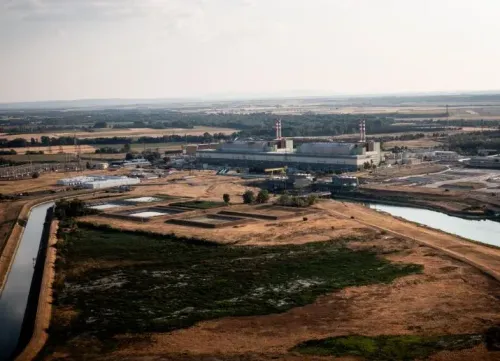
Paks , located 100 km south of Budapest , normally generates around half of Hungary's electricity .
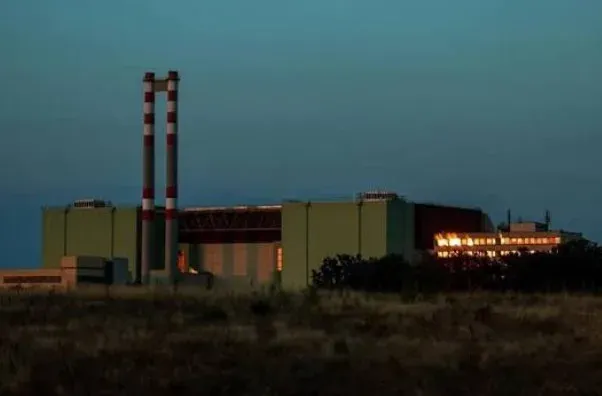
Hungary's Paks Nuclear Power Plant has restarted Turbine 6 of Unit 3, Prime Minister Peter Magyar confirmed on Saturday evening, as emergency engineering interventions and recovering water levels in the Danube River restored adequate cooling conditions at the facility. The restart marks a significant step toward full operational recovery after a weeks-long crisis triggered by record-low river levels.
How the Crisis Unfolded
By the end of July, critically low Danube water levels forced Paks — located roughly 100 km south of Budapest — to drastically curtail output, leaving just one turbine in operation at the crisis's lowest point. The plant, which houses four VVER-440 reactor units and eight turbines in total, ordinarily supplies around half of Hungary's electricity. All four reactors depend on Danube water for cooling, making river levels a direct operational constraint.
Emergency Measures Taken
The Hungarian government last week ordered a set of emergency construction measures to shore up the plant's cooling-water supply. These included the construction of a submerged weir on the Danube between Paks and Dunaszentbenedek, as well as the controlled sinking of two 80-metre barges across a section of the river. Magyar said on Wednesday that the partially completed weir and the barges had together raised the water level at the plant by approximately 15 centimetres — enough to sustain the two turbines then in operation despite the river remaining at critically low levels.
Path to Full Capacity
A second turbine had already resumed production on 10 August as conditions began improving. With Turbine 6 now back online, the plant is moving steadily toward complete restoration. 'If everything goes according to plan, the nuclear power plant will reach its nominal capacity of 2,000 megawatts by Wednesday, and one month after the first turbine was shut down, all eight turbines will once again be in operation,' Magyar said during a live broadcast from the plant.
Broader Significance
The Paks episode underscores a growing vulnerability for nuclear facilities across Europe that rely on river water for cooling — a risk that has intensified as extreme low-water events become more frequent. This is not the first time a European nuclear plant has faced cooling constraints due to drought; similar incidents have been recorded at French and German facilities in recent years. For Hungary, which lacks significant alternative baseload generation, the stakes of any prolonged Paks outage are particularly acute. The government's swift deployment of river-engineering measures reflects that urgency. How long the weir and barge interventions remain effective will depend on whether Danube levels continue to recover in the coming weeks.
Point of View
Not less. Hungary's rapid deployment of river-engineering fixes — barges and a weir — was effective in the short term, but it is an improvised solution to a structural problem. The deeper question is whether Paks, which underpins half of Hungary's baseload, has a credible long-term cooling strategy for a drier Danube. That question applies equally to nuclear operators across Central and Southern Europe.
NationPress
7 Oct 2026
Frequently Asked Questions
Why did the Paks nuclear plant reduce output?
Record-low water levels in the Danube River severely restricted the volume of cooling water the plant could draw, forcing it to cut production sharply. At the worst point, only one of the plant's eight turbines remained in operation.
What emergency measures did Hungary take to protect the Paks plant?
The government ordered the construction of a submerged weir on the Danube between Paks and Dunaszentbenedek, and the controlled sinking of two 80-metre barges across part of the river. These measures raised the water level at the plant by approximately 15 centimetres.
When will Paks return to full capacity?
Prime Minister Peter Magyar said the plant is expected to reach its nominal capacity of 2,000 megawatts by Wednesday, with all eight turbines back in operation approximately one month after the first turbine was taken offline.
How important is the Paks plant to Hungary's energy supply?
Paks is Hungary's sole nuclear facility and normally generates around half of the country's total electricity. Any prolonged outage has direct consequences for national energy security and grid stability.
Is this kind of nuclear cooling crisis common in Europe?
Similar cooling-water constraints have affected nuclear plants in France and Germany during recent drought periods. As extreme low-water events on European rivers become more frequent, the risk to river-cooled nuclear facilities is a growing concern for energy regulators across the continent.