IBM's Arvind Krishna backs Trump's quantum computing push at White House
Synopsis
At a White House event on 23 June, IBM's Arvind Krishna publicly committed to delivering quantum systems within Trump's current term — a rare, on-record industry pledge tied directly to presidential executive orders. With $2 billion already deployed and two EOs now signed, the US is making its most structured quantum bet yet, and India-origin tech leadership is at the centre of it.
Key Takeaways
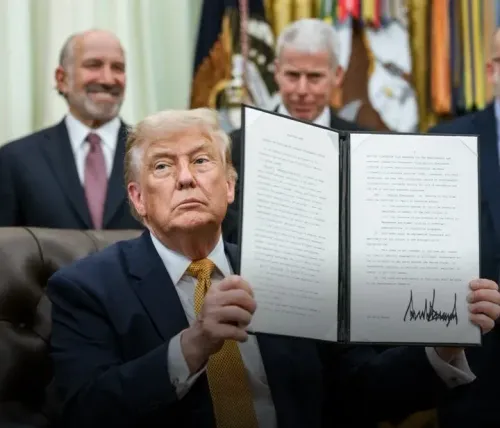
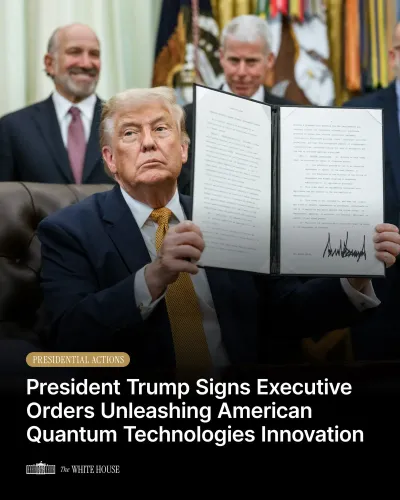
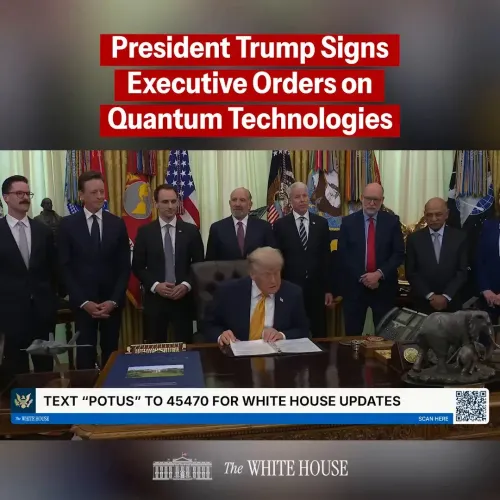
President Donald Trump signed two executive orders on 23 June to accelerate quantum computing development and post-quantum encryption across federal agencies.
IBM CEO Arvind Krishna committed to delivering quantum systems within Trump's current presidential term.
Commerce Secretary Howard Lutnick cited a recent $2 billion federal investment in quantum research.
Google President Ruth Porat described quantum computing as 'a breakthrough critical technology' and affirmed US leadership in the field.
The broader US strategy includes supply chain strengthening, workforce training, and quantum-resistant cyber security standards for all federal agencies.
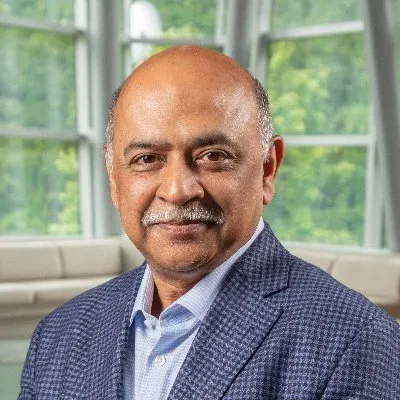
IBM Chief Executive Arvind Krishna, one of the most prominent Indian-origin technology leaders in the United States, joined senior Trump administration officials and industry executives at the White House on 23 June as President Donald Trump unveiled a sweeping new strategy to accelerate America's quantum computing development and bolster its cyber security infrastructure.
Two Executive Orders Signed
President Trump signed two executive orders at the event. The first directs federal efforts toward advancing a scientifically relevant quantum computer. The second accelerates the transition to post-quantum cryptography — encryption systems designed to protect government networks and critical infrastructure against future quantum-enabled cyber threats. Krishna welcomed both orders, crediting government leadership as a catalyst for private-sector momentum.
'So, first, I'd like to thank the president for both of these EOs,' Krishna said at the White House event. 'The role of the government is often underestimated. The role of the government in pushing innovation and technology forward is what both of these will achieve.'
What IBM's CEO Committed To
Krishna argued that federal coordination across departments would give companies like IBM the confidence to scale up investment. 'Asking for the investment in quantum computing, asking that the departments all work together will actually accelerate what industry does, because that gives us the confidence to invest even more,' he said. He added that IBM was committed to delivering quantum systems within Trump's current term — a direct response to requests made by Cabinet secretaries at the event.
Industry and Government Voices
Google President Ruth Porat, who also appeared at the event, called quantum computing 'a breakthrough critical technology' and asserted that the United States remains at the forefront of the field. 'The US is in the lead, will stay in the lead,' she said. Commerce Secretary Howard Lutnick highlighted a recent $2 billion federal investment in quantum research, and pointed to government support for domestic semiconductor and manufacturing facilities needed to produce next-generation quantum hardware inside the United States.
Broader US Quantum Strategy
The administration's wider quantum agenda spans expanding research programmes, strengthening domestic supply chains, scaling workforce training, and deploying quantum-resistant cyber security standards across federal agencies. Trump framed quantum technology as 'the next generation of innovation across computing, sensing, and networking,' declaring: 'We're already the leader by a lot, and we're going to be now the leader by a lot more.' This comes amid intensifying global competition in quantum research, particularly from China, which has made state-backed quantum investment a national priority. Notably, the White House event signals a rare alignment of Big Tech and the current administration on a long-term science policy agenda.
What Comes Next
Federal agencies are now expected to begin transitioning their systems toward post-quantum encryption standards, while industry partners such as IBM and Google are anticipated to deepen their collaboration with government research bodies. The commitment to deliver operational quantum systems within the current presidential term sets a concrete — and ambitious — benchmark that the industry will be held to.
Point of View
And government-industry alignment is necessary — but without independent benchmarking, these commitments risk becoming another round of headline numbers that flatter without delivering.
NationPress
23 Jun 2026
Frequently Asked Questions
What did President Trump announce on quantum computing on 23 June?
President Trump signed two executive orders on 23 June — one to advance the development of a scientifically relevant quantum computer, and another to accelerate the adoption of post-quantum cryptography across federal agencies and critical infrastructure.
What did IBM CEO Arvind Krishna commit to at the White House event?
Arvind Krishna committed that IBM would deliver operational quantum systems within President Trump's current term, citing the executive orders as giving the industry confidence to invest further in quantum development.
How much has the US government invested in quantum computing?
Commerce Secretary Howard Lutnick stated at the event that the government had invested $2 billion in quantum research just weeks prior, alongside support for domestic semiconductor and manufacturing facilities for next-generation quantum hardware.
Why does post-quantum cryptography matter for federal agencies?
Post-quantum cryptography refers to encryption systems designed to withstand attacks from future quantum computers, which could break current encryption standards. The executive order directs federal agencies to transition their systems to these new standards to protect government data and critical infrastructure.
Who else appeared alongside Arvind Krishna at the White House quantum event?
Google President Ruth Porat and Commerce Secretary Howard Lutnick appeared alongside IBM's Arvind Krishna, along with other senior Trump administration officials involved in science and technology policy.