India among top energy growth drivers as Hormuz crisis reshapes global supply: IEA

Synopsis
The IEA's World Energy Outlook 2026 names India as one of the biggest drivers of global energy demand growth — even as the Hormuz crisis has already wiped 2.8 billion barrels of Gulf oil from world supply. India's electric-car surge and green ammonia potential offer a cleaner way out, but the risk of coal lock-in across Asia remains the report's most uncomfortable finding.
Key Takeaways
India and Southeast Asia are projected to record the largest overall increase in energy needs, according to the IEA's World Energy Outlook 2026 .
The Strait of Hormuz disruption has caused cumulative losses of 2.8 billion barrels of oil and 60 billion cubic metres of gas by November 2026 .
Before the crisis, 80% of oil and nearly 90% of LNG through the strait was destined for Asian markets .
India is seeing a sharp year-on-year rise in electric-car sales and has potential for green ammonia expansion alongside Morocco .
India's economic growth has outpaced emissions growth over much of the past decade, the IEA found.
Energy-security pressures could prolong coal reliance across Asia even as solar and nuclear gain globally.
India and Southeast Asia are on course to record the largest overall increase in energy needs globally, the International Energy Agency (IEA) said in its World Energy Outlook 2026, as the agency warned that disruptions through the Strait of Hormuz are already leaving lasting imprints on global energy supplies and government policy. The report, released on 20 November 2026, stops short of treating its scenarios as firm forecasts, stressing that outcomes will hinge on the crisis's duration, government responses, and shifts in consumer behaviour.
India's Role in the Energy Transition
IEA Executive Director Fatih Birol set a stark tone in the report's accompanying statement: 'I don't see any credible pathway for the energy world to return to the way it was before.' Against that backdrop, India emerges as a country experiencing a sharp year-on-year rise in electric-car sales, as consumers respond to the crisis-driven fuel pressures. The report also identifies scope for India and Morocco to expand green ammonia production, which could help diversify fertiliser supplies and industrial feedstocks — a strategically significant opportunity for one of the world's largest agricultural economies.
Notably, the IEA found that economic growth in India had outpaced growth in emissions over much of the past decade, linking the broader decoupling of growth and emissions to efficiency improvements, cleaner energy adoption, and structural changes in the economy. This positions India as a relative bright spot even within a disrupted global energy landscape.
Scale of the Hormuz Disruption
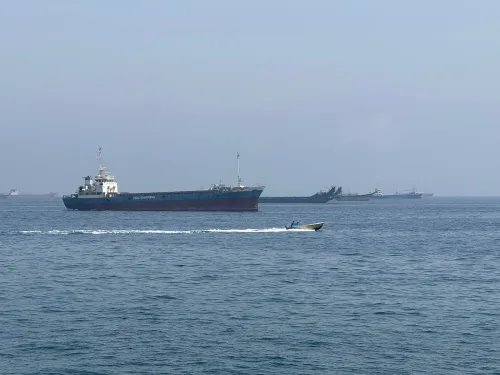
The Strait of Hormuz is the world's most critical energy chokepoint, and Asia's exposure to the current disruption is, by the IEA's own reckoning, substantial. Before the crisis, roughly 80% of oil and nearly 90% of liquefied natural gas (LNG) transiting the strait were destined for Asian markets. By November 2026, the disruption had caused cumulative supply losses of 2.8 billion barrels of oil and 60 billion cubic metres of gas from the Gulf, according to the report.
Fuel-importing countries, the IEA said, are responding by combining immediate cost-cushioning measures with longer-term efforts to strengthen supply chains, expand renewable energy, and increase electrification — a dual-track strategy that mirrors India's own policy posture.
Global Winners and Risks
Globally, solar power and nuclear energy stand to gain from governments' preference for domestically available resources, the agency said. However, the response will not be uniformly cleaner: energy-security concerns could also prolong reliance on domestic coal in Asian countries seeking to reduce exposure to imported oil and gas, potentially delaying decarbonisation timelines.
A durable resolution of the Middle East conflict could produce a markedly different market outcome. Recovering oil supplies and a delayed expansion of LNG production capacity could favour buyers and place downward pressure on prices, even as countries work to rebuild strategic inventories.
COP31 Backdrop
The findings arrive as governments convene for the COP31 climate talks in Antalya, Turkey, where delegates are deliberating on how the global shift towards electrification can simultaneously reduce dependence on fossil fuels. Australia's climate and energy minister, Chris Bowen, argued that the crisis response should reduce long-term dependence on energy supplies vulnerable to overseas conflicts. Critics of the current trajectory argue that unless coal-phase-out timelines are defended, the Hormuz crisis risks becoming a pretext for locking in carbon-intensive infrastructure for another decade.
The IEA's Paris-based team emphasised that which scenario ultimately materialises will depend on political choices made in the coming months — placing governments, including New Delhi, at the centre of the energy story for 2027 and beyond.
Point of View
Yet it rests partly on a services-heavy GDP mix rather than deep industrial decarbonisation. The Hormuz crisis hands New Delhi a genuine policy lever — accelerate EVs and green ammonia to reduce import exposure — but the same crisis also makes cheap domestic coal politically irresistible. The report's most underreported finding is that the clean-or-coal fork is not distant: the infrastructure decisions made in the next 12 to 18 months will lock in energy pathways for the 2030s. India's response will matter as much as any OPEC or Fed decision in determining whether the Hormuz shock becomes a catalyst for transition or a detour back to carbon.
NationPress
20 Nov 2026
Frequently Asked Questions
What does the IEA World Energy Outlook 2026 say about India?
The IEA's World Energy Outlook 2026 identifies India as one of the biggest drivers of global energy demand growth, alongside Southeast Asia. It also notes a sharp year-on-year rise in India's electric-car sales and highlights India's potential to expand green ammonia production.
How has the Strait of Hormuz crisis affected global energy supplies?
By November 2026, the Hormuz disruption had caused cumulative losses of 2.8 billion barrels of oil and 60 billion cubic metres of gas from the Gulf. Before the crisis, around 80% of oil and nearly 90% of LNG through the strait was destined for Asian markets, making Asia the most exposed region.
Could the Hormuz crisis push Asian countries back to coal?
Yes, the IEA warns that energy-security concerns could prolong reliance on domestic coal in Asian countries seeking to reduce exposure to imported oil and gas. This risks delaying decarbonisation timelines even as solar and nuclear energy gain globally.
What is the significance of the report's release at COP31?
The World Energy Outlook 2026 was published as governments gathered for COP31 climate talks in Antalya, Turkey. Delegates are debating how the global shift towards electrification can reduce fossil-fuel dependence — a discussion the Hormuz crisis has made more urgent and more politically charged.
What did IEA Executive Director Fatih Birol say about the energy outlook?
Birol said in the report's accompanying statement: 'I don't see any credible pathway for the energy world to return to the way it was before.' He stressed that the duration of the crisis, government responses, and consumer behaviour will determine which energy pathways ultimately emerge.