South Africa IEC urges calm as ANC leads DA with 33% votes counted
Synopsis
South Africa's local government elections are delivering a tightly contested early count — the ANC leading at 32% against the DA's 28% with only a third of votes in. With the MK Party surging in KwaZulu-Natal and coalition arithmetic looming in key municipalities, the 2026 polls could further reshape the ANC's already-weakened grip on local power.
Key Takeaways
The IEC called for calm on 5 November 2026 as counting continued after Wednesday's local government elections in South Africa.
With approximately 33% of votes counted, the ANC held around 32% of the national proportional representation vote against the DA's 28% .
The MK Party was leading in KwaZulu-Natal ; the DA was ahead in Gauteng and the Western Cape .
The IEC warned against spreading unverified results, cautioning that disinformation could 'incite violence.' The ANC's national vote fell to 45.59% in 2021 and further to approximately 40% in 2024, making 2026 a critical test of its local support base.
Where no party wins outright, coalition negotiations will determine which parties govern at the municipal level.
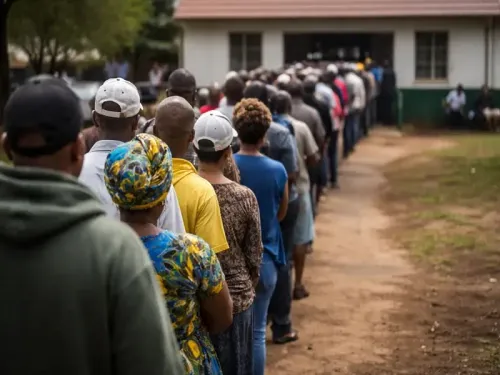
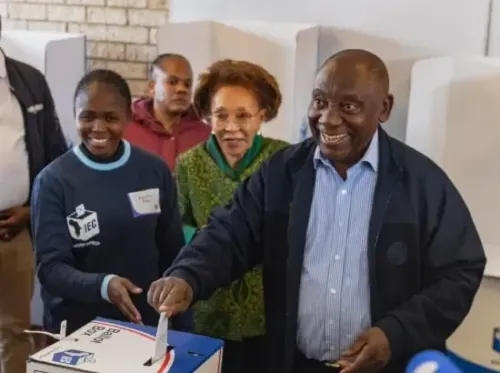
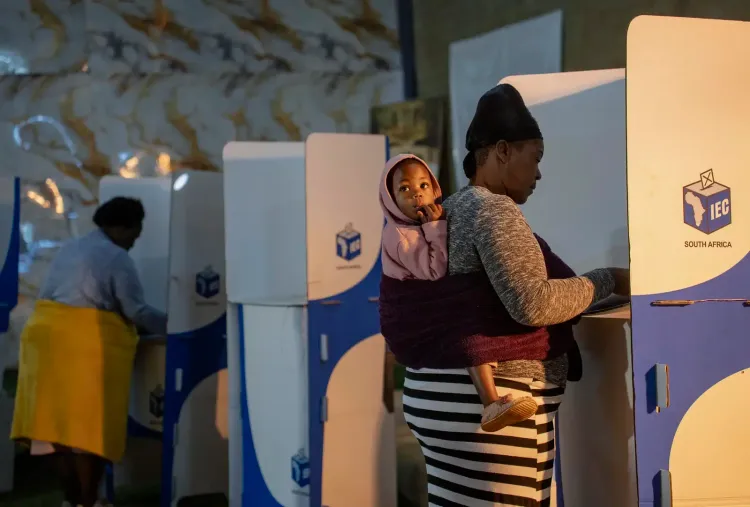
The Electoral Commission of South Africa (IEC) on Thursday, 5 November 2026 called for patience and restraint as vote counting and results verification continued following Wednesday's local government elections, which unfolded largely without incident despite some localised disruptions. Sy Mamabolo, Chief Electoral Officer of the IEC, briefed the media Thursday morning on the progress of counting and results-processing operations.
Counting Underway Through the Night
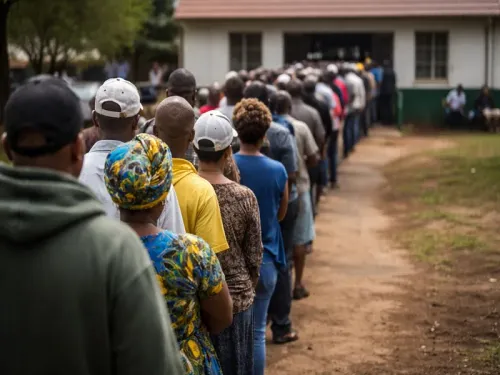
Mamabolo confirmed that ballots were being counted at voting stations across the country, with results being simultaneously captured, transmitted, and verified to ensure accuracy and integrity. 'The counting, tallying and verification process continued throughout the night in the presence of political party agents, independent candidate agents and accredited observers, reinforcing the transparency, integrity and accountability of the electoral process,' he said.
The IEC also warned stakeholders against circulating unverified information or disinformation about the results, stating that such actions 'could create unnecessary tensions, incite violence and potentially lead to property damage and injuries.'
Early Results: ANC Ahead, DA Close Behind
Preliminary figures released on Thursday showed the ruling African National Congress (ANC) narrowly ahead of its chief rival, the Democratic Alliance (DA), in the national proportional representation vote. With approximately 33 per cent of votes counted, the ANC had secured around 32 per cent of the national vote against the DA's approximately 28 per cent, according to provisional data. These figures remain subject to significant change as more voting districts complete their counting and verification processes.
Regional Picture: MK Party Leads in KwaZulu-Natal
Early returns pointed to notable regional variation. The ANC maintained leads in several provinces, while the DA was ahead in Gauteng and the Western Cape. The uMkhonto weSizwe (MK) Party was leading in KwaZulu-Natal. Notably, since these are local government elections, the composition of individual municipal councils — not national vote share alone — will determine which parties actually govern at the local level. Where no party secures an outright majority, coalition negotiations are expected to be decisive.
What Is at Stake for the ANC
The 2026 local government elections represent a significant political test for the ANC, which has experienced a steady decline in electoral support over recent cycles. In the 2021 municipal elections, the party received 45.59 per cent of the national vote — falling below the 50 per cent threshold for the first time since the end of apartheid in 1994. The ANC subsequently lost its parliamentary majority in the 2024 national and provincial elections, securing approximately 40 per cent of the vote, which prompted the formation of a government of national unity.
What Happens Next
The IEC is expected to complete counting, verification, and auditing processes before formally announcing final results and the allocation of seats in municipal councils. All parties and candidates have been asked to allow the process to unfold without interference. How coalition dynamics play out in key municipalities — particularly those where no party wins outright — will shape South Africa's local governance landscape for the next term.
Point of View
And even a 'win' on provisional tallies may mask a governance crisis if the party cannot form stable municipal majorities without coalition partners. The MK Party's reported lead in KwaZulu-Natal is the detail that deserves closer scrutiny — a strong showing there would further fragment the opposition and complicate any neat two-party framing. South Africa's real test after this count is not who leads nationally, but who can actually run its cities.
NationPress
5 Nov 2026
Frequently Asked Questions
What is the current status of South Africa's 2026 local government election results?
Counting is ongoing as of 5 November 2026, with the IEC urging patience. Provisional figures with about 33% of votes counted show the ANC at approximately 32% and the DA at approximately 28% in the national proportional representation vote. Final results have not yet been declared.
Why is the IEC urging calm during the vote count?
The IEC's Chief Electoral Officer Sy Mamabolo warned that circulating unverified or false information about results could create unnecessary tensions, incite violence, and lead to property damage. The Commission has asked all parties and their supporters to allow the counting and verification process to conclude without interference.
Which party is leading in KwaZulu-Natal in the 2026 elections?
Early results indicated that the uMkhonto weSizwe (MK) Party was leading in KwaZulu-Natal, while the DA was ahead in Gauteng and the Western Cape. These figures remain provisional and could shift as more districts report.
How have the ANC's election results changed over recent years?
The ANC's support has declined steadily — it received 45.59% in the 2021 municipal elections, falling below 50% for the first time since the end of apartheid. It further dropped to approximately 40% in the 2024 national elections, which led to the formation of a government of national unity.
What happens if no party wins an outright majority in a municipality?
Where no single party secures an outright majority in a municipal council, coalition negotiations will determine which parties form the local administration. This is expected to be a decisive factor in several key municipalities based on early trends.