India at CICA Summit: Calls on Asian states to unite against cross-border terrorism
Synopsis
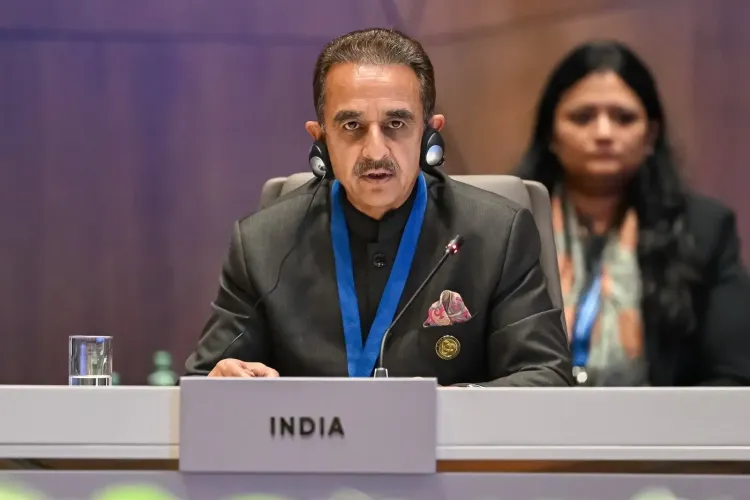
At the 7th CICA Summit in Baku, India's Minister of State for External Affairs Kirti Vardhan Singh put cross-border terrorism front and centre — invoking 'Vasudhaiva Kutumbakam' while calling on 28 member states, including Pakistan and China, to unite against it. The diplomatic weight of that ask, inside a room that contains New Delhi's most complicated neighbours, is what makes this moment matter.
Key Takeaways
Minister of State for External Affairs Kirti Vardhan Singh addressed the Plenary Session of the 7th CICA Summit in Baku, Azerbaijan on 15 October 2026 .
India called upon all 28 CICA member states to unite against cross-border terrorism .
Singh reiterated India's philosophy of 'Vasudhaiva Kutumbakam' (The World is One Family) as the foundation for Asian peace and cooperation.
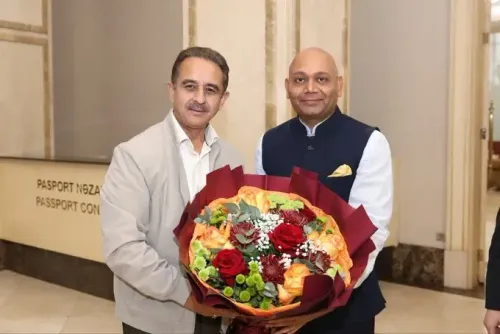
Singh arrived in Baku on Wednesday and was received by India's Ambassador to Azerbaijan, Abhay Kumar .
CICA was first proposed by Kazakhstan's Nursultan Nazarbayev at the UN General Assembly in 1992 .
CICA membership includes geopolitical rivals India, Pakistan, China, Iran, Israel , and Russia , making a terrorism consensus diplomatically complex.
Minister of State for External Affairs Kirti Vardhan Singh on Thursday, 15 October 2026, called upon all member states of the Conference on Interaction and Confidence Building Measures in Asia (CICA) to unite against cross-border terrorism, addressing the 7th CICA Summit in Baku, Azerbaijan. Singh also reiterated India's guiding philosophy of 'Vasudhaiva Kutumbakam' — the world is one family — as a framework for regional peace, cooperation, and shared security.
India's Stand at the Plenary Session
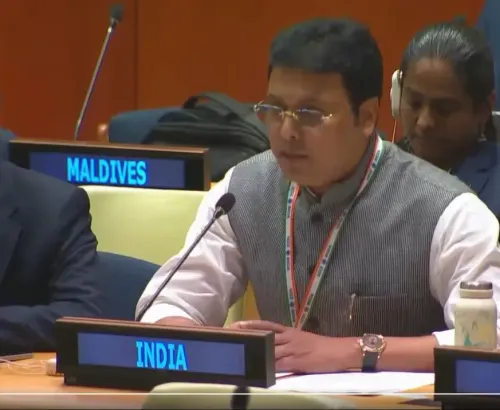
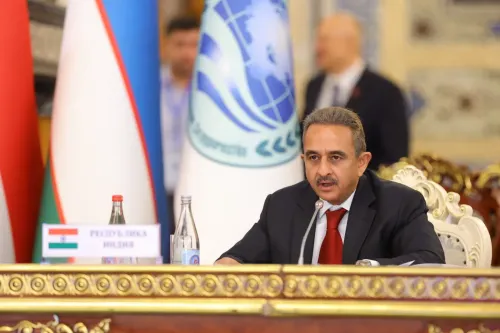
Singh addressed the Plenary Session of the summit, where he underscored India's commitment to multilateral dialogue on Asian stability. 'Emphasised India's vision of Vasudhaiva Kutumbakam (The World is One Family) for peace, cooperation, friendship and countering shared challenges. Called upon all Member States to unite against cross-border terrorism,' Singh said in a post on X following his address.
The call to action against cross-border terrorism carries particular weight given that CICA's membership includes nations with historically complex bilateral ties — among them India, Pakistan, China, and Iran — making any consensus on terrorism a diplomatically significant outcome.
Singh's Arrival and Reception in Baku
Singh arrived in Baku on Wednesday and was received by India's Ambassador to Azerbaijan, Abhay Kumar. On arrival, Singh had stated: 'I look forward to constructive deliberations on strengthening regional cooperation, building mutual trust, and advancing peace, stability and security across Asia.'
The ministerial-level representation — rather than a head-of-state delegation — reflects India's calibrated engagement with CICA, which it treats as a platform for multilateral confidence-building rather than binding security commitments.
What CICA Is and Why It Matters
CICA is a multi-national forum established to enhance cooperation and promote peace, security, and stability across Asia. The forum's foundational premise is that Asian security is indivisible from global stability. It currently has 28 member states, spanning South Asia, Central Asia, West Asia, and East Asia — including India, China, Russia, Kazakhstan, Pakistan, Israel, Iran, and Turkey, among others.
The idea was first proposed by Kazakhstan's then-President Nursultan Nazarbayev at the 47th Session of the United Nations General Assembly in 1992, with the explicit aim of creating an efficient structure for ensuring peace and security in Asia.
Broader Context: India's Counter-Terror Diplomacy
India's emphasis on cross-border terrorism at multilateral forums is a consistent thread in its foreign policy. This comes amid ongoing tensions related to state-sponsored terrorism emanating from its neighbourhood, and New Delhi has repeatedly sought to build international consensus — through platforms such as the United Nations, SCO, and now CICA — to isolate and name actors that enable transnational terror networks.
Notably, CICA's geographic and political diversity makes unanimous agreement on terrorism a difficult but symbolically important goal. India's push at Baku signals that New Delhi intends to keep the issue at the centre of regional security conversations, regardless of forum.
What to Watch Next
The outcomes of the 7th CICA Summit — including any joint declaration on terrorism or regional cooperation frameworks — are expected to be released in the coming days. India's position will be closely watched given the presence of both China and Pakistan as member states within the same grouping.
Point of View
Both of whom have historically blocked or diluted strong counter-terror language in multilateral settings. Invoking 'Vasudhaiva Kutumbakam' gives India a moral high ground, but platitudes about a 'world family' sit uneasily alongside unresolved bilateral tensions within the same membership list. The real test of this Baku engagement is whether any summit declaration contains actionable language on terror financing and safe havens — or whether it remains a statement of shared aspiration. India's consistent use of every multilateral platform to internationalise its counter-terror narrative is a deliberate strategy; its effectiveness depends on outcomes, not optics.
NationPress
15 Oct 2026
Frequently Asked Questions
What did India say at the 7th CICA Summit in Baku?
India's Minister of State for External Affairs Kirti Vardhan Singh called upon all 28 CICA member states to unite against cross-border terrorism at the 7th CICA Summit in Baku, Azerbaijan on 15 October 2026. He also emphasised India's vision of 'Vasudhaiva Kutumbakam' — the world is one family — as a guiding principle for peace and regional cooperation.
What is CICA and who are its members?
CICA, the Conference on Interaction and Confidence Building Measures in Asia, is a 28-member multilateral forum aimed at promoting peace, security, and stability across Asia. Its members include India, China, Russia, Pakistan, Iran, Israel, Kazakhstan, Turkey, and the UAE, among others. The forum was first proposed by Kazakhstan's President Nursultan Nazarbayev at the UN General Assembly in 1992.
Who represented India at the CICA Summit 2026?
Minister of State for External Affairs Kirti Vardhan Singh represented India at the 7th CICA Summit. He arrived in Baku on Wednesday and was received by India's Ambassador to Azerbaijan, Abhay Kumar.
Why does India raise cross-border terrorism at multilateral forums like CICA?
India consistently raises cross-border terrorism at multilateral platforms as a core element of its foreign policy, seeking to build international consensus against state-sponsored or state-tolerated terror networks in its neighbourhood. Platforms like CICA, the SCO, and the UN serve as arenas where India attempts to isolate actors that enable transnational terrorism.
Where was the 7th CICA Summit held?
The 7th CICA Summit was held in Baku, the capital of Azerbaijan, on 15 October 2026. India was represented at the Plenary Session by Minister of State for External Affairs Kirti Vardhan Singh.