India better placed than Pakistan to gain from Washington shift: Report
Synopsis
While Pakistan spent nearly US$5 million lobbying the Trump administration — including a $200,000-a-month contract tied to Trump Organisation insiders — India's bipartisan, institutionally grounded partnership with Washington has quietly strengthened. An Asia Times report argues the contrast exposes Islamabad's transactional approach as costly and fragile, leaving India better placed to shape its US ties as Washington's political landscape shifts.
Key Takeaways
An Asia Times report finds India better positioned than Pakistan to benefit from political changes in Washington due to deeper, institutionally grounded US ties.
Pakistan reportedly committed nearly US$5 million to contracts with six Washington lobbying firms to cultivate favour with the Trump administration.
Contracts included a $200,000-per-month deal with Seiden Law and a subcontract with Javelin Advisors , co-founded by former Trump Organisation insiders.
On 1 May 2026 , Pakistan's embassy locked into a new $1.2 million multi-year deal with Ervin Graves Strategy Group LLC to lobby the Pentagon and Capitol Hill .
American lawmakers have reportedly described Washington's engagement with Pakistan as transactional and its partnership with India as a long-term strategic commitment.
Pakistan's lobbying expenditure draws scrutiny given the country's ongoing dependence on IMF bailouts and recurring economic crises.
India is better positioned than Pakistan to capitalise on the political changes in Washington because its partnership with the United States rests on deeper, institutionally grounded ties — unlike Islamabad's approach, which reportedly relied on transactional dealings and an aggressive lobbying campaign targeting the Donald Trump administration, according to a report published by the Hong Kong-based English-language newspaper Asia Times.
Pakistan's Lobbying Blitz in Washington
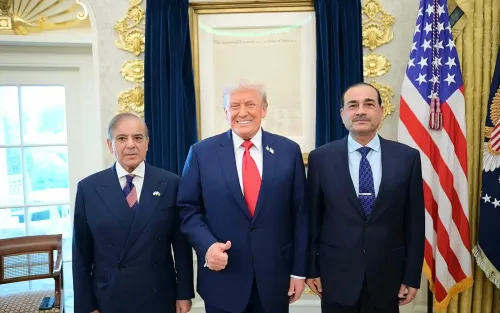
According to the Asia Times report, Pakistan's military-led hybrid government went to considerable lengths to cultivate favour with the Trump administration. These efforts included pursuing cryptocurrency deals with members of the President's family and promoting the country's rare-earth mineral potential at the White House.
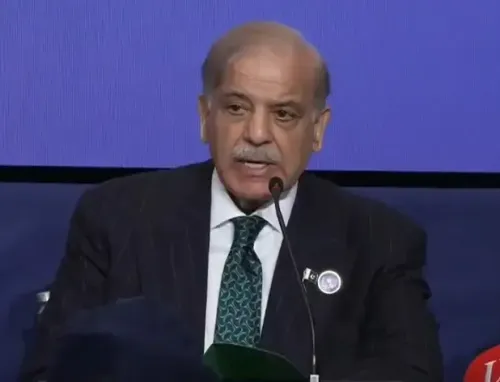
Pakistani Prime Minister Shehbaz Sharif was notably effusive in his public praise. 'Pakistani Prime Minister Shehbaz Sharif left no stone unturned in praising Trump. From the Global Peace Summit on Iran to discussions on Gaza and other pressing international conflicts and issues, Sharif repeatedly lauded Trump, seemingly hoping to secure his goodwill,' the report stated.
The lobbying effort extended well beyond rhetoric. According to the report, Islamabad committed nearly US$5 million to contracts with six major Washington lobbying firms. These included a $200,000-per-month engagement with Seiden Law, which subcontracted Javelin Advisors — a firm co-founded by former Trump Organization executive George Sorial and Trump's ex-bodyguard and Oval Office operations director Keith Schiller.
A separate arrangement with Orchid Advisors, which subcontracted Squire Patton Boggs, also targeted the administration's inner circle. Though those initial contracts concluded, the Sharif government reportedly doubled down on 1 May 2026, locking the Pakistani Embassy into a new multi-year $1.2 million deal with Ervin Graves Strategy Group LLC — led by former Republican Congressman Tom Graves — to promote Islamabad's strategic narratives at the Pentagon and on Capitol Hill.
IMF Dependence Raises Questions About Priorities
The report raised pointed questions about Pakistan's allocation of national resources, noting that the country's continued dependence on International Monetary Fund (IMF) bailouts and external loans — alongside recurring economic crises — sits in uncomfortable contrast with its willingness to spend heavily on Washington lobbying. Critics argue this pattern reflects a government prioritising foreign favour over domestic fiscal stability.
India's Strategic Ties Built on Bipartisan Foundations
By contrast, the report highlighted that India's strategic partnership with the US has shown considerable resilience, underpinned by strong institutional frameworks and bipartisan support in Washington. The bilateral relationship has largely maintained a positive trajectory despite occasional political differences and high-level tensions between the two governments.
'American lawmakers have repeatedly assured their Indian counterparts that Washington's engagement with Pakistan has been transactional, driven by specific American interests in West Asia and the wider region's security context, while its partnership with India is a long-term strategic commitment,' the Asia Times report noted.
This institutional momentum, the report argued, allows the India-US partnership to withstand shifts in political leadership in both countries — a durability that Pakistan's transactional approach cannot replicate.
What This Means Going Forward
As the Trump administration's second term shapes US foreign policy priorities in South Asia and beyond, the contrasting trajectories of the two relationships are likely to become more pronounced. India, with its established defence, technology, and trade linkages with Washington, is widely seen as better placed to deepen engagement — while Pakistan's reliance on paid advocacy and personal diplomacy may prove an increasingly costly and uncertain strategy.
Point of View
Technology partnerships, and diaspora influence. The more revealing detail is not the dollar figure but the optics — a government under IMF supervision diverting scarce resources to Capitol Hill fixers while domestic economic pain deepens. For India, the report confirms what its strategic community has long argued: that bipartisan buy-in in Washington is a durable asset that no lobbying contract can manufacture quickly. The challenge now is converting that goodwill into tangible outcomes on trade, technology transfer, and visa flows — areas where the relationship has historically underperformed relative to its stated ambition.
NationPress
15 Nov 2026
Frequently Asked Questions
Why is India considered better positioned than Pakistan to benefit from Washington's political changes?
According to an Asia Times report, India's partnership with the US is rooted in strong institutional foundations and bipartisan support, giving it resilience across changes in political leadership in both countries. Pakistan's approach, by contrast, has relied heavily on transactional dealings and paid lobbying to secure favour with the Trump administration.
How much did Pakistan spend on lobbying in Washington?
Pakistan reportedly committed nearly US$5 million to contracts with six major Washington lobbying firms. The most recent commitment, dated 1 May 2026, was a multi-year $1.2 million deal with Ervin Graves Strategy Group LLC to promote Islamabad's narratives at the Pentagon and on Capitol Hill.
What lobbying firms did Pakistan engage in Washington?
Pakistan engaged several firms including Seiden Law — at $200,000 per month — which subcontracted Javelin Advisors, a firm co-founded by former Trump Organisation executive George Sorial and ex-Trump bodyguard Keith Schiller. A separate deal involved Orchid Advisors, which subcontracted Squire Patton Boggs.
How have American lawmakers characterised US ties with India versus Pakistan?
American lawmakers have reportedly assured their Indian counterparts that Washington's engagement with Pakistan is transactional, driven by specific US interests in West Asia and regional security, while describing the partnership with India as a long-term strategic commitment.
Why does Pakistan's lobbying spending raise concerns?
The Asia Times report noted that Pakistan continues to rely on IMF bailouts and external loans amid recurring economic crises, making its willingness to spend heavily on Washington lobbying firms a subject of scrutiny regarding government priorities and the use of scarce national resources.