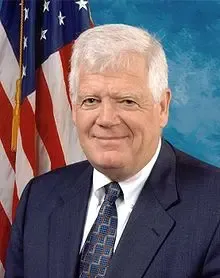
India Caucus co-chair Jim McDermott, friend of India, dies at 89
Synopsis
Jim McDermott, the Seattle Democrat who co-chaired the Congressional India Caucus and declared 'India, we stand with you' on the floor of the House after the 2006 Mumbai train bombings, died at 89 — a figure who championed US-India ties across two decades while breaking with his party on the landmark civil nuclear deal, framing his dissent as opposition to Bush rather than to India.
Key Takeaways
Jim McDermott , former Democratic US Congressman and Congressional India Caucus co-chair, died on Thursday night at Harborview Medical Center, Seattle , aged 89 .
He represented Washington state's 7th Congressional District for 14 terms from 1989 to 2017 ; Pramila Jayapal succeeded him.
He co-introduced legislation in 2001 to lift nuclear sanctions on India and Pakistan and addressed Congress in solidarity after the 2006 Mumbai train bombings .
Despite his pro-India record, he voted against the US-India civil nuclear cooperation legislation in both July 2006 and September 2008 , citing India's fissile material production.
Rajya Sabha member Milind Deora paid tribute on X , calling him a family friend and a 'steadfast friend of India.'
Former US Congressman Jim McDermott, a Democrat from Seattle who served as co-chair of the Congressional India Caucus and spent decades advocating for closer US-India ties, died on Thursday night at Harborview Medical Center in Seattle. He was 89.
A Long Legislative Career
McDermott represented Washington state's 7th Congressional District — centred on Seattle — for 14 terms, from 1989 to 2017. A trained psychiatrist and former Navy officer, he was one of the longest-serving members from the Pacific Northwest. Indian American Congresswoman Pramila Jayapal succeeded him in office.
Born in Chicago in 1936, McDermott served as a Navy psychiatrist before entering politics. During 16 years in Washington state's legislature, he helped craft the state's Basic Health Plan, which extended healthcare coverage to residents who could not afford insurance.
His Engagement with India
McDermott's engagement with India was consistent and varied across two decades. In April 2001, he co-introduced legislation with Republican Congressman Ed Royce to lift sanctions imposed on both India and Pakistan following their 1998 nuclear tests.
On 11 July 2006 — the day of the Mumbai train bombings — he addressed the House of Representatives to express solidarity with then Prime Minister Manmohan Singh and the Indian people. 'India is a great nation, and the noble spirit of its people will overcome today's heartbreak,' he said, closing with the words: 'India, we stand with you.'
He served as Democratic co-chair of the Congressional India Caucus from 2000 to 2002 and returned to the leadership role in 2007. Joe Crowley was subsequently chosen to succeed him in December 2010.
The Civil Nuclear Agreement: A Noted Exception
McDermott's support for the broader US-India relationship did not extend to the landmark civil nuclear cooperation agreement. He voted against the enabling legislation in July 2006 and against the final approval legislation in September 2008; both measures ultimately passed.
In a statement entered into the Congressional Record in July 2006, he said India should commit to ending production of fissile material for nuclear weapons. 'In the absence of an Indian commitment to end fissile material production, I cannot support moving forward at this time with this agreement,' he stated.
He was careful, however, to frame his opposition narrowly. In a January 2007 interview, he characterised his vote as a protest against the Bush administration rather than a statement against India, adding that bilateral cooperation could continue across other fields.
Later Ties and Tributes
Even after his opposition to the nuclear deal, McDermott sponsored a November 2009 resolution welcoming Prime Minister Manmohan Singh to the United States, with language recognising the expanding US-India relationship in security, trade, technology, science and health, as well as the contributions of Indian Americans.
His links with Indian representatives continued after his retirement from Congress. Rajya Sabha member Milind Deora remembered him on X as a family friend and a 'steadfast friend of India.' Congresswoman Jayapal recalled how he helped organise a Seattle community gathering against hate following the September 11, 2001 attacks, standing alongside immigrant communities well before such solidarity was politically fashionable. 'He was always willing to stand up with us — even before it was popular — for immigrant justice,' she said.
McDermott's death closes a chapter in the decades-long bipartisan effort to build the Congressional foundation for the US-India strategic partnership that formally deepened in the years after he left office.
Point of View
That the vote was aimed at the Bush White House rather than New Delhi, says as much about the domestic politics of US foreign policy as it does about the bilateral relationship. The fact that Rajya Sabha member Milind Deora remembered him as a family friend, despite that vote, suggests that in Washington's India network, relationships were built on personal credibility as much as on legislative scorecards.
NationPress
17 Nov 2026
Frequently Asked Questions
Who was Jim McDermott and why does he matter to India?
Jim McDermott was a Democratic US Congressman from Seattle who served 14 terms from 1989 to 2017 and co-chaired the Congressional India Caucus. He was one of the most consistent advocates for closer US-India ties in Congress, speaking out after the 2006 Mumbai train bombings and sponsoring legislation to lift nuclear sanctions on India.
How did Jim McDermott die and when?
Jim McDermott died on Thursday night at Harborview Medical Center in Seattle. He was 89 years old.
Why did Jim McDermott oppose the US-India civil nuclear agreement?
McDermott voted against the civil nuclear cooperation legislation in July 2006 and September 2008, arguing that India should first commit to ending production of fissile material for nuclear weapons. He later clarified in a 2007 interview that his vote was a protest against the Bush administration's approach rather than opposition to India itself.
Who succeeded Jim McDermott in Congress?
Indian American Congresswoman Pramila Jayapal succeeded McDermott in Washington state's 7th Congressional District after he retired in 2017. Jayapal paid tribute to him, recalling his support for immigrant communities after the September 11, 2001 attacks.
How did Indian leaders react to Jim McDermott's death?
Rajya Sabha member Milind Deora remembered McDermott on X as a family friend and a 'steadfast friend of India.' Congresswoman Pramila Jayapal also recalled his solidarity with immigrant communities, saying he was always willing to stand up for immigrant justice even before it was politically popular.