India, EU to push WTO reforms at July 15 Brussels TTC meet
Synopsis
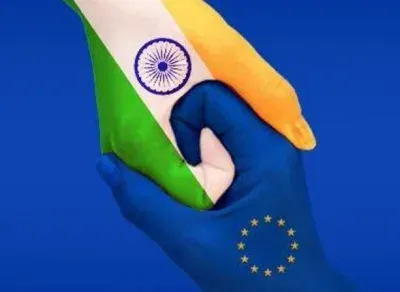
Fresh off concluding one of the world's largest bilateral trade deals, India and the EU are now aiming higher — a coordinated push to reform the WTO itself. With written proposals being readied for Geneva and ministers meeting in Brussels on 15 July, the India-EU partnership is moving from bilateral commerce to multilateral trade architecture.
Key Takeaways
India and the EU will formally discuss WTO reform at the India-EU Trade and Technology Council (TTC) ministerial in Brussels on 15 July .
India's Chief Negotiator Darpan Jain confirmed WTO reform is a dedicated strand within the TTC engagement framework.
EU Chief Negotiator Christophe Kiener said Brussels is preparing written contributions for ongoing WTO reform discussions in Geneva .
The push follows the conclusion of the India-EU FTA , covering goods, services, investment, digital trade, and supply-chain diversification.
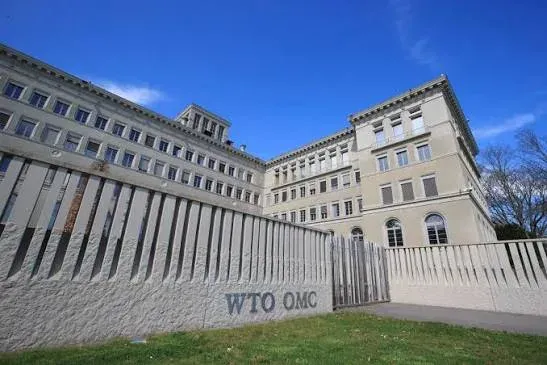
The WTO has 164 member nations , making consensus-building a significant challenge, as Jain acknowledged.
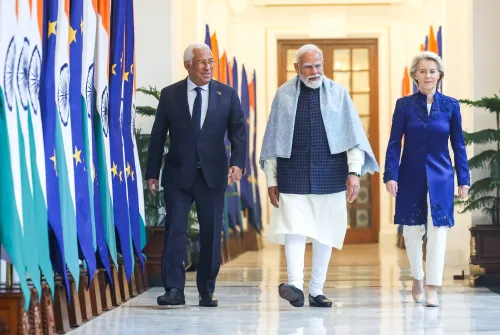
India and the European Union are set to intensify joint efforts to reform the World Trade Organization (WTO), with both sides stating that their newly concluded free trade agreement (FTA) has created a stronger platform for coordinated multilateral action amid rising uncertainty in global commerce. Senior trade negotiators confirmed the issue will be a centrepiece of the next India-EU Trade and Technology Council (TTC) ministerial meeting in Brussels on 15 July.
What Negotiators Said
Darpan Jain, India's Chief Negotiator for the EU-India Free Trade Agreement, speaking at a discussion hosted by the Peterson Institute for International Economics in Washington on 9 July, confirmed WTO reform is embedded in the TTC's working structure. 'There is a track in our engagement on the Trade and Technology Council on WTO as well,' Jain said. 'Fundamentally, I think, we both believe in strengthening WTO, but we also believe that there is a reform which is required. Especially in the current context, my feeling is both India and the EU recognise that we need to work together.'
Jain also acknowledged the formidable challenge of overhauling an organisation with 164 member nations. 'WTO is a body which has 164 members, so very difficult to hatch consensus there. But I think our efforts are in that direction,' he said.
EU's Concrete Proposals in Geneva
Christophe Kiener, the European Union's Chief Negotiator for the India-EU FTA, said Brussels is actively preparing written contributions to ongoing WTO reform discussions in Geneva. 'We are working on a couple or three written contributions that we are about to table in the context of ongoing discussions in Geneva on the reform of the World Trade Organization,' Kiener said.
He described the TTC as a dedicated bilateral channel for coordinating reform positions, adding that ministers will formally take up the issue at the 15 July Brussels meeting. Kiener also expressed broader ambition for the partnership: 'I would just hope that now that we have climbed the Everest of all bilateral agreements, we could... jointly, I don't know, go to the moon and indeed successfully clinch a multilateral trade deal that would enhance the legal certainty multilaterally in the WTO.'
The India-EU FTA as a Strategic Foundation
The push for WTO reform follows the recent conclusion of negotiations on one of the world's largest bilateral free trade agreements between India and the EU, covering goods, services, investment, digital trade, and supply-chain diversification. Both sides have characterised the deal as a strategic partnership extending beyond commerce to encompass technology, security, mobility, and clean energy cooperation.
Jain noted that the TTC has evolved into a key mechanism for advancing collaboration across technology, innovation, and broader economic engagement — well beyond the scope of the FTA itself. Ministers at the Brussels meeting are expected to pursue what he described as 'a very ambitious plan' to deepen outcomes across multiple sectors.
Why This Matters
The WTO has faced sustained pressure in recent years, with its dispute-settlement mechanism effectively paralysed and major economies pursuing bilateral deals over multilateral frameworks. India and the EU joining forces on reform proposals — backed by the credibility of a freshly concluded mega-FTA — represents a notable shift in multilateral trade diplomacy. Notably, this comes amid broader geopolitical uncertainty over global trade rules, including tariff volatility from major economies. A coordinated India-EU bloc at Geneva could influence the reform agenda in ways that neither could achieve independently.
Point of View
Bilateral coordination — however well-resourced — has historically struggled to produce binding multilateral outcomes. What is new here is the credibility lever: a freshly concluded mega-FTA gives both sides demonstrated capacity to negotiate complex trade architecture, which could lend weight to their Geneva proposals. The real test is whether India and the EU can bring enough of the Global South along — particularly given that India's historical WTO positions on agriculture and industrial policy have often diverged sharply from EU preferences. A joint India-EU paper on reform is significant; a joint India-EU-developing-world coalition would be transformative.
NationPress
9 Jul 2026
Frequently Asked Questions
What WTO reforms are India and the EU pushing for?
India and the EU are working toward strengthening the multilateral trading system, with the EU preparing written contributions for ongoing WTO reform discussions in Geneva. Specific proposals will be taken up by ministers at the India-EU Trade and Technology Council meeting in Brussels on 15 July.
What is the India-EU Trade and Technology Council (TTC)?
The India-EU Trade and Technology Council is a bilateral ministerial mechanism that coordinates cooperation on trade, technology, and innovation between India and the European Union. It includes a dedicated strand for bilateral dialogue on WTO reform.
How does the India-EU FTA relate to the WTO reform push?
Both sides say the newly concluded India-EU free trade agreement — covering goods, services, investment, digital trade, and supply-chain diversification — has created a stronger platform for jointly pursuing WTO reform. The FTA is seen as a foundation for broader multilateral ambition.
Why is WTO reform difficult to achieve?
The WTO has 164 member nations, making consensus on any significant reform extremely challenging. India's Chief Negotiator Darpan Jain acknowledged this difficulty directly, noting that building agreement across such a diverse membership is a formidable task.
When is the next India-EU ministerial meeting on this issue?
Ministers from India and the EU are scheduled to meet in Brussels on 15 July as part of the Trade and Technology Council, where WTO reform will be a key agenda item alongside broader plans to deepen bilateral cooperation across multiple sectors.