India joins UN push to protect global sea lanes amid Gulf disruptions
Synopsis
At the UN General Assembly, India's External Affairs Minister Jaishankar joined Gulf states, Singapore, the Philippines and Djibouti in an unusually coordinated warning: attacks on ships and blockages at the Strait of Hormuz and Red Sea are no longer a regional problem — they are a global economic and humanitarian threat, with India's own crude imports and seafarers squarely in the line of fire.
Key Takeaways
Jaishankar called for restraint, de-escalation and free navigation at the UN General Assembly on 27 September 2026 .
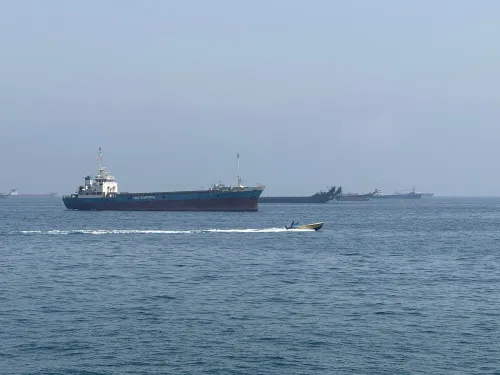
Oman said a recent regional war had paralysed navigation through the Strait of Hormuz , threatening energy security and price stability.
Saudi Arabia and Bahrain rejected any fees or restrictions on movement through strategic straits.
The Philippines cited the killing of two Filipino seafarers in the Strait of Hormuz, calling maritime security a human security issue; nearly 90% of world trade moves by sea.
Singapore held up the Strait of Singapore — through which nearly a quarter of global seaborne trade passes — as a model of multilateral protection.
India imports most of its crude oil via these routes; disruptions risk higher fuel, freight and insurance costs for Indian consumers.
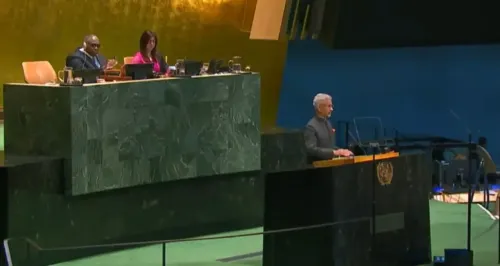
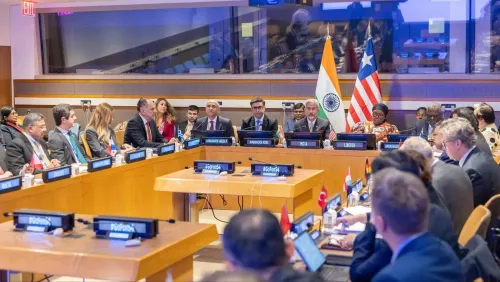
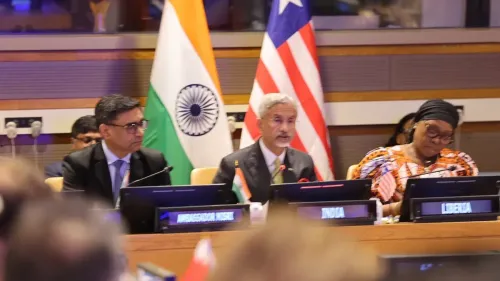
External Affairs Minister S. Jaishankar on 27 September 2026 joined a broad coalition of maritime and Gulf nations at the United Nations General Assembly in New York, calling for the protection of international sea lanes after attacks on commercial vessels and disruptions at strategic waterways threatened global energy supplies, food security and trade. The coordinated warnings — spanning speeches from Oman, Saudi Arabia, Bahrain, Singapore, the Philippines, Djibouti and others — marked one of the most sustained multilateral pushes on maritime security in recent UN sessions.
Jaishankar's Call for Restraint and Free Navigation
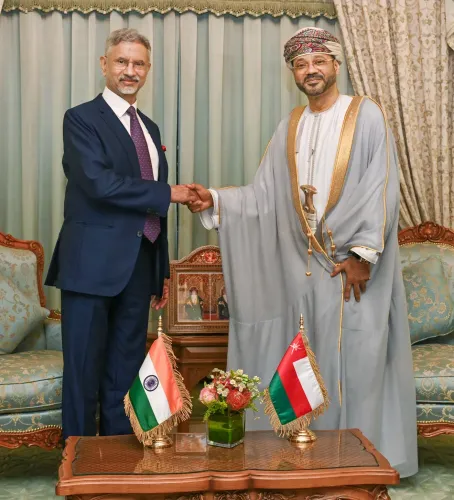
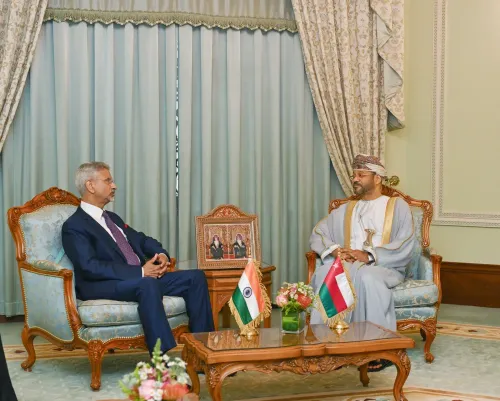
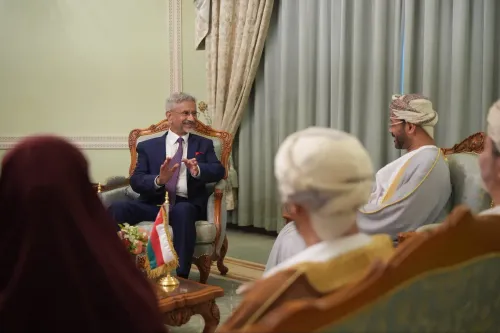
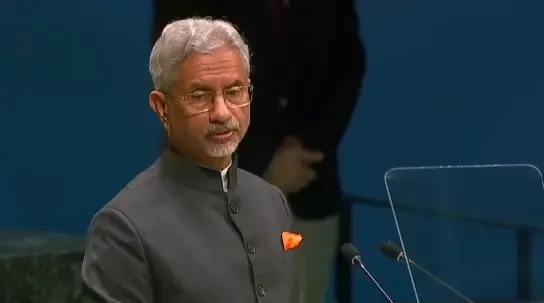
Addressing the General Assembly debate, Jaishankar expressed deep concern over continuing hostilities in the Gulf and the targeting of commercial vessels and maritime crews in international waters. He urged restraint, de-escalation and the uninterrupted movement of energy and commerce, while also seeking greater international protection for ships and seafarers caught in regional conflicts. India's position reflects its significant exposure: the country imports the majority of its crude oil and depends heavily on maritime trade routes that run through the Strait of Hormuz, the Red Sea and the Strait of Malacca.
Gulf Nations Warn of Hormuz Paralysis
Oman's Foreign Minister Sayyid Badr bin Hamad bin Hamood Albusaidi said a recent regional war had paralysed navigation and trade through the Strait of Hormuz, affecting energy security, price stability and confidence in the international order. He reaffirmed Oman's commitment to safeguarding navigation through the strait under international law and the UN Convention on the Law of the Sea (UNCLOS), urging all parties to cooperate in protecting countries dependent on the route.
Saudi Foreign Minister Prince Faisal bin Farhan Al Saud directly linked Gulf stability to global energy security and trade. 'Safeguarding international navigation and the resilience of global supply chains is a shared responsibility,' he said. Riyadh also opposed fees or restrictions on movement through the Strait of Hormuz, and rejected the use of critical waterways as instruments of political pressure against other states.
Bahrain's Foreign Minister Abdullatif bin Rashid Al Zayani widened the frame, arguing that maritime disruptions extend far beyond coastal states. 'A waterway is not merely a security issue of concern for coastal States,' he said, noting that such routes carry food, medicine and energy and affect families even in landlocked countries. Bahrain also opposed permit and fee systems for passage through strategic straits.
The Philippines Puts a Human Face on Maritime Risk
Philippine Foreign Secretary Theresa Lazaro placed seafarers at the centre of the debate, noting that nearly 90 per cent of world trade moves by sea with the support of approximately two million seafarers — more than a quarter of them Filipino. She referred to a recent incident in the Strait of Hormuz that killed two Filipino seafarers and injured others. 'Their tragedy reminds us: maritime security is human security,' Lazaro said. 'Open and secure seas, free from interference and coercion, are vital to our security, our economy, and our people,' she added.
Singapore and Djibouti Cite Broader Chokepoints
Singapore's Foreign Minister Vivian Balakrishnan cited the Strait of Singapore as a working model of multilateral cooperation, noting that nearly a quarter of global seaborne trade passes through it. Rules developed by the three littoral states have kept it open, safe and accessible, he said, describing UNCLOS as one of the greatest achievements of multilateral lawmaking.
Djibouti's Foreign Minister Abdoulkader Houssein Omar sounded a similar alarm about the Red Sea, warning that 'any obstruction to the free movement of shipping could seriously disrupt supply chains.' Notably, the three routes under discussion — the Strait of Hormuz, the Bab Al Mandab–Red Sea corridor and the Malacca–Singapore straits — collectively handle the bulk of Asia's energy imports and export flows.
What This Means for India
India's dependence on these chokepoints makes maritime security a strategic economic priority. Disruptions along these routes can raise fuel, freight and insurance costs, delay shipments and expose Indian seafarers serving aboard international vessels to conflict-related risks. This is the latest instance of New Delhi using multilateral platforms to advocate for free navigation — a stance that aligns with its broader Indo-Pacific security posture and its engagement in frameworks such as the Quad. The convergence of so many nations on this issue at the UNGA suggests growing pressure for a formal multilateral response mechanism. How quickly that translates into binding commitments will be the defining question in the weeks ahead.
Point of View
Gulf monarchies, Singapore, the Philippines and Djibouti all speaking in the same register within a single UNGA session — is unusual and signals that maritime chokepoint anxiety has crossed a threshold. What is missing from the debate is enforcement: UNCLOS provides a legal framework, but it has no navy. India's vocal stance is consistent with its Indo-Pacific posture, yet New Delhi has been careful to avoid naming any actor responsible for the Hormuz paralysis, preserving its balancing act between Gulf energy partners and broader geopolitical alignments. The real test is whether this multilateral consensus produces a mechanism with teeth, or whether it remains, as so many UNGA moments do, a coordinated expression of concern with no operational follow-through.
NationPress
27 Sept 2026
Frequently Asked Questions
Why did India raise maritime security at the UN General Assembly?
India joined Gulf and maritime nations at the UNGA on 27 September 2026 to demand protection of international sea lanes after attacks on commercial vessels and disruptions at the Strait of Hormuz threatened global energy supplies and trade. India imports most of its crude oil through these routes and has seafarers serving on international vessels exposed to conflict risks.
What is the threat to the Strait of Hormuz?
Oman's Foreign Minister said a recent regional war had paralysed navigation and trade through the Strait of Hormuz, disrupting energy security and price stability. The strait connects Gulf energy producers with markets through the Arabian Sea and the Indian Ocean, making it one of the world's most critical shipping chokepoints.
What did the Philippines say about seafarers at the UNGA?
Philippine Foreign Secretary Theresa Lazaro said nearly 90 per cent of world trade moves by sea, supported by about two million seafarers — over a quarter of them Filipino. She cited a recent Strait of Hormuz incident that killed two Filipino seafarers, saying their deaths proved maritime security is human security.
Which countries joined India in the call to protect sea lanes?
Oman, Saudi Arabia, Bahrain, Singapore, the Philippines and Djibouti all issued warnings at the UNGA about threats to strategic waterways including the Strait of Hormuz, the Red Sea's Bab Al Mandab corridor, and the Strait of Singapore. Together they framed maritime security as a global economic and humanitarian concern.
How do maritime disruptions affect India specifically?
India imports the majority of its crude oil by sea and depends on routes through the Strait of Hormuz, the Red Sea and the Strait of Malacca. Disruptions along these corridors can raise fuel, freight and insurance costs domestically, delay shipments, and put Indian seafarers serving on international vessels at risk of conflict-related harm.