India-Kiribati talks focus on copra and coconut oil cooperation in Suva
Synopsis
India and Kiribati are quietly building one of the more substantive small-nation partnerships in the Pacific — spanning copra trade, dialysis units, solar power, and diplomat training. The Suva meeting on 27 May signals that New Delhi is now eyeing Kiribati's coconut economy as a tangible economic anchor, not just a diplomatic courtesy.
Key Takeaways
India and Kiribati held bilateral talks in Suva on 27 May 2025 , focusing on copra and coconut oil development .
The meeting was between High Commissioner Suneet Mehta and Kiribati's Minister Tangariki Reete .
India sent a six-bedded container-based Dialysis Unit to Kiribati in March 2024 , fulfilling a FIPIC III commitment.
In 2017 , India granted USD 1.1 million for solar lighting in the South Tarawa district.
India provides annual grants, ITEC training slots, and diplomat training to Kiribati through the Foreign Service Institute of India .
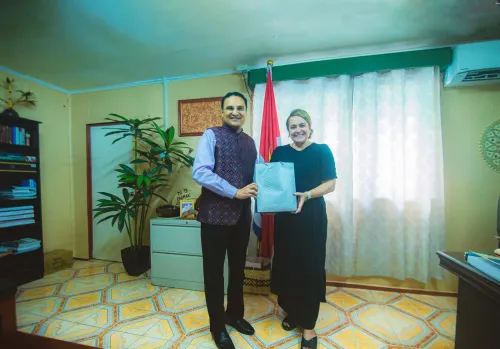
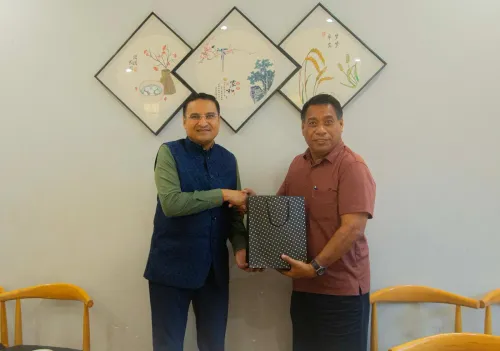
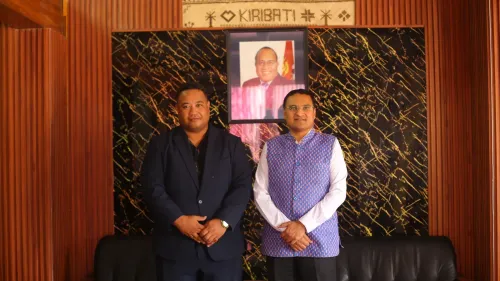
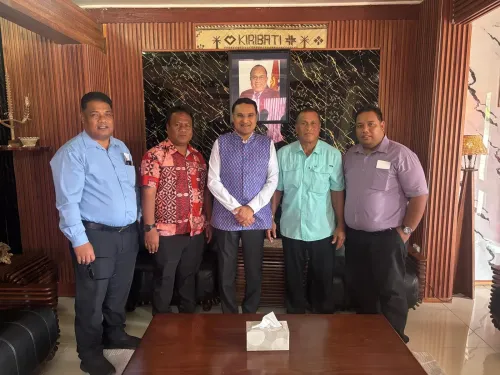
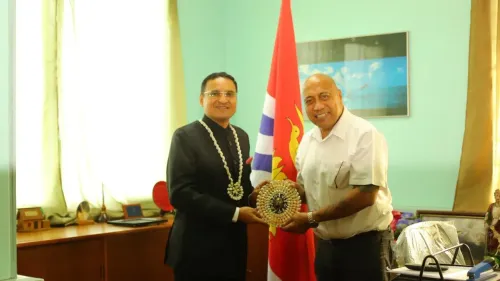
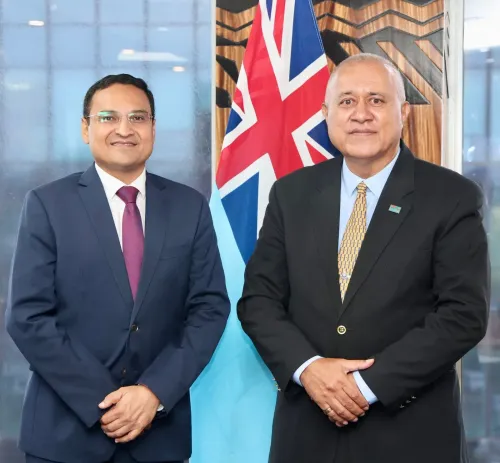
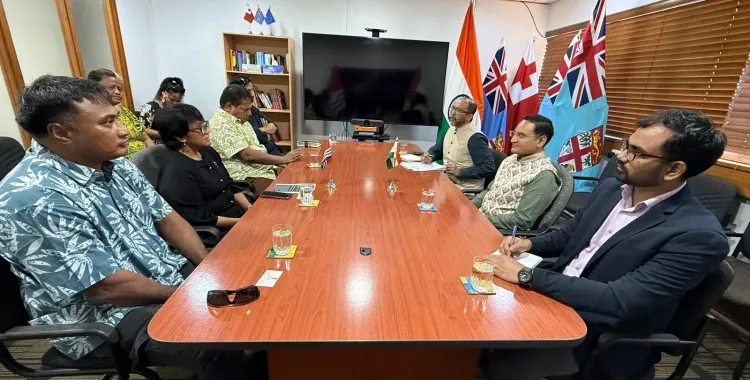
India and Kiribati on Wednesday, 27 May held focused discussions on deepening bilateral cooperation in copra and coconut oil development, underscoring a growing economic partnership between the two countries. The talks took place in Suva, Fiji, during a meeting between India's High Commissioner to Fiji, Suneet Mehta, and a Kiribati delegation led by Minister for Tourism, Commerce, Industry and Cooperatives Tangariki Reete.
Key Developments from the Suva Meeting
The delegation's visit followed a recent trip to India, and both sides used the Suva meeting to explore practical avenues for expanding cooperation. According to the Indian High Commission in Fiji, discussions were described as 'productive', with a focus on identifying new opportunities in the copra and coconut oil sector — commodities central to Kiribati's economy.
'Productive discussions were held focussing on their recent visit to India and exploring avenues to further strengthen India-Kiribati cooperation in copra and coconut oil development, reaffirming the growing partnership between our two countries,' the High Commission stated in a post on X.
Diplomatic Ties and Accreditation History
India's diplomatic relationship with Kiribati dates back to September 1992, when the Indian High Commission in Wellington was first concurrently accredited to the Pacific island nation. Accreditation was subsequently transferred to the Indian High Commission in Suva in October 2011, reflecting the growing centrality of Fiji as India's Pacific diplomatic hub.
India's Broader Development Support to Kiribati
The copra talks are part of a wider pattern of Indian engagement with Kiribati. In March 2024, India dispatched a six-bedded container-based Dialysis Unit to Kiribati, fulfilling a commitment made at the FIPIC III Summit. The unit was shipped from Mundra Port to Tarawa, Kiribati's capital.
Beyond healthcare, the Indian government provides annual grants for community development projects in Kiribati and offers training slots under the Indian Technical and Economic Cooperation (ITEC) Programme. Kiribati diplomats are also trained at the Foreign Service Institute of India, according to the Ministry of External Affairs (MEA).
In 2017, India provided a grant of USD 1.1 million to fund solar lighting across the South Tarawa district, extending electricity access to households that had previously relied on fossil fuels for lighting.
Why This Partnership Matters
Kiribati, a low-lying Pacific atoll nation, is among the world's most climate-vulnerable countries and has limited economic diversification. Copra — dried coconut kernel — and its derivative coconut oil remain among the few viable export commodities for the island. India's interest in this sector aligns with its broader Forum for India-Pacific Islands Cooperation (FIPIC) strategy, which seeks to position New Delhi as a credible development partner across the Pacific.
Notably, this engagement comes at a time when major powers including China are actively deepening ties with Pacific island nations, making India's sustained and multi-sectoral outreach strategically significant. With sectoral discussions now underway, the next step will likely involve technical cooperation frameworks or trade facilitation measures between the two sides.
Point of View
It is sector-specific engagements — copra, solar, dialysis — that build durable influence in small island states. Kiribati's vulnerability to climate change and economic isolation makes it receptive to India's development-first approach, which contrasts with debt-heavy alternatives. The test for New Delhi is whether these discussions translate into binding trade or technical cooperation agreements, or remain goodwill gestures that do not move economic needles for either side.
NationPress
11 Oct 2026
Frequently Asked Questions
What did India and Kiribati discuss in Suva on 27 May 2025?
India and Kiribati held talks focused on strengthening cooperation in copra and coconut oil development. The meeting in Suva brought together India's High Commissioner Suneet Mehta and a Kiribati delegation led by Minister for Tourism, Commerce, Industry and Cooperatives Tangariki Reete.
What is copra and why does it matter to Kiribati?
Copra is dried coconut kernel used to produce coconut oil, and it is one of Kiribati's primary export commodities. As a low-lying Pacific atoll nation with limited economic diversification, Kiribati depends significantly on copra and coconut oil for trade revenue.
What other support has India provided to Kiribati?
India has provided a six-bedded container-based Dialysis Unit shipped in March 2024, a USD 1.1 million solar lighting grant for South Tarawa in 2017, annual community development grants, and training slots under the ITEC Programme and the Foreign Service Institute of India.
How long have India and Kiribati maintained diplomatic ties?
India has been concurrently accredited to Kiribati since September 1992, initially through the High Commission in Wellington. Accreditation was transferred to the Indian High Commission in Suva in October 2011.
How does this fit into India's broader Pacific strategy?
The engagement is part of India's Forum for India-Pacific Islands Cooperation (FIPIC) framework, which positions New Delhi as a development partner across Pacific island nations. India's multi-sectoral outreach — spanning health, energy, trade, and diplomacy — is seen as a counterweight to growing Chinese influence in the region.