India-Netherlands semiconductor and AI partnership: Key deals and what they mean
Synopsis
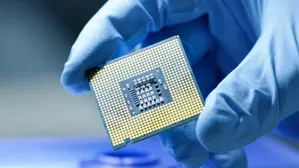
India and the Netherlands have launched a 'brain bridge' linking six IITs and IISc with two Dutch universities, backed by ASML and Tata Electronics — a pairing that goes far beyond academic exchange. With ASML as the world's only EUV chip-making machine manufacturer, this partnership quietly positions India inside one of the most strategically guarded nodes of the global semiconductor supply chain.
Key Takeaways
India and the Netherlands formalised a technology cooperation roadmap on 17 May 2025 , with semiconductors as the centrepiece.
A 'brain bridge' links Eindhoven University of Technology and University of Twente with IISc , IIT Bombay , IIT Delhi , IIT Gandhinagar , IIT Guwahati , and IIT Madras .
Industry backers include NXP Semiconductors , ASML , Tata Electronics , and CG Semi .
The Dutch Semicon Competence Centre will be connected with the India Semiconductor Mission to support startups, SMEs, and scale-ups.
Cooperation also spans AI , photonics , quantum technologies , cybersecurity , space , and higher education .
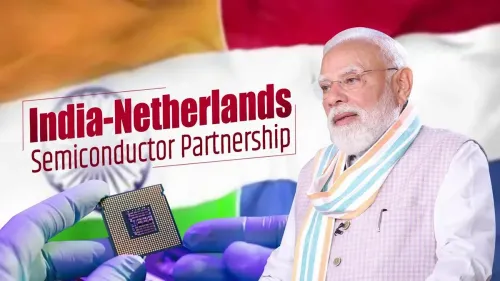
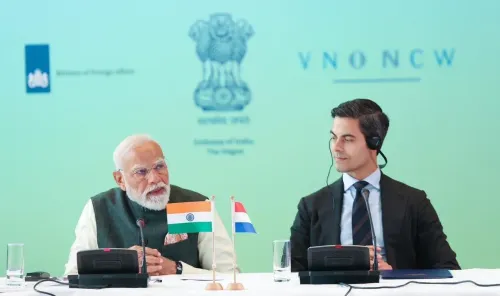
India and the Netherlands have unveiled a comprehensive technology cooperation roadmap, with semiconductors at its core, spanning artificial intelligence, photonics, quantum technologies, cybersecurity, space, and higher education. The agreement, formalised on 17 May 2025, builds on an existing Memorandum of Understanding on semiconductors and seeks to forge trusted, resilient supply chains through coordinated action across industries, research institutions, and governments in both countries.
Semiconductor Supply Chains and the India-Netherlands MoU
The centrepiece of the partnership is the expansion of collaboration under the existing MoU on semiconductors and related emerging technologies. Both sides will jointly explore opportunities in AI, photonics, quantum technologies, and cybersecurity, with a deliberate focus on building technology value-chain partnerships rather than transactional exchanges. The agreement also aims to connect the Dutch Semicon Competence Centre with the India Semiconductor Mission to channel support toward startups, SMEs, scale-ups, and component suppliers through technology sharing, skill development, and innovation-led cooperation.
The 'Brain Bridge': Six IITs and Two Dutch Universities
A landmark academic initiative under the partnership links Eindhoven University of Technology and the University of Twente with six premier Indian institutions: the Indian Institute of Science (IISc), IIT Bombay, IIT Delhi, IIT Gandhinagar, IIT Guwahati, and IIT Madras. The so-called 'brain bridge' in semiconductors and related technologies is backed by industry heavyweights including NXP Semiconductors, ASML, Tata Electronics, and CG Semi — a combination that signals both research depth and commercialisation intent. Notably, ASML is the world's sole manufacturer of extreme ultraviolet (EUV) lithography machines, making Dutch participation in India's semiconductor ambitions strategically significant beyond academia.
Science, Research and Innovation Alignment
The two countries will also intensify scientific collaboration through the existing Joint Working Group on Science, Technology and Innovation, aligning national research priorities in energy materials, biomolecular and cell technologies, AI, and cybersecurity. This comes amid a broader global scramble to diversify semiconductor and deep-tech supply chains away from single-geography dependencies — a trend accelerated by post-pandemic disruptions and ongoing geopolitical tensions in East Asia.
Higher Education and Space Cooperation
Beyond semiconductors, India and the Netherlands reaffirmed their commitment to higher education ties through a joint working plan under the existing MoU on higher education cooperation. Both nations will encourage deeper STEM-based academic exchanges and explore platforms for institutional partnerships. The agreement also extends to the space sector, with both countries looking to leverage space-based applications to address global challenges including climate change, water management, food security, and air quality.
What Comes Next
The roadmap sets the direction, but execution timelines and funding frameworks are yet to be publicly detailed. Industry bodies and academic institutions on both sides will be watched closely for how quickly the 'brain bridge' and the Semicon Competence Centre linkage translate into active programmes. With India's semiconductor ambitions scaling rapidly under the India Semiconductor Mission, the Dutch partnership — anchored by ASML's unique position in the global chip supply chain — could prove to be one of New Delhi's most consequential technology alignments of the decade.
Point of View
Or whether this joins the long archive of well-intentioned technology MOUs that produced little beyond press releases.
NationPress
6 Oct 2026
Frequently Asked Questions
What is the India-Netherlands semiconductor partnership announced in May 2025?
India and the Netherlands formalised a technology cooperation roadmap on 17 May 2025, centred on semiconductors and expanding into AI, photonics, quantum technologies, and cybersecurity. The agreement builds on an existing MoU and aims to build resilient semiconductor supply chains through joint industry, research, and government collaboration.
What is the 'brain bridge' between India and the Netherlands?
The 'brain bridge' is an academic initiative linking Eindhoven University of Technology and the University of Twente with six Indian institutions — IISc, IIT Bombay, IIT Delhi, IIT Gandhinagar, IIT Guwahati, and IIT Madras — focused on semiconductors and related technologies. It is backed by industry players including NXP Semiconductors, ASML, Tata Electronics, and CG Semi.
Why is ASML's involvement in this partnership significant?
ASML is the world's sole manufacturer of extreme ultraviolet (EUV) lithography machines, which are essential for producing advanced semiconductors. Its participation gives the India-Netherlands partnership strategic depth beyond typical academic or trade agreements, placing India in proximity to one of the most guarded nodes of the global chip supply chain.
How does this partnership connect to India's semiconductor ambitions?
The Dutch Semicon Competence Centre will be linked with the India Semiconductor Mission to support semiconductor startups, SMEs, scale-ups, and suppliers through technology sharing and skill development. This directly reinforces India's broader push to build a domestic semiconductor ecosystem.
What other areas does the India-Netherlands cooperation cover?
Beyond semiconductors, the partnership spans AI, photonics, quantum technologies, cybersecurity, space-based applications, and higher education. Both countries will align research priorities through the existing Joint Working Group on Science, Technology and Innovation, and expand STEM-based academic exchanges under an MoU on higher education.