India-New Zealand FTA opens zero-duty access across 8,284 product lines
Synopsis
The India–New Zealand Free Trade Agreement hands Indian exporters immediate zero-duty access across all 8,284 product lines — a significant market-opening move anchored in a broader 'Roadmap to 2030' Strategic Partnership. With a $3 billion merchandise trade target in sight and MSMEs, pharma and textiles in pole position, the deal marks one of India's more comprehensive bilateral trade frameworks in the Indo-Pacific.
Key Takeaways
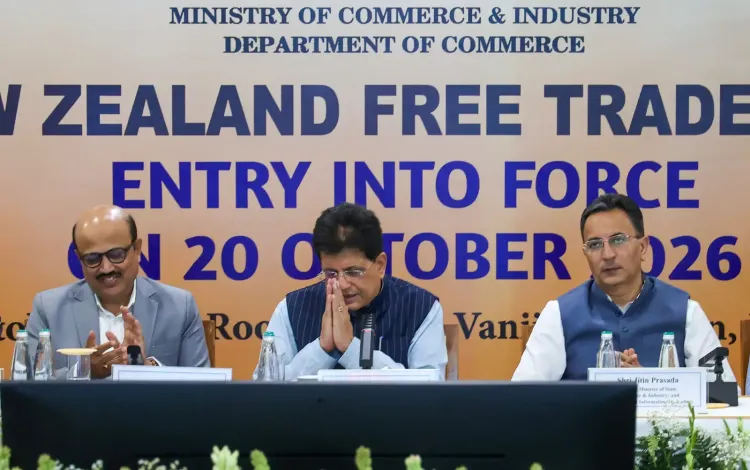
The India–New Zealand Free Trade Agreement (FTA) grants Indian exports zero-duty access across all 8,284 product lines in New Zealand, effective immediately.
Merchandise trade between the two countries is targeted to reach approximately $3 billion by 2030 under the FTA's strategic framework.
Key beneficiary sectors include pharmaceuticals , textiles , engineering goods , gems and jewellery , footwear and leather products .
MSMEs , artisans and women entrepreneurs are specifically identified as beneficiaries, with institutional support mechanisms planned to ease market entry.
The FTA is embedded within a broader 'Roadmap to 2030' Strategic Partnership covering technology, agriculture, skills exchange and supply chain cooperation.
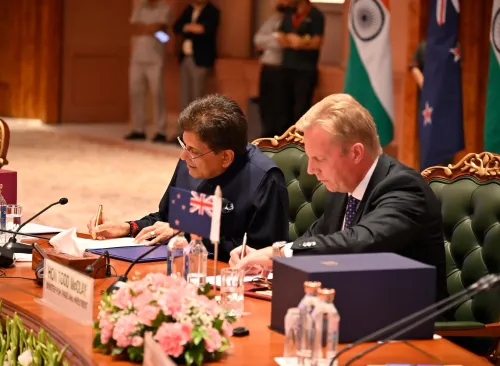
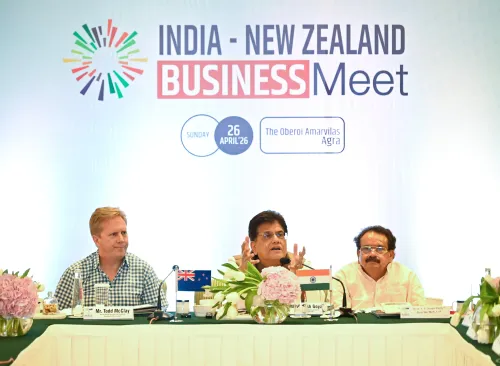
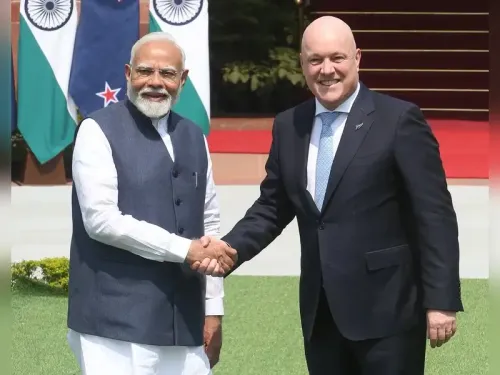
India and New Zealand are entering a new chapter of bilateral engagement, with the India–New Zealand Free Trade Agreement (FTA) creating fresh commercial pathways for businesses, farmers, micro, small and medium-sized enterprises (MSMEs), entrepreneurs and young professionals in both countries. The agreement, analysts note, extends well beyond tariff reductions to cover investment, technology exchange, agriculture and strategic cooperation.
Key Features of the FTA
One of the agreement's most consequential provisions is New Zealand's immediate grant of zero-duty market access for Indian exports across all 8,284 product lines. This blanket tariff elimination offers Indian exporters a meaningful opportunity to sharpen price competitiveness, diversify export destinations, and deepen their foothold in a high-income developed economy.
The FTA's strategic framework sets an ambitious merchandise trade target of approximately $3 billion by 2030, underpinned by the broader 'Roadmap to 2030' Strategic Partnership. Achieving that target, according to assessments of the agreement, will hinge on effective implementation, sustained business participation and growth across multiple sectors.
Sectors Positioned to Benefit
Labour-intensive and manufacturing-oriented industries are identified as being particularly well placed to capitalise on the improved market access. Key sectors include pharmaceuticals, textiles, engineering goods, machinery, gems and jewellery, sports goods, footwear and leather products. Businesses in these categories can leverage the preferential access to expand production capacity, attract new international orders and build stronger distribution networks in New Zealand and, potentially, the broader Pacific region.
MSMEs and Women Entrepreneurs in Focus
A notable aspect of the FTA's architecture is its explicit attention to smaller enterprises and underrepresented groups. MSMEs, artisans and women entrepreneurs — who typically face higher transaction costs, limited market intelligence and barriers to forming overseas commercial ties — are identified as direct beneficiaries. Improved tariff access, paired with institutional support mechanisms and enhanced business-to-business engagement, is expected to help address these structural constraints and open export markets that were previously out of reach for smaller players.
Strategic Dimension and Long-Term Direction
The FTA sits within a wider framework of India–New Zealand cooperation that spans technology, agriculture, skills exchange and supply chain integration. The 'Roadmap to 2030' gives this economic relationship a multi-year directional commitment, signalling that both governments view the bilateral partnership as a long-term strategic investment rather than a transactional arrangement. This comes amid India's broader push to diversify its trade partnerships across the Indo-Pacific and reduce dependence on any single market corridor.
With implementation frameworks yet to be fully operationalised, business chambers and industry bodies in both countries will be watching closely to see how quickly the tariff benefits translate into on-the-ground export growth.
Point of View
284 product lines is a headline-grabbing provision, but the real test lies in utilisation rates — how many Indian exporters, particularly MSMEs, actually mobilise to capture the access. India's FTA track record shows a persistent gap between preferential market access granted on paper and actual trade flows realised, often because smaller firms lack the documentation capability, foreign-market intelligence or logistics networks to compete. The $3 billion merchandise trade target by 2030 is achievable only if the institutional support promised to MSMEs and women entrepreneurs materialises faster than in past bilateral frameworks. The Indo-Pacific strategic context adds urgency: with supply chain diversification accelerating globally, India cannot afford to let an ambitious agreement gather dust at the implementation stage.
NationPress
2 Nov 2026
Frequently Asked Questions
What is the India–New Zealand Free Trade Agreement?
The India–New Zealand Free Trade Agreement (FTA) is a bilateral trade pact that grants Indian exports immediate zero-duty access across all 8,284 product lines in New Zealand. It also covers investment, technology exchange, agriculture and strategic cooperation, framed within a broader 'Roadmap to 2030' Strategic Partnership.
Which Indian sectors benefit most from the FTA?
Pharmaceuticals, textiles, engineering goods, machinery, gems and jewellery, sports goods, footwear and leather products are identified as sectors with substantial export potential. Labour-intensive and manufacturing-oriented industries are expected to benefit the most from the zero-duty market access.
How does the FTA help MSMEs and women entrepreneurs?
The FTA's framework specifically targets MSMEs, artisans and women entrepreneurs, who typically face high transaction costs and limited access to overseas markets. Improved tariff access combined with institutional support and stronger business-to-business engagement is expected to help smaller enterprises enter and sustain operations in the New Zealand market.
What is the India–New Zealand trade target under the FTA?
The FTA's strategic framework sets a merchandise trade target of approximately $3 billion by 2030. Achieving it will depend on effective implementation, active business participation and sustained sectoral growth on both sides.
What is the 'Roadmap to 2030' mentioned alongside the FTA?
The 'Roadmap to 2030' is a bilateral Strategic Partnership framework that gives the India–New Zealand economic relationship a longer-term direction beyond tariff reductions. It covers technology, agriculture, skills exchange, supply chain integration and strategic cooperation, providing the overarching structure within which the FTA operates.