India slams UN rapporteur for falsely listing Dawood Ibrahim as India-based
Synopsis
India's UN Mission publicly accused Special Rapporteur Ben Saul of 'incompetence' for labelling Dawood Ibrahim 'India-based' — a characterisation India says inverts reality. With Dawood having fled India before 2003, wanted since 1993, and widely understood to be sheltered in Pakistan, the error isn't merely sloppy — India argues it does the UN 'tremendous harm' and called for the highest standards of impartiality amid reported funding concerns.
Key Takeaways
India's UN Mission on 22 October 2026 called out UN Special Rapporteur Ben Saul for describing Dawood Ibrahim as leader of an 'India-based' criminal network in his July report.
Raghoo Puri , First Secretary at India's UN Mission, said Ibrahim 'fled India much before the 2003 UN Security Council listing' and has been wanted for terror attacks since 1993 .
Puri indicated Ibrahim resides in the country where Osama bin Laden was found — an unmistakable reference to Pakistan .
Watchdog group UN Watch reported Saul received $150,000 from China and a total of $1.7 million in disclosed funding from various sources.
US Secretary of State Marco Rubio , visiting Mumbai , independently questioned the competence of UN special rapporteurs on the same day.
India dismissed Pakistan's Kashmir claims as 'pure propaganda' and reaffirmed that Jammu and Kashmir and Ladakh are 'an inalienable part of India.'
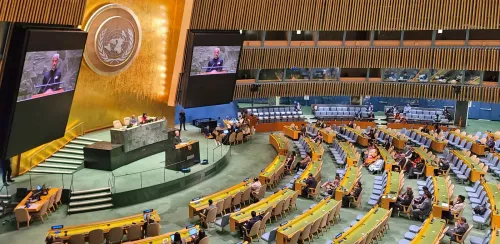
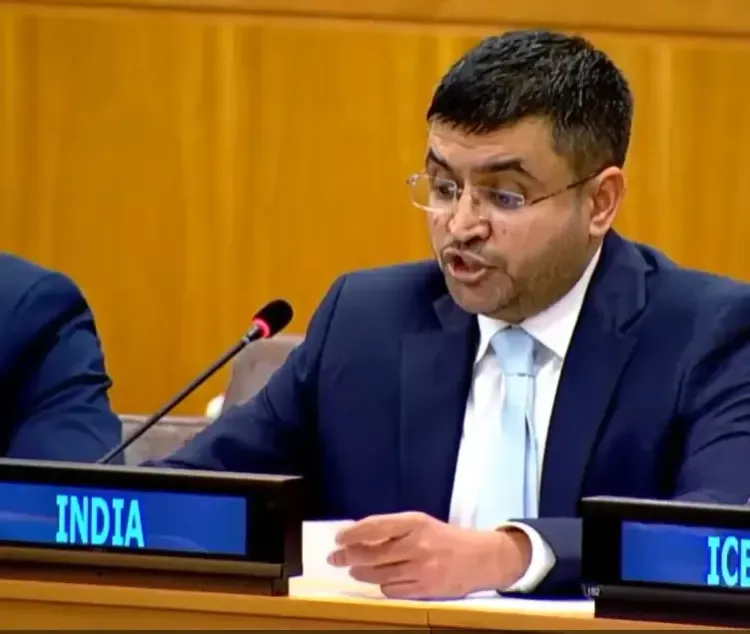
India on Wednesday sharply rebuked a United Nations special rapporteur for describing wanted terrorist Dawood Ibrahim as the leader of an 'India-based' criminal network, calling the error 'regrettable' and warning that such inaccuracies cause the UN 'tremendous harm.' The rebuke came at the UN in New York, where Raghoo Puri, First Secretary at India's Permanent Mission to the UN, directly accused the rapporteur of incompetence.
What the UN Report Got Wrong
Ben Saul, the Special Rapporteur on Counter-Terrorism and Human Rights and a professor of international law at the University of Sydney, had described Dawood Ibrahim in his July report as the leader of the 'India-based' D-Company criminal gang with terrorist ties. The report also noted that the UN Security Council sanctioned Ibrahim for his association with al-Qaeda.
Puri called this description a 'particularly glaring inaccuracy,' stressing that the characterisation, 'read in isolation, paints a very different picture from the actual reality.' He pointed out that Dawood Ibrahim and D-Company 'have been wanted in India for terror attacks since 1993' — a fact, he argued, that Saul conspicuously failed to mention.
India's Core Argument: Dawood Fled India Decades Ago
Puri was unequivocal in setting the record straight. 'For the record, this individual fled India much before the 2003 listing' as an international terrorist by the Security Council, he said. It was from outside India that Ibrahim was listed for association with al-Qaeda and Osama bin Laden, Puri clarified.
In a pointed reference, Puri added that Dawood Ibrahim 'resides in the same country where Osama bin Laden was found and neutralised' — an unmistakable allusion to Pakistan, where bin Laden was discovered hiding in Abbottabad and killed by US Navy SEALs in 2011. India had previously secured an Interpol Red Corner Notice against Ibrahim, requiring law enforcement worldwide to locate and arrest him for extradition.
Funding Concerns and Independence of the Rapporteur
Puri flagged media allegations about potential conflicts of interest surrounding Saul's office. According to data compiled by the watchdog group UN Watch, Saul has reportedly received $150,000 from China, with his total disclosed funding reaching $1.7 million from sources including his university, three US universities, and institutions in Switzerland and Spain. Special rapporteurs are not directly paid by the UN and are meant to operate independently of it.
Puri urged that 'the highest standards of probity and impartiality be maintained,' signalling India's concern that the office of special mandate holders risks being compromised. 'Not mentioning this fact is regrettable and such incompetence on the part of special mandate holders does this organisation tremendous harm,' he said.
US Secretary of State Echoes Criticism
Notably, US Secretary of State Marco Rubio, who was in Mumbai — the city struck by the deadly 26/11 terror attack by Pakistani terrorists in 2008 — on the same day questioned the competence of UN special rapporteurs. 'The UN experts are the oxymoron,' Rubio reportedly said, in a remark that aligned with India's critique, though delivered independently.
India Rejects Pakistan's Kashmir Claims
Turning to Pakistan, which had raised the issue of Kashmir during the proceedings, Puri was dismissive. 'Everyone in this room knows that what has been mentioned against my country, including about the Union territory of Jammu and Kashmir and Ladakh, is pure propaganda made for very narrow political gains,' he said. He attributed the allegations to 'the actual rulers of Pakistan, which is its military,' and reiterated that 'Jammu and Kashmir and Ladakh are an inalienable part of India and have been so and will always remain.'
Puri also pushed back on attempts to shield terrorism behind human rights arguments, stating: 'Human rights framework cannot be the refuge of the perpetrators of terror and those who propagate radicalisation and extremism. Terrorism can never be justified.' The episode is likely to intensify India's scrutiny of UN human rights mechanisms and their accountability frameworks going forward.
Point of View
Calibrated for a multilateral forum. What mainstream coverage risks missing is that this incident arrives as India faces sustained UN-level pressure on Kashmir; challenging the credibility of a rapporteur simultaneously rebuts both the Dawood mischaracterisation and the broader narrative infrastructure being used against New Delhi. The convergence of India's rebuke with Rubio's remarks on the same day is unlikely to be coincidental diplomacy.
NationPress
22 Oct 2026
Frequently Asked Questions
What did the UN rapporteur's report say about Dawood Ibrahim?
UN Special Rapporteur Ben Saul's July report described Dawood Ibrahim as the leader of the 'India-based' D-Company criminal gang with terrorist ties, and noted the Security Council sanctioned him for association with al-Qaeda. India says this characterisation is factually wrong and misleading in isolation.
Why did India object to the UN rapporteur's report?
India objected because Saul's report failed to clarify that Dawood Ibrahim fled India well before his 2003 UN listing and has been wanted by India for terror attacks since 1993. India's UN Mission said the omission of this fact — clearly stated in the Security Council's own sanctions entry — constitutes incompetence that causes the UN 'tremendous harm.'
Where is Dawood Ibrahim believed to be?
India's First Secretary Raghoo Puri said Ibrahim 'resides in the same country where Osama bin Laden was found and neutralised' — a clear reference to Pakistan. Bin Laden was killed by US Navy SEALs in Abbottabad, Pakistan, in 2011. India holds an Interpol Red Corner Notice against Ibrahim.
What are the concerns about Ben Saul's funding?
According to data compiled by watchdog group UN Watch, Special Rapporteur Ben Saul has reportedly received $150,000 from China, with total disclosed funding of $1.7 million from sources including his university, three US universities, and institutions in Switzerland and Spain. India said it was 'concerned by media allegations' about the office and urged the 'highest standards of probity and impartiality.'
What did India say about Pakistan's Kashmir claims at the UN?
India's Raghoo Puri dismissed Pakistan's references to Kashmir as 'pure propaganda made for very narrow political gains,' attributing the allegations to Pakistan's military establishment. He reiterated that Jammu and Kashmir and Ladakh are 'an inalienable part of India and have been so and will always remain.'