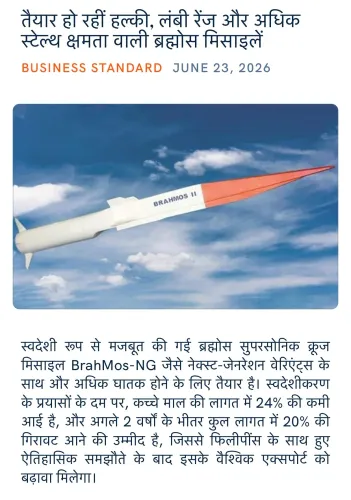
BrahMos missile draws new enquiries from Gulf, Latin America and Asia
Synopsis
India's BrahMos supersonic cruise missile is no longer just a Southeast Asian story. With the UAE in active talks, fresh enquiries from Saudi Arabia, Egypt, Brazil and Chile, and defence exports hitting a record ₹38,424 crore in FY26, India is quietly reshaping its identity — from arms importer to a credible, lifecycle-capable global supplier.
Key Takeaways
Reported enquiries for BrahMos have expanded to Saudi Arabia , Egypt , Thailand , Brazil and Chile .
Talks with the UAE are under way; a deal would mark BrahMos's first entry into the Gulf region .
Defence Secretary Rajesh Kumar Singh confirmed a BrahMos deal with Vietnam is signed; the Indonesia agreement is in its final stages.
India's defence exports reached a record ₹38,424 crore in FY26 , up roughly 62 per cent year-on-year.
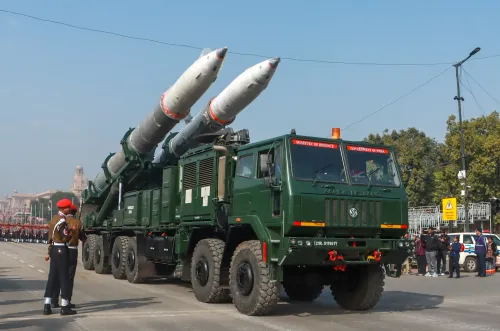
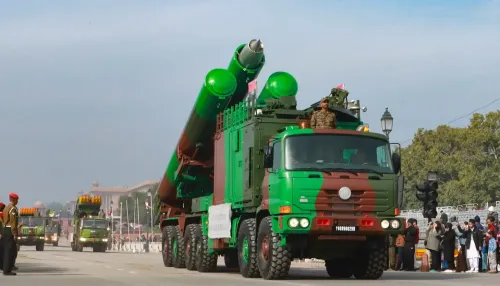
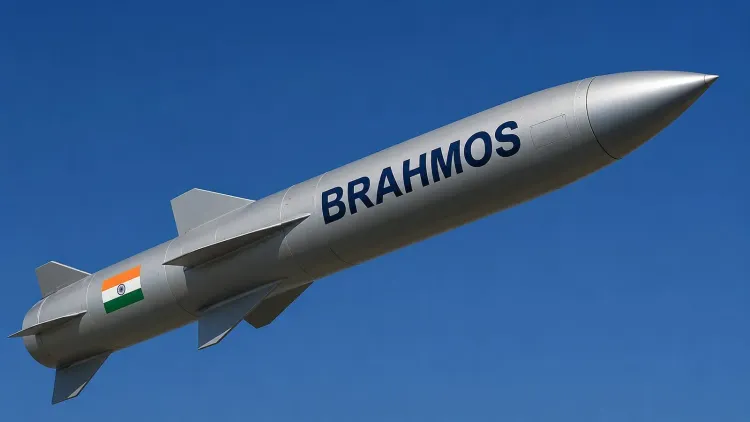
The BrahMos travels at Mach 2.8 , carries a 200–300 kg warhead, and has a range of up to 450 kilometres .
Tactical drone procurement opportunity has reportedly surged from ₹30–35 billion to nearly ₹120–140 billion .
India's BrahMos supersonic cruise missile is attracting fresh interest from a widening circle of nations, with reported enquiries now coming from Saudi Arabia, Egypt, Thailand, Brazil and Chile — extending well beyond the missile's earlier footprint in Southeast Asia. Talks with the United Arab Emirates are reportedly under way for a potential BrahMos sale that, if concluded, would mark the missile's first entry into the Gulf region.
What BrahMos Brings to the Table
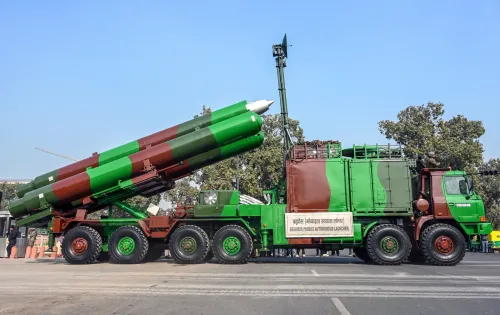
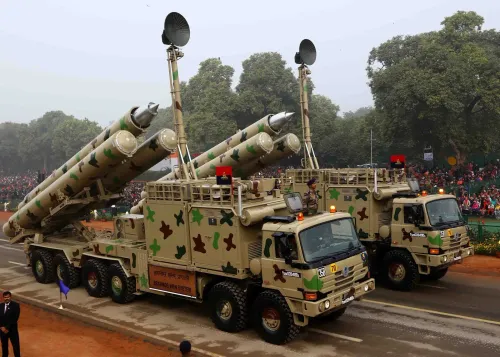
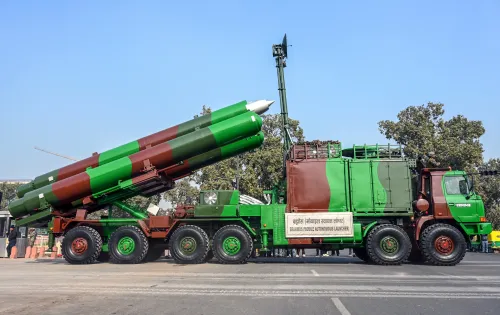
The BrahMos — a joint venture between India's Defence Research and Development Organisation (DRDO) and Russia's NPO Mashinostroyeniya — travels at around Mach 2.8, carries a 200–300 kilogram warhead, and has had its range progressively extended to roughly 450 kilometres in its most advanced variants. These specifications place it among the fastest operational cruise missiles in the world, making it a sought-after asset for nations looking to bolster maritime and land-strike capabilities.
The UAE is also reportedly in early-stage discussions to acquire the Akashteera air defence command-and-control system, developed by Bharat Electronics Limited (BEL) in collaboration with the Indian Army.
Deals Already in Motion
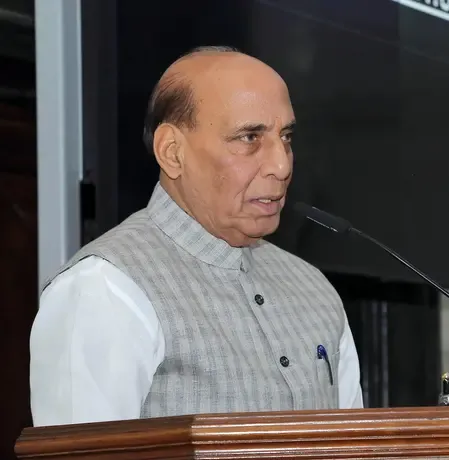
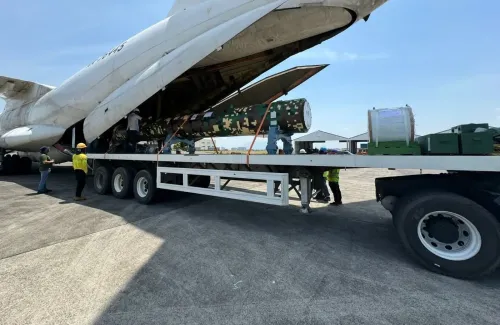
Defence Secretary Rajesh Kumar Singh, speaking at the Shangri-La Dialogue in Singapore last month, confirmed that India has signed a BrahMos agreement with Vietnam and that a deal with Indonesia is in its final stages. The Ministry of Defence also said Indonesia has backed a proposal to establish a Joint Defence Industry Cooperation Committee, covering technology transfer, joint research and development, and supply-chain integration — signalling a shift from transactional arms sales toward deeper industrial partnership.
The China Factor
Analysts have noted a pattern among recent and prospective BrahMos buyers: several have active maritime disputes with China or face other regional security pressures. However, defence observers caution against reading the sales as a coordinated anti-China strategy, arguing that India is responding to organic market demand rather than pursuing any formal geopolitical alignment. The pattern, they say, reflects buyer-driven security calculus more than a deliberate Indian pivot.
Record Defence Exports and a Structural Shift
The BrahMos momentum sits within a broader surge in Indian defence exports. Ministry of Defence data shows exports rose to a record ₹38,424 crore in FY26, up approximately 62 per cent from the previous year. Tactical drones are also emerging as a high-growth segment, with procurement opportunity reportedly rising from ₹30–35 billion in the previous cycle to nearly ₹120–140 billion.
India is simultaneously building institutional infrastructure to sustain its role as a long-term arms supplier — including lifecycle support systems, end-use monitoring frameworks, and the diplomatic bandwidth to manage consequences when exported weapons are deployed by recipient nations. Analysts describe the sector as entering a structural, multi-year growth cycle driven by indigenisation, rising defence capital expenditure, and accelerated adoption of advanced technologies.
Point of View
Third-party conflict risk, and technology-transfer obligations in markets as complex as the Middle East and South America remains nascent. The record ₹38,424 crore export figure is headline-worthy, but the harder question is whether India's institutional capacity — legal, diplomatic, and industrial — is scaling at the same rate as the order pipeline.
NationPress
30 Jun 2026
Frequently Asked Questions
Which countries have reportedly shown interest in buying the BrahMos missile?
Reported enquiries for the BrahMos supersonic cruise missile have come from Saudi Arabia, Egypt, Thailand, Brazil and Chile, expanding beyond earlier interest from the Philippines, Vietnam and Indonesia. Talks with the UAE are also reportedly under way for a potential sale.
What is the BrahMos missile and who makes it?
BrahMos is a supersonic cruise missile jointly developed by India's DRDO and Russia's NPO Mashinostroyeniya. It travels at around Mach 2.8, carries a 200–300 kg warhead, and has a range of up to approximately 450 kilometres in its most advanced variants.
Has India finalised any BrahMos export deals recently?
Yes. Defence Secretary Rajesh Kumar Singh confirmed at the Shangri-La Dialogue in Singapore that a BrahMos deal with Vietnam has been signed and that an agreement with Indonesia is in its final stages.
Why are analysts linking BrahMos buyers to China?
Analysts have noted that several recent and prospective BrahMos buyers have active maritime disputes with China or face related regional security concerns. However, they caution that India is responding to market demand rather than executing a formal anti-China strategy.
How much did India's defence exports grow in FY26?
India's defence exports rose to a record ₹38,424 crore in FY26, up approximately 62 per cent from the previous year, according to Ministry of Defence data.