India, South Korea strengthen customs cooperation to ease trade barriers
Synopsis
South Korea's customs agency flew to New Delhi to push India on a persistent problem: Korean businesses getting stuck in customs queues. The resulting cooperation agreement — covering training, case-sharing, and smoother clearance — is a quiet but meaningful step in the India-South Korea economic relationship, arriving alongside a record-breaking joint drug bust that seized 2.1 tonnes of narcotics across 18 countries.
Key Takeaways
The Korea Customs Service (KCS) and India's CBIC met in New Delhi on 12 August 2025 to agree on deeper customs cooperation.
KCS Director General Han Min called India 'a major partner in the Asia-Pacific region' and flagged hurdles faced by South Korean exporters.
Both sides discussed joint training programmes and mechanisms to resolve customs clearance difficulties for Korean firms in India.
A separate joint Asia-Pacific operation from May to June with 18 countries seized 2.1 tonnes of drugs in 785 cases — more than triple the previous year's tally of 663 kg in 235 cases.
Seized substances included 633.4 kg of methamphetamine , 368.8 kg of cannabis , and 57.1 kg of cocaine .
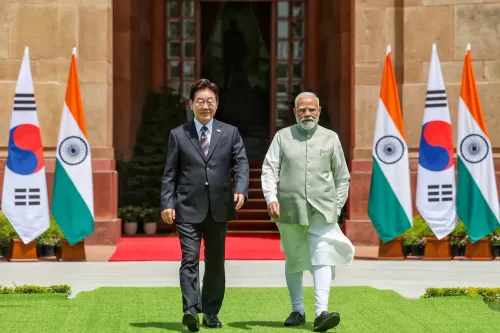
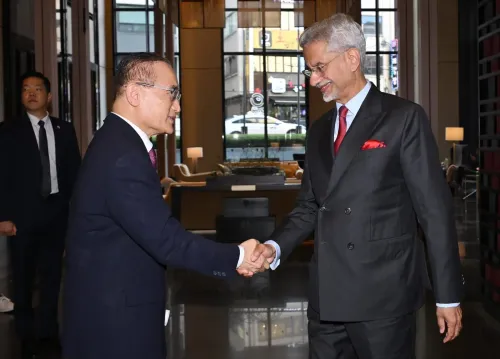
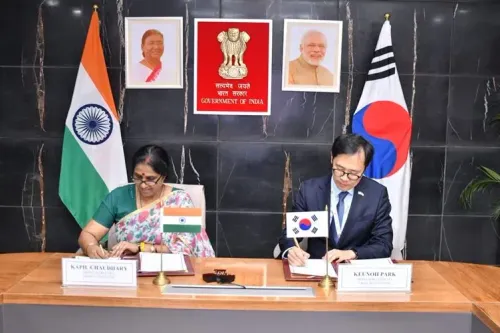
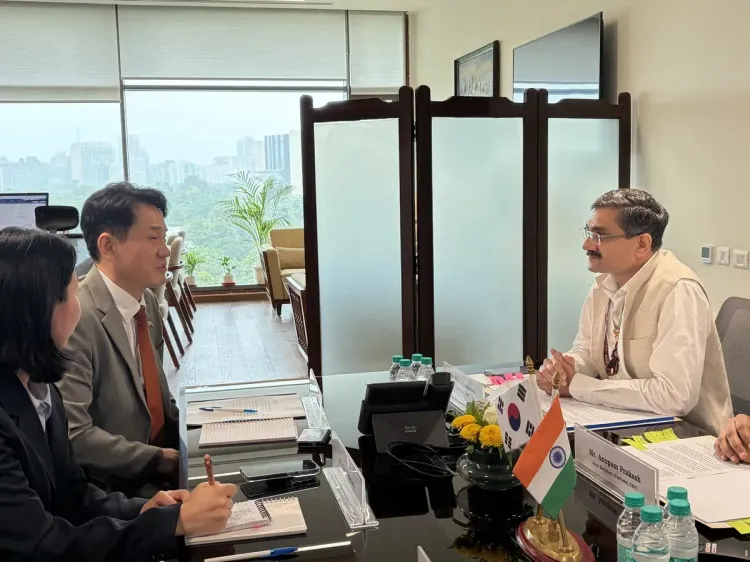
The Korea Customs Service (KCS) and India's Central Board of Indirect Taxes and Customs (CBIC) have agreed to deepen bilateral cooperation in customs affairs, with the goal of facilitating smoother trade and resolving hurdles faced by South Korean businesses operating in India. The agreement was reached during a high-level meeting held in New Delhi on Tuesday, 12 August 2025.
What Was Discussed
Officials from the KCS used the meeting to present specific cases of South Korean companies based in India that have encountered difficulties with customs clearance. Both sides discussed frameworks for bilateral cooperation, including joint training programmes aimed at aligning customs procedures.
Han Min, Director General for International Affairs at the KCS, underscored the strategic importance of the engagement. 'With India being a major partner in the Asia-Pacific region, the two countries intend to bolster cooperation down the road to address hurdles facing South Korean firms seeking to export to India,' he said in an official release.
Why This Matters for Trade
India has emerged as a critical destination for South Korean investment, particularly in electronics, automotive components, and infrastructure. Customs bottlenecks have reportedly been a recurring pain point for Korean exporters, delaying shipments and increasing compliance costs. This agreement signals a structured attempt to institutionalise solutions rather than address grievances on a case-by-case basis.
Notably, the meeting comes at a time when both nations are deepening economic ties under the broader India-South Korea Comprehensive Economic Partnership Agreement (CEPA) framework, with trade volumes between the two countries having expanded steadily over the past decade.
Joint Drug Seizure Operation
Separately, the KCS disclosed that it participated in a two-month joint global anti-narcotics operation from May to June alongside 18 other countries in the Asia-Pacific region, conducted under the World Customs Organization's Regional Intelligence Liaison Office for Asia and the Pacific. The campaign, themed 'For a Drug-Free World,' resulted in the seizure of 2.1 tonnes of drugs across 785 cases.
The haul significantly exceeded the previous year's operation, which had yielded 663 kilograms of illicit drugs in 235 cases. By substance, authorities seized 633.4 kg of methamphetamine, 368.8 kg of cannabis, and 57.1 kg of cocaine.
Next Steps
The KCS indicated it plans to expand its international cooperation footprint, including with the United Nations Office on Drugs and Crime (UNODC) and the International Criminal Police Organization (INTERPOL). On the bilateral front, implementation of the customs cooperation framework with India, including the launch of joint training programmes, is expected to follow in the coming months.
Point of View
Or remains a diplomatic gesture. India's customs administration has a long history of reform announcements that struggle with last-mile implementation. The addition of joint training programmes is a positive structural signal, but the absence of a defined timeline or dispute-resolution mechanism leaves the framework thin for now.
NationPress
27 Sept 2026
Frequently Asked Questions
What did India and South Korea agree on in their customs meeting?
The Korea Customs Service and India's Central Board of Indirect Taxes and Customs agreed to strengthen bilateral cooperation in customs affairs, including joint training programmes and mechanisms to ease customs clearance for South Korean businesses operating in India. The meeting took place in New Delhi on 12 August 2025.
Why are South Korean firms facing customs difficulties in India?
According to the KCS, South Korean companies based in India have encountered recurring customs-related hurdles that delay shipments and increase compliance costs. The KCS shared specific case studies with Indian officials during the New Delhi meeting to press for targeted remedies.
What was the outcome of the joint Asia-Pacific drug operation?
A two-month operation from May to June 2025, involving the KCS and 18 other countries under the World Customs Organization's Asia-Pacific office, resulted in the seizure of 2.1 tonnes of drugs across 785 cases. This far surpassed the previous year's operation, which yielded 663 kilograms in 235 cases.
Which drugs were seized in the Asia-Pacific customs operation?
Authorities seized 633.4 kg of methamphetamine, 368.8 kg of cannabis, and 57.1 kg of cocaine, among other substances, during the two-month joint operation conducted under the campaign slogan 'For a Drug-Free World.'
What are the next steps following the India-South Korea customs agreement?
The KCS is expected to work with the CBIC to roll out joint training programmes and implement the cooperation framework in the coming months. The agency also plans to expand its international partnerships with the UNODC and INTERPOL.