India-Tajikistan 12th Joint Commission: Trade up 27%, energy and pharma in focus
Synopsis
India's exports to Tajikistan jumped over 27% to $58.12 million in 2025-26, and the two countries have now formally placed hydropower, pharmaceuticals, and digital services at the centre of their bilateral agenda. With BHEL, KEC, and Kalpataru already operating in Tajikistan's energy sector, this 12th Joint Commission meeting signals a concrete push to move beyond diplomatic goodwill into investable projects.
Key Takeaways
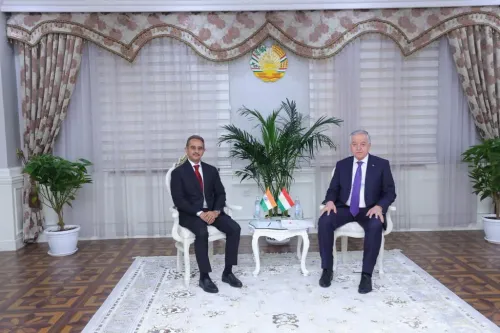
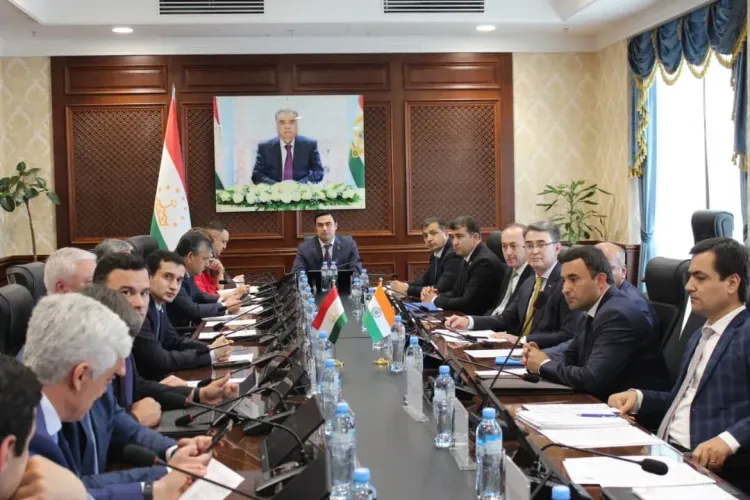
The 12th India-Tajikistan Joint Commission meeting was held via video conference, co-chaired by Mohit Yadav (India) and Nuriddinzoda Ahliddin Nuriddin (Tajikistan).
India's goods exports to Tajikistan rose 27.23% to an estimated $58.12 million in 2025-26 .
India's services exports to Tajikistan stood at $123.89 million in 2024 ; Tajikistan exported $37.56 million in services to India.
BHEL , KEC International , and Kalpataru Projects International are already active in Tajikistan's energy sector, with officials citing significant untapped potential.
Priority sectors identified: hydropower , pharmaceuticals , critical minerals , agriculture , IT , and digital services .
India reported GDP growth of 7.7% in FY 2025-26 and 7.8% in the final quarter.
India and Tajikistan have reaffirmed their commitment to deepening bilateral economic ties at the 12th Meeting of the India-Tajikistan Joint Commission on Trade, Economic, Scientific and Technical Cooperation, held via video conference. The session reviewed collaboration across sectors including energy, hydropower, critical minerals, pharmaceuticals, digital economy, and logistics, signalling a push to translate longstanding political goodwill into concrete economic outcomes.
Key Developments at the Joint Commission
The meeting was co-chaired by Mohit Yadav, Joint Secretary in India's Department of Commerce, and Nuriddinzoda Ahliddin Nuriddin, Deputy Minister of Economic Development and Trade of Tajikistan. Senior officials from multiple ministries and agencies on both sides participated in the discussions.
Commerce Secretary Rajesh Agrawal delivered the opening remarks, underscoring the need for both nations to convert their historical ties and political rapport into stronger economic results, particularly in the context of a shifting global trade and technology landscape.
Trade Figures Show Positive Momentum
Bilateral trade registered notable growth ahead of the meeting. India's goods exports to Tajikistan reached an estimated $58.12 million in 2025-26, a 27.23% increase over the previous year. Key export categories included pharmaceutical products, pulses, dairy machinery, medical instruments, tea, herbal products, and refrigeration equipment.
On the services front, India's exports to Tajikistan stood at $123.89 million in 2024, while Tajikistan's services exports to India were valued at $37.56 million. Both sides agreed to explore further cooperation in IT, digital services, healthcare, education, tourism, start-ups, and skill development.
India also highlighted its macroeconomic strength, citing a GDP growth of 7.7% in FY 2025-26 and 7.8% in the final quarter of that fiscal year.
Pharmaceuticals, Agriculture, and Digital Economy
Pharmaceuticals and healthcare emerged as a primary area of cooperation. India emphasised the quality and affordability of its pharmaceutical exports, and both sides agreed to enhance regulatory dialogue, expedite product registration, and deepen industry-level collaboration.
Agriculture and food products were also identified as high-potential sectors. Discussions covered rice, sugar, processed foods, meat products, pulses, and agro-technology. India expressed readiness to expand agricultural exports in ways that support Tajikistan's food security alongside mutual economic benefit.
Energy Cooperation and Indian Firms Already on the Ground
Energy cooperation was identified as a strategic pillar, with Tajikistan's extensive hydropower potential seen as a significant opportunity for Indian public and private sector participation. Several Indian companies — including Bharat Heavy Electricals Limited (BHEL), KEC International, and Kalpataru Projects International Limited — are already involved in ongoing initiatives in Tajikistan's energy sector.
Officials noted, however, that substantial untapped potential remains for deeper Indian engagement. Both sides agreed to strengthen coordination among government bodies, trade organisations, and business chambers to facilitate smoother trade flows and encourage fresh investment.
What's Next
With trade volumes rising and multiple high-value sectors now formally on the bilateral agenda, the 12th Joint Commission marks a renewed push to move the India-Tajikistan economic relationship beyond its current scale. Follow-up action on regulatory harmonisation in pharmaceuticals and expanded energy project participation by Indian firms will be key indicators of whether this momentum translates into measurable outcomes.
Point of View
But the base remains modest at $58 million — smaller than what India trades with many individual African nations. The real strategic play here is energy: Tajikistan holds some of Central Asia's largest untapped hydropower reserves, and Indian firms like BHEL are already positioned. What the Joint Commission has not yet produced is a bankable project pipeline with timelines and financing structures. Diplomatic goodwill and Joint Commission communiqués have a long history of not converting into signed contracts in this corridor. The test of this 12th meeting will be whether the regulatory harmonisation on pharmaceuticals and the energy project MoUs — if any emerge — carry enforcement teeth or remain aspirational.
NationPress
8 Jul 2026
Frequently Asked Questions
What was discussed at the 12th India-Tajikistan Joint Commission meeting?
The 12th Joint Commission reviewed bilateral cooperation across energy, hydropower, critical minerals, pharmaceuticals, agriculture, digital economy, transport, and logistics. Both sides also assessed market access challenges and agreed to strengthen coordination between government bodies and business chambers to facilitate trade and investment.
How much has India-Tajikistan trade grown?
India's goods exports to Tajikistan reached an estimated $58.12 million in 2025-26, a 27.23% increase over the previous year. On the services side, India exported $123.89 million worth of services to Tajikistan in 2024, while Tajikistan's services exports to India stood at $37.56 million.
Which Indian companies are active in Tajikistan's energy sector?
Bharat Heavy Electricals Limited (BHEL), KEC International, and Kalpataru Projects International Limited are among the Indian firms already involved in energy initiatives in Tajikistan. Officials noted that significant untapped potential remains for further Indian participation, particularly in hydropower.
Why is Tajikistan important for India's energy cooperation strategy?
Tajikistan holds substantial hydropower potential that aligns with India's interest in diversifying energy partnerships and supporting clean energy development in Central Asia. The sector has been identified as a strategic pillar of the bilateral relationship, with both public and private Indian firms encouraged to participate.
What are the key export items India sends to Tajikistan?
India's key exports to Tajikistan include pharmaceutical products, pulses, dairy machinery, medical instruments, tea, herbal products, and refrigeration equipment. Pharmaceuticals and agriculture have been highlighted as priority areas for further expansion.