India at UNSC: Security Council must act now to curb conflict-driven food crises
Synopsis
India drew a firm line at the UN Security Council: the body must act to protect humanitarian access in conflict zones, but long-term food security is a national responsibility, not a Council mandate. Meanwhile, the UN Secretary-General named three active maritime flashpoints — Ukraine's Black Sea, the Strait of Hormuz, and the Red Sea — and unveiled a UNOPS-led ship verification framework to unblock fertiliser flows. Tens of millions more people face food insecurity if political will does not follow.
Key Takeaways
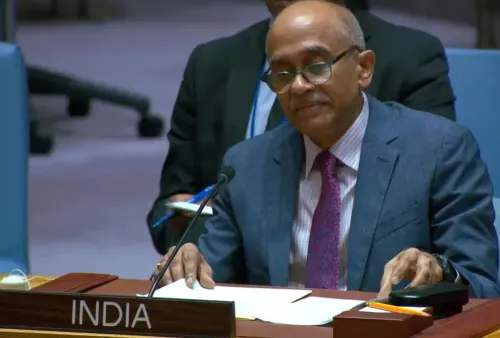
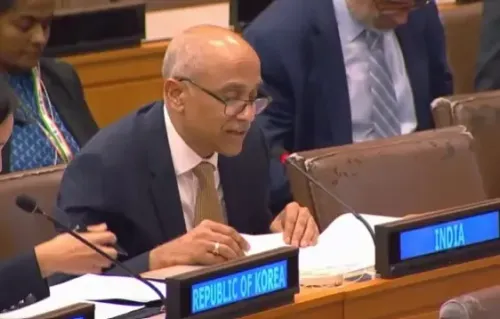
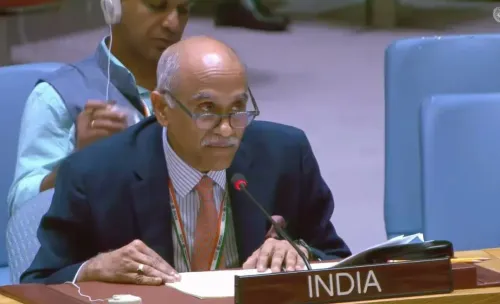
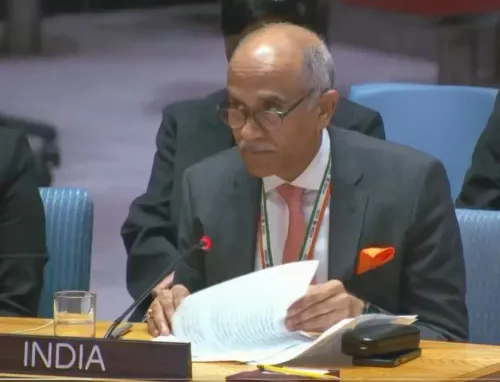
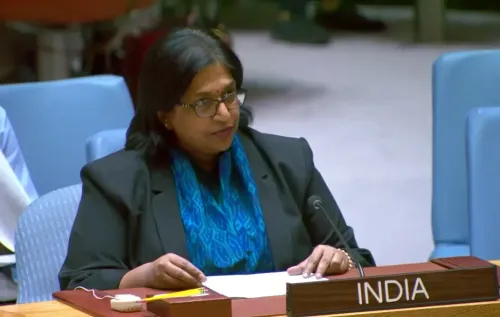
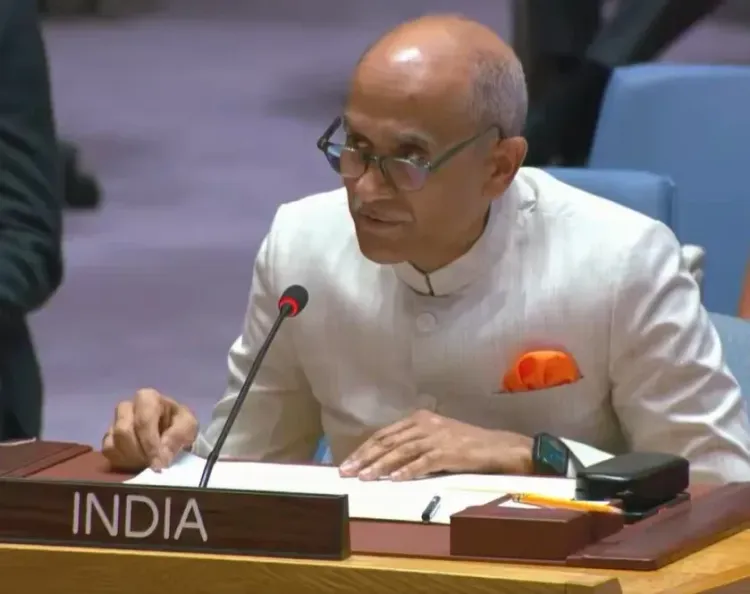
India's Permanent Representative P Harish addressed the UNSC open debate on 26 August , calling for immediate action to mitigate the humanitarian fallout of conflicts.
Harish urged the Council to ensure sanctions and other actions do not impede humanitarian assistance or legitimate food and agricultural trade.
India cited PM-KISAN direct benefit transfers to over 110 million farming households and the National Food Security Act as models of national food security commitment.
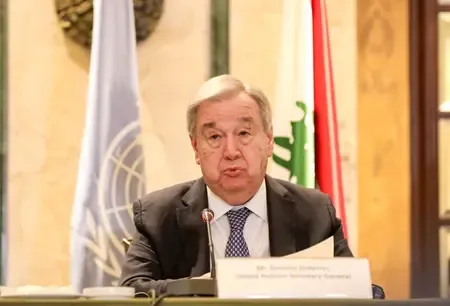
UN Secretary-General Antonio Guterres named the Black Sea , Strait of Hormuz , and Red Sea as the three active flashpoints disrupting global food and fertiliser supply chains.
A UNOPS -led task force has developed a ship verification framework to facilitate fertiliser transit through the Hormuz corridor, building on proposals made in March .
WFP Acting Director Carl Skau warned that maritime trade disruptions could push tens of millions more people into food insecurity.
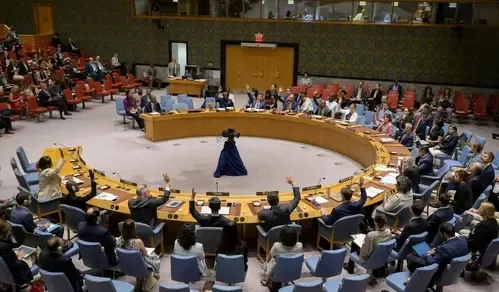
India's Permanent Representative to the United Nations, P Harish, on Tuesday, 26 August, called on the UN Security Council (UNSC) to make mitigating the humanitarian fallout of conflicts its immediate priority, warning that modern conflicts generate consequences far beyond their immediate theatres of hostility. His remarks came at a Council open debate titled 'Food Under Fire: The Security Council's Role in Mitigating Global and Local Food Crises'.
How Conflicts Are Threatening Global Food Security
'Today's conflicts increasingly generate ripple effects far beyond the immediate theatre of hostilities,' Harish said, pointing to cascading disruptions across energy markets, fertiliser supplies, maritime transport, humanitarian logistics, and agricultural trade. He stressed that such disruptions demonstrate how regional conflicts can threaten food security across the world, with developing countries that are heavily import-dependent bearing a disproportionate share of the burden.
What India Said the Council Must Do
Harish called on the Council to facilitate 'safe, rapid and unimpeded humanitarian access' and support de-confliction arrangements in conflict zones. He also urged the Council to ensure that its own actions — including the imposition of sanctions — 'do not inadvertently impede humanitarian assistance or legitimate food and agricultural trade.' Notably, he drew a clear boundary: building resilient, food-secure societies, he said, 'remains primarily the responsibility of national governments, supported by the UN development system and the Rome-based agencies,' rather than the Security Council itself.
India's Own Food Security Record
Harish cited India's domestic policy achievements as evidence of what national commitment can deliver. He highlighted the National Food Security Act, which provides a statutory entitlement to subsidised food grains, and the PM-KISAN programme, which has extended direct benefit transfers to over 110 million farming households, strengthening the economic resilience of small and marginal producers. India's championing of the International Year of Millets in 2023, he said, has catalysed global attention to climate-resilient, nutrient-rich crops as a pathway to diversified food security. 'These efforts, underpinned by digital public infrastructure and climate-adaptive agricultural practices, have enabled India to remain both food-secure and a net contributor to global food supply,' he added.
UN Chief Names the Three Flashpoints
While Harish spoke in general terms about maritime disruption risks without naming specific conflicts, UN Secretary-General Antonio Guterres was direct. He identified three active flashpoints threatening global food security: the war in Ukraine, affecting grain and energy exports in the Black Sea; restrictions and closures at the Strait of Hormuz — a conduit for a fifth of global oil supplies and a third of global fertiliser trade — which have 'driven up commodity prices, and made availability plummet'; and attacks on commercial vessels in the Red Sea, which are 'further threatening supply chains for food and other commodities.'
UN Proposes Fertiliser Corridor, Awaits Political Will
Guterres announced that a task force led by the UN Office for Project Services (UNOPS), building on proposals first made in March, has developed a framework for registering and verifying ships carrying fertiliser and related products to facilitate their transit through the Hormuz corridor. The mechanism is described as 'time-bound' and focused initially on fertilisers and raw materials, with the potential to be extended to other products. 'What is needed now is the cooperation and political will of the parties,' Guterres said, urging all concerned to 'engage seriously and constructively.' World Food Programme Acting Director Carl Skau reinforced the urgency, warning that 'serious disruptions to maritime trade now threaten to push tens of millions more people into food insecurity.' Whether the political will materialises remains the central question.
Point of View
Insisting that food security is ultimately a national governance responsibility. This dual framing reflects India's consistent position of engaging multilateral bodies without ceding sovereignty over domestic policy benchmarks. The more consequential development was Guterres naming the Hormuz corridor and unveiling the UNOPS verification framework: it is a rare instance of the UN moving from diagnosis to mechanism. The real test is whether Iran and the parties to the Red Sea conflict engage — without that, the framework is paperwork. The gap between the urgency of Skau's warning and the pace of diplomatic progress at the Council is precisely where tens of millions of vulnerable people fall through.
NationPress
10 Oct 2026
Frequently Asked Questions
What did India say at the UN Security Council on food security?
India's Permanent Representative P Harish called on the Security Council to make mitigating the humanitarian fallout of conflicts its immediate priority, including facilitating unimpeded humanitarian access and ensuring sanctions do not block food and agricultural trade. He also argued that long-term food security is primarily the responsibility of national governments, not the Council.
Which conflicts are threatening global food security, according to the UN?
UN Secretary-General Antonio Guterres named three flashpoints: the war in Ukraine affecting Black Sea grain and energy exports, restrictions at the Strait of Hormuz disrupting a fifth of global oil and a third of global fertiliser trade, and attacks on commercial vessels in the Red Sea threatening broader supply chains.
What is the UNOPS fertiliser corridor proposal?
A UNOPS-led task force has developed a framework to register and verify ships carrying fertiliser and related products, facilitating their transit through the Strait of Hormuz. The mechanism is time-bound and initially focused on fertilisers, with scope to expand to other goods. It builds on proposals first made in March.
How has India contributed to global food security?
India highlighted its National Food Security Act, which provides subsidised food grains to eligible citizens, and the PM-KISAN programme, which has extended direct benefit transfers to over 110 million farming households. India also promoted the International Year of Millets in 2023, spotlighting climate-resilient crops as a food security pathway.
Why does the UN warn that maritime disruptions matter for food security?
WFP Acting Director Carl Skau warned that serious disruptions to maritime trade could push tens of millions more people into food insecurity. Key shipping routes — the Red Sea, Black Sea, and Strait of Hormuz — carry critical volumes of grain, fertiliser, and oil, meaning conflict-related closures rapidly translate into higher food prices and reduced availability worldwide.