India at UN Security Council: National action key to food security
Synopsis
At a UN Security Council session on food diplomacy, India pushed back on the narrative that conflict alone drives hunger — arguing national governments must own the solution. The speech was backed by hard numbers: 50,000 metric tonnes of wheat to Afghanistan, 2,000 metric tonnes of rice to Sudan, and 135 metric tonnes of aid to Palestine since October 2023.
Key Takeaways
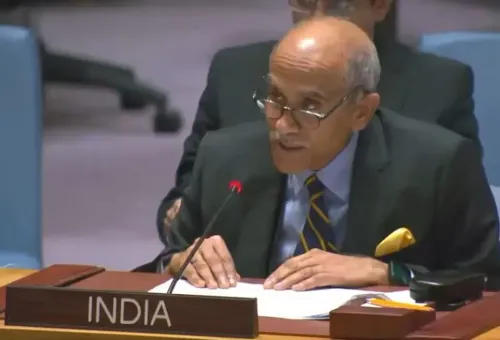
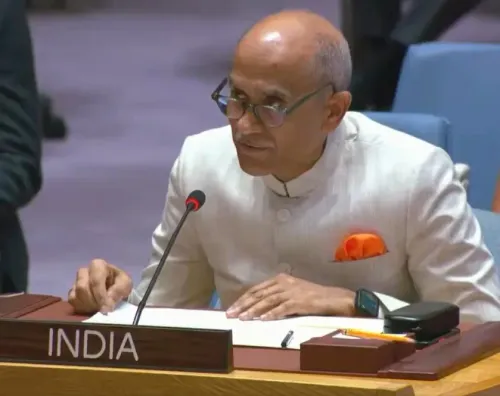
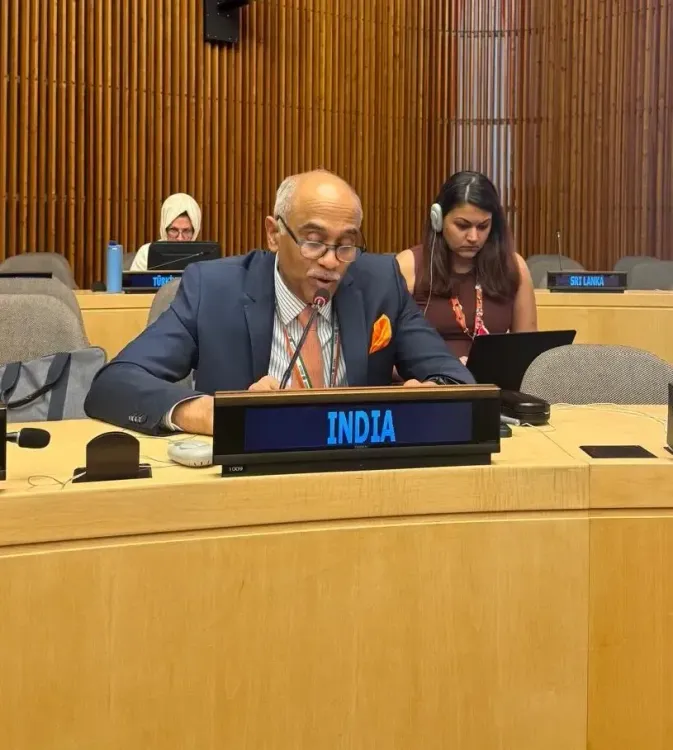
India's Permanent Representative Harish addressed a UN Security Council informal meeting on 18 November 2026 , convened by council president Greece .
India argued that conflict and political instability are contributing factors to food insecurity, not its root cause, placing primary responsibility on national governments .
India has sent 50,000 metric tonnes of wheat to Afghanistan , supporting nearly five million people .
India has contributed 135 metric tonnes of aid to Palestine — including 81.5 metric tonnes of medical supplies — since the Gaza conflict began in October 2023 .
A co-authored concept paper described food systems as 'strategic assets' but warned they must never be weaponised.
India called for investment in agriculture, irrigation, and climate-resilient crops such as millets as long-term fixes.
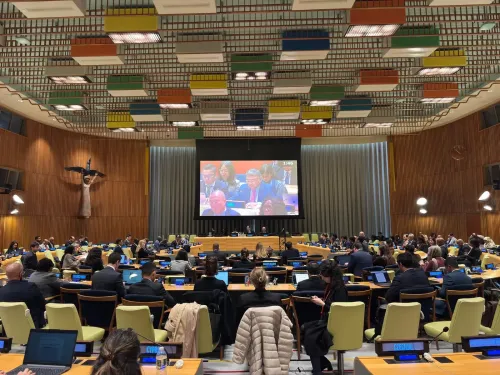
India's Permanent Representative to the United Nations, Harish, on 18 November 2026 urged national governments to take primary responsibility for building food-secure societies, asserting that conflict and political instability — while contributing factors — are not the root cause of global food insecurity. He was addressing an informal meeting of the UN Security Council convened by its president, Greece, on the theme of 'Food Diplomacy and Conflict-Induced Food Insecurity'.
India's Core Position on Food Insecurity
'While food insecurity is affected by conflict, political instability and underdevelopment, we firmly believe that these factors are not the root cause of food insecurity,' Harish said. He stressed that 'building resilient, food-secure societies remains primarily the responsibility of national governments, supported by the UN development system and the Rome-based agencies' — referring to the Food and Agriculture Organisation (FAO) and the World Food Programme (WFP).
The position signals India's preference for domestically driven solutions over geopolitically framed humanitarian frameworks, a stance consistent with its broader foreign policy posture at the UN.
Food Systems as Strategic Assets
A concept paper prepared for the meeting — co-authored by Greece, India, and other member states — described food systems as 'strategic assets, with importance comparable to energy and critical minerals,' while cautioning that this strategic value 'must never be used to justify weaponising food.'
The paper also flagged that disruptions to food production, supply chains, and trade — alongside dependencies on critical inputs such as energy, fertilisers, and water — 'can have consequences that extend beyond markets and development.' Without naming the Strait of Hormuz or the Black Sea crisis by name, Harish called for ensuring 'safety and freedom of navigation, in accordance with international law, which are essential for movement of supplies and to protect seafarers.'
India's Humanitarian Contributions
Harish cited concrete examples of India's food diplomacy in action. India has dispatched 50,000 metric tonnes of wheat to Afghanistan, benefiting nearly five million people, and sent 2,000 metric tonnes of rice along with medicines to Sudan. Since the onset of the Gaza conflict in October 2023, India has also contributed 135 metric tonnes of humanitarian aid to Palestine, including 81.5 metric tonnes of medical supplies.
These contributions, Harish noted, reflect India's commitment to South-South cooperation and development partnerships — sharing resources with nations in need while upholding the principles of neutrality and impartiality.
Role of the Security Council and Humanitarian Principles
On the Council's mandate, Harish said its 'immediate priority should be to mitigate the humanitarian consequences of conflict and facilitate safe, rapid and unimpeded humanitarian access and protection of civilian infrastructure essential for food security.' He also cautioned that Council actions such as sanctions should 'not impede humanitarian assistance or legitimate agricultural trade.'
'Humanitarian assistance must remain guided by need and the principles of humanity, neutrality, impartiality and independence and should be guided by national requests,' he added.
Long-Term Fixes: Agriculture Investment and Climate-Resilient Crops
Harish emphasised that humanitarian action alone cannot resolve the food crisis in the long run. He called for 'nationally owned investment in agriculture, irrigation, storage and diversified supply chains,' alongside affordable access to seeds, fertilisers, technology, and concessional finance for small farmers.
He also highlighted the role of climate adaptation, stating that 'climate-resilient crops such as millets can strengthen nutrition and food security' — a nod to India's global push for millet adoption following its International Year of Millets presidency in 2023. The coming months are likely to see India continue building coalitions on food diplomacy through multilateral forums.
Point of View
Houthi disruptions, sanctions regimes — as the primary levers of global food insecurity. By insisting national governments bear primary responsibility, New Delhi deflects both scrutiny of its own food export controls and pressure to endorse Security Council interventionism in the name of food access. The aid figures — substantial by developing-world standards — reinforce India's South-South credentials ahead of its continued multilateral engagement. Yet the speech's most consequential line may be the one on navigation freedom: without naming the Strait of Hormuz or the Black Sea, India signalled a clear stake in keeping global shipping lanes open, an interest that aligns as much with its own import dependencies as with humanitarian principle.
NationPress
18 Nov 2026
Frequently Asked Questions
What did India say at the UN Security Council on food security?
India's Permanent Representative Harish argued on 18 November 2026 that conflict and political instability contribute to food insecurity but are not its root cause, and that national governments bear primary responsibility for building food-secure societies. He called for investment in agriculture, irrigation, and climate-resilient crops as sustainable long-term solutions.
What humanitarian aid has India provided for food security?
India has sent 50,000 metric tonnes of wheat to Afghanistan, supporting nearly five million people, and 2,000 metric tonnes of rice along with medicines to Sudan. Since the Gaza conflict began in October 2023, India has also contributed 135 metric tonnes of humanitarian aid to Palestine, including 81.5 metric tonnes of medical supplies.
What was the UN Security Council meeting about?
The informal meeting was convened by Greece, as the Security Council's sitting president, on the theme of 'Food Diplomacy and Conflict-Induced Food Insecurity.' It brought together member states to discuss how conflict, supply chain disruptions, and geopolitical tensions affect global food access.
What is the concept paper India co-authored at the UN?
A concept paper prepared by Greece, India, and other countries for the meeting described food systems as strategic assets comparable to energy and critical minerals, while warning they must never be weaponised. It also flagged risks from disruptions to supply chains, fertilisers, energy, and water access.
Why did India raise freedom of navigation at a food security meeting?
Without explicitly naming the Strait of Hormuz or the Black Sea crisis, India's representative stressed the importance of safe and free navigation under international law as essential for the movement of food and fertiliser supplies. The reference reflects India's vulnerability to any disruption in global shipping lanes, given its dependence on imported energy and agricultural inputs.