India flags AI, maritime security as UNSC 2028-29 candidature priorities
Synopsis
India has placed AI and maritime security at the heart of its UNSC election bid for 2028–2029, making the case at the UN on the very day Iran reported three oil tankers ablaze from sea mines in the Strait of Hormuz. The confluence of diplomatic ambition and live maritime peril gave India's pitch an urgency that no prepared speech could manufacture.
Key Takeaways
India has declared AI and maritime security as the top priorities for its UNSC 2028–2029 non-permanent seat candidature.
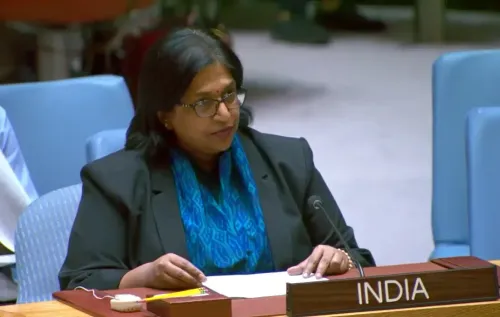
Permanent Representative P.
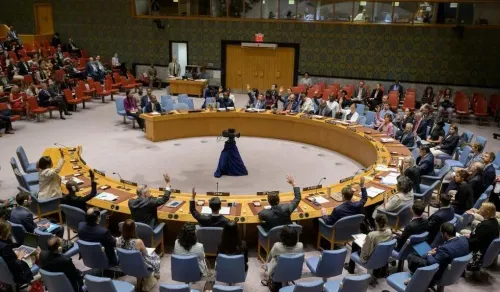
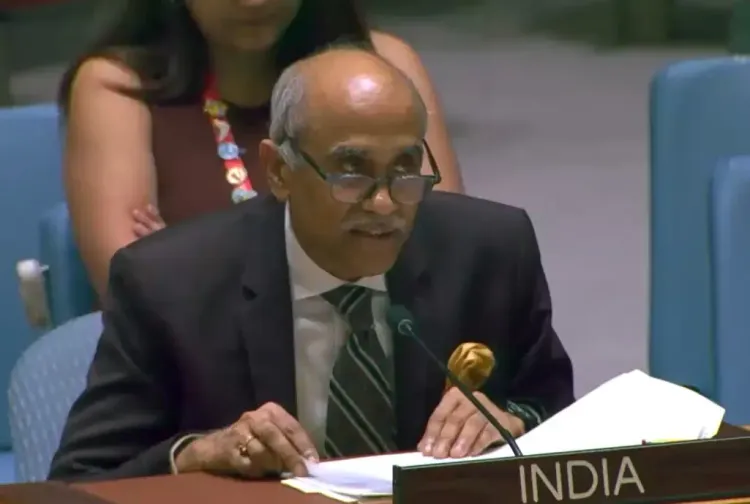
Harish made the announcement at a UN Security Council open debate on 30 October 2026 in New York .
On the same day, Iran's Navy reported three oil tankers struck sea mines and ablaze in the Strait of Hormuz .
India's IFC-IOR , set up in 2018 and hosted by the Indian Navy , has 12 international partners and was cited as a model for regional maritime cooperation.
Journalist Fareed Zakaria warned that 95% of global digital communications run through vulnerable subsea cables .
Last week, IRGC Brigadier General Yadollah Javani threatened to attack undersea internet cables in the Strait of Hormuz if Iran's infrastructure was targeted.
India has identified artificial intelligence (AI) and maritime security as the twin pillars of its campaign for a non-permanent seat on the United Nations Security Council (UNSC) for the 2028–2029 term, with its top UN diplomat urging stronger international cooperation to counter technology-driven threats at sea. The declaration came on Thursday, 30 October 2026, at a high-profile open debate at the Security Council in New York.
India's Candidature Framework
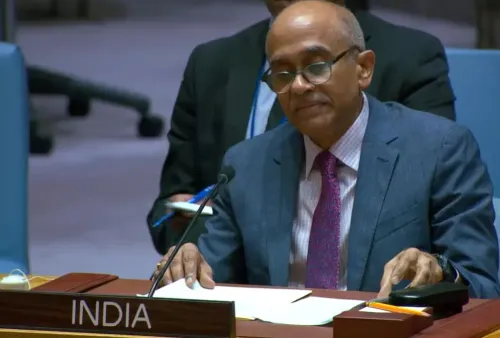
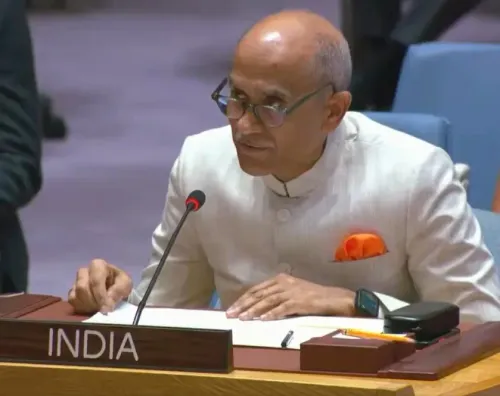
Speaking at the Council debate, India's Permanent Representative P. Harish outlined New Delhi's priorities ahead of the election slated for next year. 'India has identified AI and maritime security as important priorities for its candidature to the Security Council for 2028–2029,' he said. The election, if won, would give India a two-year non-permanent seat beginning in 2028.
Harish articulated a clear normative framework for how India views the intersection of technology and global order: 'Technology must strengthen human security, not undermine it; it must expand opportunity, not inequality; and it must make our shared maritime commons safer, not more contested.' The statement signals that India intends to anchor its multilateral diplomacy around responsible technology governance at sea.
The Debate and Its Backdrop
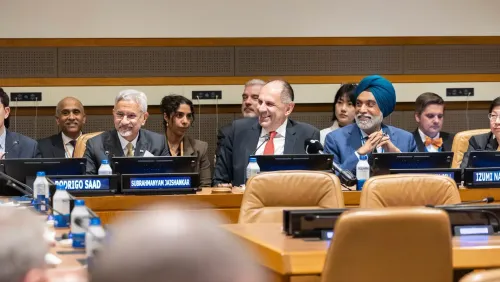
The open debate, titled 'Emerging Technologies and Maritime Security: Implications for Peace and Security', was convened by Greece during its Council presidency and chaired by Greek Prime Minister Kyriakos Mitsotakis. The timing was stark: on the same day, Iran's Navy reported that three oil tankers in the Strait of Hormuz had struck sea mines and were ablaze, providing an immediate and dramatic backdrop to the proceedings.
Harish condemned such incidents in clear terms. 'India strongly condemns attacks against commercial vessels and reiterates the importance of freedom of navigation, unimpeded lawful maritime commerce and the safety of seafarers, in accordance with international law,' he said. He added that attacks on commercial shipping 'threaten seafarers, disrupt supply chains and disproportionately affect developing countries through higher costs and economic uncertainty.'
AI as a Tool for Maritime Awareness
Harish highlighted the transformative role AI can play in strengthening maritime domain awareness. He noted that 'AI-enabled analysis of satellite imagery, radar and vessel-tracking data can improve maritime domain awareness, detect suspicious activities.' India offered its cooperation under the vision of SAGAR — Security and Growth for All in the Region — a framework that has guided New Delhi's Indian Ocean policy since 2015.
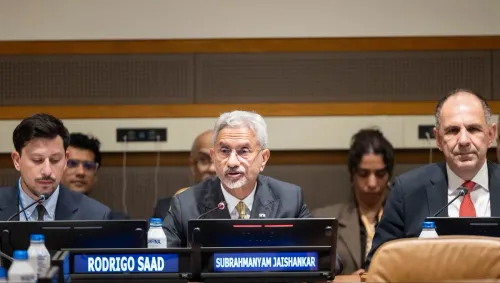
He also pointed to India's Information Fusion Centre–Indian Ocean Region (IFC-IOR), located near New Delhi, as a concrete model of regional cooperation. The centre, set up in 2018 and hosted by the Indian Navy, currently has 12 international partners and aggregates maritime data for the region. Harish noted that External Affairs Minister S. Jaishankar and Greece's Foreign Minister George Gerapetritis had co-chaired a high-level discussion on AI and maritime security just last month, calling this debate an opportunity to build further on that momentum.
Expert Warnings: Undersea Cables and Non-State Threats
Fareed Zakaria, the Indian-American journalist and author who briefed the Council via video link, underscored the vulnerability of the global digital infrastructure underpinning trade and communication. He said 95 per cent of the world's digital communications travel through a network of subsea cables, leaving them exposed to deliberate attacks. He argued that real-time AI-based data processing could enable prompt responses to signal-jamming or attempts to sever undersea cables. 'The technology is there. The ocean is waiting. What we need is the political will to implement this,' he said.
The UN Secretary-General's Chef de Cabinet, Earle Courtenay Rattray, warned that non-state actors, including terrorist groups, could exploit emerging technologies, and called on the Council to strengthen international frameworks to counter such risks. Notably, just last week, a senior Islamic Revolutionary Guard Corps (IRGC) commander, Brigadier General Yadollah Javani, had warned that Iran could target undersea internet cables in the Strait of Hormuz if its own infrastructure came under attack — a threat that added urgency to the Council's deliberations.
What Comes Next
India's formal UNSC candidature election is expected next year, with the seat covering the 2028–2029 period. As geopolitical tensions in key maritime chokepoints — particularly the Strait of Hormuz and the Red Sea — continue to simmer, New Delhi's emphasis on AI-enabled maritime governance could sharpen its multilateral profile ahead of the vote. The IFC-IOR's expanding partner base will likely serve as a practical demonstration of India's claimed leadership role in Indian Ocean security.
Point of View
Without taking sides in great-power rivalries. The IFC-IOR is a genuine operational asset, not just a talking point, which gives the pitch more substance than most candidature diplomacy. Yet the hard question is whether AI-enhanced maritime awareness can be institutionalised beyond bilateral goodwill, especially given the Strait of Hormuz crisis unfolding in real time. India's 2028–2029 seat, if secured, will be tested immediately by exactly the kind of maritime flash points it is now promising to help manage.
NationPress
30 Oct 2026
Frequently Asked Questions
Why is India contesting the UNSC election, and when is it?
India is seeking a non-permanent seat on the UN Security Council for the 2028–2029 term, with the election scheduled for next year. A non-permanent seat allows India to shape global deliberations on peace and security for a two-year period.
What are India's stated priorities for its UNSC candidature?
India has identified artificial intelligence (AI) and maritime security as its two key priorities, arguing that technology must reinforce human security and keep the maritime commons safer and more open for all nations, especially developing economies.
What is India's IFC-IOR and why does it matter?
The Information Fusion Centre–Indian Ocean Region (IFC-IOR) , set up in 2018 near New Delhi and hosted by the Indian Navy , is a maritime data-sharing hub with 12 international partners . India cites it as a working model of the multilateral cooperation it wants to promote at the UNSC.
What happened in the Strait of Hormuz on 30 October 2026?
On the same day as the UNSC debate, Iran's Navy reported that three oil tankers in the Strait of Hormuz had struck sea mines and were on fire. The incident underscored the real-world urgency of the Council's discussion on maritime security.
What threat did Iran make regarding undersea internet cables?
Last week, IRGC Brigadier General Yadollah Javani warned that Iran could attack undersea internet cables in the Strait of Hormuz if its own infrastructure was targeted. Journalist Fareed Zakaria noted that 95% of global digital communications depend on such subsea cables, making them a critical vulnerability.