Indian American CEOs lead US AI export push under Trump's SI Exports Program
Synopsis
Four tech giants led by Indian American CEOs — Satya Nadella, Arvind Krishna, Nikesh Arora, and Sridhar Ramaswamy — are anchor members of 33 US government-backed AI export consortia under Trump's Super Intelligence Exports Program. It is the most direct federal attempt yet to weaponise US AI dominance commercially, and Indian diaspora leaders are right at its centre.
Key Takeaways
The US Commerce Department has selected 33 consortia under the American SI Exports Program to export integrated AI systems overseas.
Microsoft (Satya Nadella), IBM (Arvind Krishna), Palo Alto Networks (Nikesh Arora), and Snowflake (Sridhar Ramaswamy) are among the anchor members — all led by Indian American executives .
The programme spans 19 distinct anchor companies leading the 33 consortia, covering hardware, AI models, cybersecurity, and applications.
Selection grants access to federal support and US Commercial Service representatives , not a direct export contract.
A second application window opens on 30 November for groups with specific overseas deals in progress.
The initiative implements a Trump executive order aimed at expanding US AI market reach and countering rival technological powers.
Four major US technology companies led by Indian American executives — Microsoft, IBM, Palo Alto Networks, and Snowflake — are among the anchor members of 33 industry consortia selected by the US Commerce Department to export American artificial intelligence systems to overseas markets. The selection, announced on 17 November 2026, marks a significant milestone in President Donald Trump's push to extend US technological dominance globally through what the government calls the American SI Exports Program — where 'SI' stands for 'Super Intelligence'.
The Indian American Leadership Connection
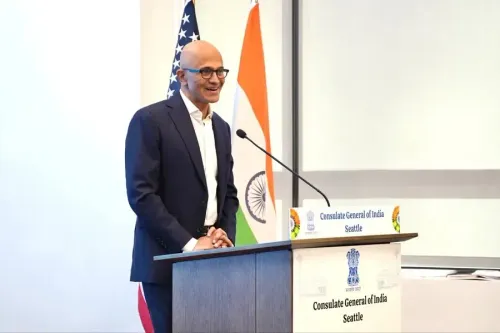
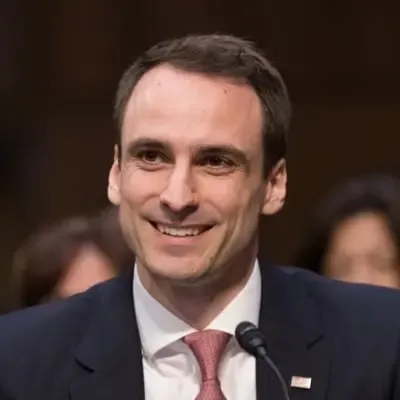
The four firms are helmed by some of the most prominent Indian-origin technology leaders in the world. Satya Nadella leads Microsoft, Arvind Krishna heads IBM, Nikesh Arora commands Palo Alto Networks, and Sridhar Ramaswamy steers Snowflake. Each company has been designated as an anchor member, tasked with organising and leading a consortium under the programme. This concentration of Indian American leadership at the apex of a federally-backed AI export initiative is notable — and reflects the outsized role the diaspora continues to play in shaping global technology strategy.
What the SI Exports Program Covers
The programme brings together suppliers across the full AI technology stack, encompassing computing hardware, data tools, AI models, cybersecurity solutions, and end-user applications. Selected consortia receive coordinated federal support — including access to US Commercial Service representatives and government partners — to market their integrated technology packages to foreign governments and other international customers. Crucially, selection grants access to this government support apparatus rather than constituting an award of an export contract in itself.
Notably, the 33 consortia announced are not 33 separate companies. Several firms lead multiple groups, with 19 distinct anchor companies identified on the published list — indicating that the programme's reach is broader in structure than headline numbers suggest.
How the Selection Process Worked
The first application window opened on 1 April and closed on 30 June. According to the Commerce Department, industry groups submitted 78 applications during this period. Proposed packages were then reviewed against national security criteria, foreign policy considerations, and programme requirements before the final 33 consortia were selected. The process underscores that participation carries geopolitical vetting, not merely commercial assessment.
A Second Route Opens 30 November
The Commerce Department also announced a second application pathway set to open on 30 November, designed for groups assembled around specific overseas deals already in progress. Unlike the first route, applicants under this window need only supply the technology layers required by their proposed transaction, rather than a complete, end-to-end AI system. This more flexible entry point could lower barriers for mid-tier technology companies or niche solution providers looking to participate.
The Bigger Picture: Trump's AI Export Order
The programme implements a Trump executive order directing the Commerce Department to organise and promote exports of integrated American AI systems. Its stated objectives are twofold: expanding overseas markets for US companies and reinforcing American technological leadership at a time of intensifying competition with China. This comes amid growing global debate over AI governance, data sovereignty, and the conditions under which foreign governments adopt AI infrastructure built on US platforms — questions that could shape the programme's reception in partner countries.
Point of View
Krishna, Arora, and Ramaswamy did not arrive at the top of these firms by accident; their elevation reflects a decades-long pipeline from IIT campuses to Silicon Valley boardrooms. What is worth watching, however, is whether the programme's geopolitical vetting requirements create friction with the very foreign governments — including India — that these companies might target. The Trump administration's framing of AI as 'Super Intelligence' exports is also deliberate signalling: this is not a trade programme, it is a technological-dominance programme. The question of which foreign governments accept US AI infrastructure on Washington's terms, and which push back over data sovereignty and strategic autonomy, will define the programme's real-world impact far more than the list of 33 selected consortia.
NationPress
17 Nov 2026
Frequently Asked Questions
What is the American SI Exports Program?
The American SI Exports Program — where 'SI' stands for 'Super Intelligence' — is a US Commerce Department initiative that organises US technology companies into consortia to export integrated American AI systems to foreign governments and other international customers. It was created to implement a Trump executive order promoting US AI exports and reinforcing American technological leadership.
Which Indian American-led companies were selected as anchor members?
Microsoft (led by Satya Nadella), IBM (Arvind Krishna), Palo Alto Networks (Nikesh Arora), and Snowflake (Sridhar Ramaswamy) were each named as anchor members responsible for organising and leading a consortium under the programme.
What does being selected actually mean for these companies?
Selection grants the consortia access to coordinated federal support — including US Commercial Service representatives and government partners — to market their AI technology packages abroad. It does not constitute an award of an export contract; that comes through separate commercial arrangements.
How many companies and consortia are involved in the programme?
The Commerce Department announced 33 consortia, led by 19 distinct anchor companies. Several companies lead multiple groups, meaning the total number of participating firms is broader than the headline consortia count suggests.
What is the second application window opening on 30 November?
A second route opens on 30 November for groups assembled around specific, identified overseas deals. Unlike the first window, these applicants only need to provide the technology layers required by their proposed transaction rather than a complete AI system, lowering the barrier for more targeted participation.