Indian-American students win inaugural Presidential AI Challenge at White House
Synopsis
At the inaugural Presidential AI Challenge ceremony on 9 June, the White House spotlighted a striking pattern: Indian-American students swept multiple category titles — from a bullying-prevention chatbot built by elementary schoolers in Virginia to a criminal-investigation computer vision tool by a Pennsylvania teen headed to Harvard. With over 20,000 participants across all 50 states, this is the US government's clearest signal yet that AI literacy is now a national priority — and Indian-origin students are already leading the field.
Key Takeaways
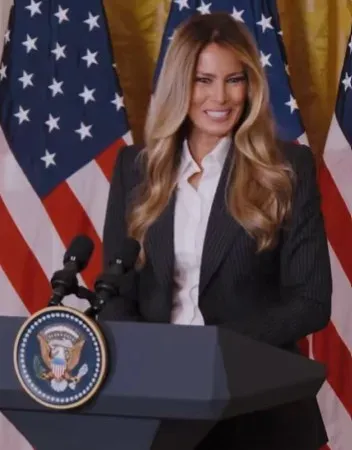
First Lady Melania Trump honoured winners of the inaugural Presidential AI Challenge at the White House on 9 June 2025 .
The competition attracted more than 20,000 participants from all 50 US states , Puerto Rico , the District of Columbia , and 49 Department of Defence schools across 10 countries .
A five-member Indian-American team from Aldie, Virginia won Elementary School Track 2 with a bullying-prevention chatbot app.
Viha Iyer , Arya Pratap , and Shrimayi Shetty of NorthStar Middle School, Sammamish won Middle School Track 1 with project 'SkillUp' .
Khandakar Mahin of Upper Darby Senior High School, Pennsylvania won High School Track 1 and will attend Harvard University in the autumn.
Winning projects spanned education , bullying prevention , criminal investigations , accessibility , and urban development .
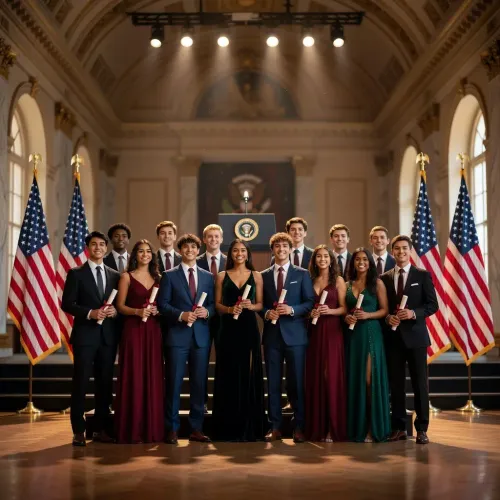
Several Indian-American students were honoured at the White House on Tuesday, 9 June as First Lady Melania Trump recognised national champions of the inaugural Presidential AI Challenge, a nationwide competition that drew more than 20,000 participants from across the United States and beyond. The event marked the first time the White House has hosted a dedicated student artificial intelligence competition of this scale.
Indian-Origin Winners and Their Projects
Among the celebrated teams was a five-member group from Aldie, Virginia, whose project — the 'Friendzone Chatbot Bullying Prevention App' — claimed the top prize in the Elementary School Track 2 category. The team comprised Aarna Jaiswal, Eshani Khatri, Riva Madda, Samhitha Pinnamareddy, and Sanuli Rathnayake.
At the middle school level, Viha Iyer, Arya Pratap, and Shrimayi Shetty of NorthStar Middle School in Sammamish, Washington, won the Middle School Track 1 category with their project 'SkillUp', designed to build practical skills through AI-driven learning.
In the high school division, Khandakar Mahin of Upper Darby Senior High School in Pennsylvania won the High School Track 1 title for his project, 'Utilising Computer Vision for Hotel Room Identification in Criminal Investigations'. Organisers noted that Mahin is set to graduate from high school this week and will attend Harvard University in the autumn.
What Melania Trump Said at the Ceremony
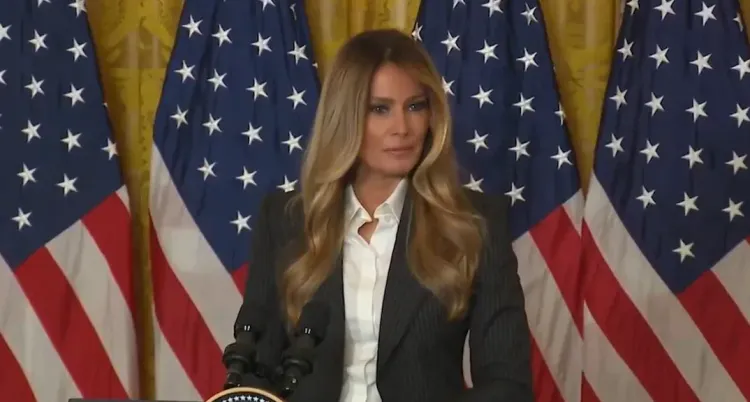
Speaking at the awards ceremony, First Lady Melania Trump praised the student innovators and framed the competition as a statement of national ambition. 'It is wonderful to see this very impressive group of innovators at the White House. I'm proud that you represent the best of America. You are our future,' she said.
She also highlighted the competition's sweeping reach: 'The first Presidential AI Challenge was broadly welcomed across our nation. More than 20,000 students participated across all 50 states, plus the District of Columbia, Puerto Rico, and 49 Department of War schools in 10 countries around the world.' She urged participants to 'continue to build boldly' and help 'safeguard America's leading position in the world of technology.'
Scope of the Challenge and Winning Themes
According to the White House, winning projects addressed a broad spectrum of real-world challenges — spanning education, bullying prevention, criminal investigations, accessibility for visually impaired people, and urban development. The competition drew entries from all 50 US states, the District of Columbia, Puerto Rico, and Department of Defence schools overseas. Two educator champion teams from North Carolina and New Jersey were also recognised. Following the ceremony, participants attended a reception in the White House Rose Garden.
Broader Context: AI, Education Policy, and Indian-Americans in STEM
The Presidential AI Challenge reflects a broader US policy push to embed AI literacy into mainstream education as Washington seeks to maintain its competitive edge in advanced technologies. Policymakers have increasingly prioritised AI skills development among students as competition with other global powers intensifies.
Notably, Indian-Americans have long held a prominent position in the US technology sector, leading major companies, research institutions, and start-ups. Their strong representation among the inaugural winners underscores the growing role of Indian-origin students in science, technology, engineering, and mathematics (STEM) education across the United States. This is the first such nationally recognised platform to spotlight that contribution at the White House level.
Point of View
It is increasingly dependent on first- and second-generation immigrant talent. The challenge now is whether this ceremonial recognition translates into sustained federal funding for AI education in under-resourced school districts — not just in Virginia and Washington state, where winners clustered, but across the country.
NationPress
19 Sept 2026
Frequently Asked Questions
What is the Presidential AI Challenge?
The Presidential AI Challenge is an inaugural nationwide student competition organised by the White House to encourage AI innovation among young people. It drew more than 20,000 participants from all 50 US states, Puerto Rico, the District of Columbia, and Department of Defence schools in 10 countries.
Which Indian-American students won the Presidential AI Challenge?
Several Indian-American students won across categories: Aarna Jaiswal, Eshani Khatri, Riva Madda, Samhitha Pinnamareddy, and Sanuli Rathnayake won Elementary School Track 2; Viha Iyer, Arya Pratap, and Shrimayi Shetty won Middle School Track 1; and Khandakar Mahin won High School Track 1.
Who hosted the Presidential AI Challenge awards ceremony?
First Lady Melania Trump hosted and presided over the awards ceremony at the White House on 9 June 2025, personally recognising the national champions and praising them as 'America's future.'
What was Khandakar Mahin's winning project about?
Khandakar Mahin of Upper Darby Senior High School in Pennsylvania won High School Track 1 for a project titled 'Utilising Computer Vision for Hotel Room Identification in Criminal Investigations.' He is set to attend Harvard University in the autumn after graduating this week.
Why does Indian-American student success in this competition matter?
Indian-Americans have long been prominent in the US technology sector, and their strong showing in the inaugural Presidential AI Challenge reflects the growing role of Indian-origin students in STEM education. It also highlights the broader US policy push to build AI literacy from school level to maintain competitiveness in advanced technologies.