BrahMos deal boosts Indonesia's strategic autonomy in Indo-Pacific
Synopsis
India's USD 630 million BrahMos and air-to-air missile deal with Indonesia — signed during PM Modi's Jakarta visit — is more than a defence transaction. It hands Indonesia a supersonic deterrent in the South China Sea, reinforces its non-aligned posture against both Beijing and Washington, and extends India's missile export footprint deeper into Southeast Asia, all while the region's arms race accelerates.
Key Takeaways
PM Modi visited Indonesia from 6 to 8 July , signing defence deals worth approximately USD 630 million .
The agreements cover the BrahMos supersonic cruise missile system and Indian-made air-to-air missiles .
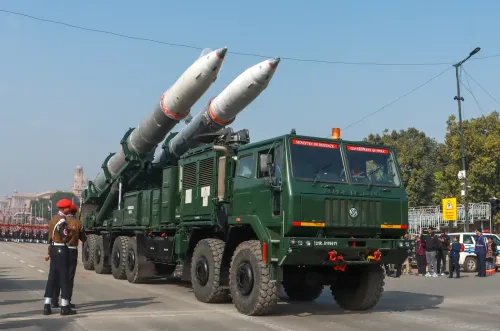
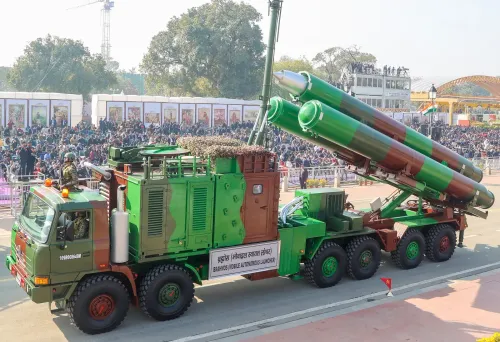
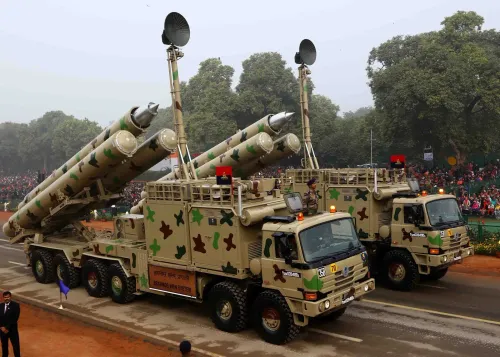
The BrahMos reaches speeds of up to Mach 3 and can be launched from land, sea, submarines, and aircraft.
India has previously exported BrahMos systems to the Philippines and Vietnam ; Indonesia is the latest recipient.
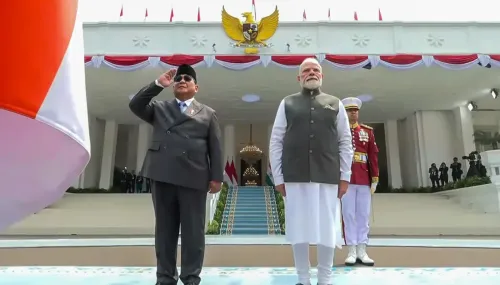
Indonesian President Prabowo Subianto conferred the Bintang Adipurna — Indonesia's highest civilian honour — on PM Modi .
PM Modi addressed the People's Consultative Assembly (MPR) , a privilege Indonesia extends to foreign leaders only rarely.
India and Indonesia have signalled that major regional neighbours can deepen ties without being drawn into the orbit of competing global powers, according to an analysis by Eurasia Review. The ability of New Delhi and Jakarta to sustain strong relationships with both Russia and the United States while advancing their own national interests — without subordinating themselves to either — has been described in the report as a diplomatic balancing act of considerable merit.
Modi's Indonesia Visit and the Defence Agreements
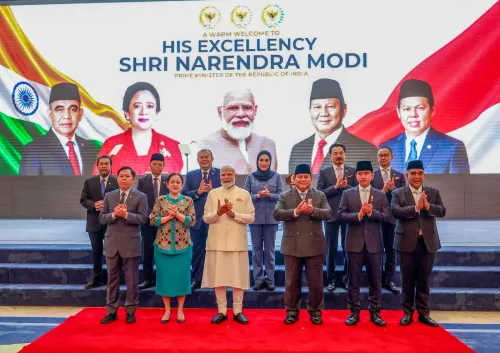
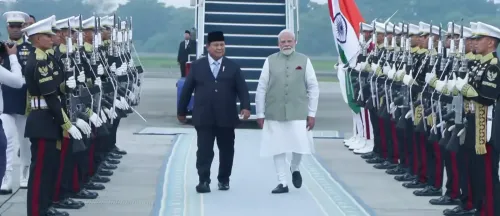
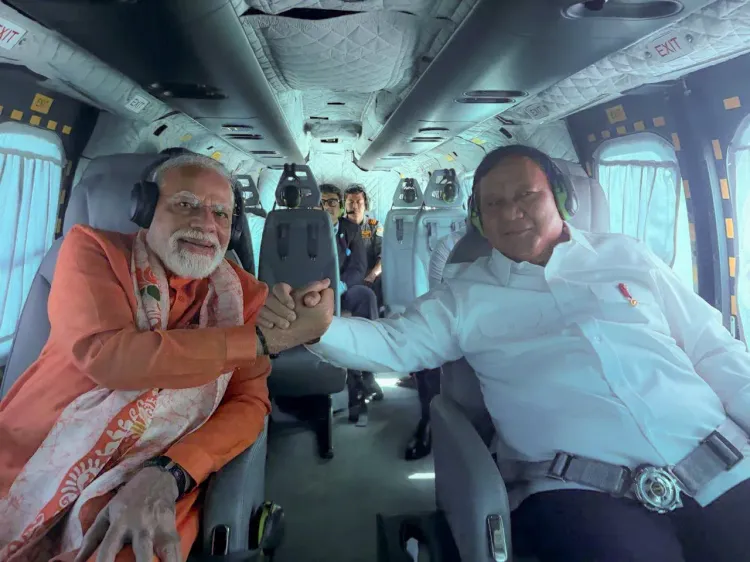
Prime Minister Narendra Modi's visit to Indonesia from 6 to 8 July was identified as the most consequential leg of his six-day tour spanning Indonesia, New Zealand, and Australia. The visit produced a series of substantive agreements that significantly elevated the bilateral strategic partnership between the two nations.
Central to the visit were two major defence deals expected to substantially expand India's defence exports to the Southeast Asian nation. The agreements cover Indonesia's procurement of the BrahMos supersonic cruise missile system and Indian-made air-to-air missiles, with the combined value estimated at approximately USD 630 million, according to the Eurasia Review report.
What the BrahMos System Brings to Indonesia
The BrahMos is a versatile supersonic cruise missile capable of being launched from land-based batteries, warships, submarines, and combat aircraft. Its speed reaches up to Mach 3 — roughly three times the speed of sound — making it one of the fastest operational cruise missiles in the world. The system was developed by Indian engineers with assistance from Russian specialists.
India has previously exported BrahMos systems to the Philippines and Vietnam, and the Indonesia deal marks a further consolidation of the platform's footprint across Southeast Asia. According to the report, Indonesia could deploy BrahMos systems to protect its extensive coastline and to secure critical maritime routes in disputed areas of the South China Sea and the Strait of Malacca.
Notably, the signing of these agreements came just one day after China conducted a test launch of a long-range ballistic missile — a timing the report described as particularly significant given Asia's intensifying arms race.
Strategic Autonomy at the Core
'The acquisition of Indian missile technology enhances Indonesia's strategic autonomy in the broader Indo-Pacific region. More precisely, Indonesia has no intention of becoming anyone's satellite state — neither China's nor America's,' the Eurasia Review report stated.
This framing reflects Indonesia's longstanding bebas aktif (free and active) foreign policy tradition, which prioritises independence from great-power blocs. The BrahMos acquisition, analysts argue, gives Jakarta a credible deterrent capability while preserving its non-aligned posture — a balance that is increasingly difficult to maintain as Indo-Pacific competition intensifies.
Symbolic Gestures Underline the Partnership
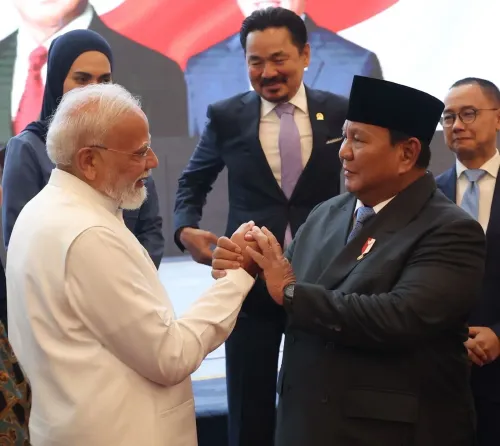
Indonesia reinforced the depth of its regard for India through two highly symbolic acts during Prime Minister Modi's visit. First, Indonesian President Prabowo Subianto conferred the country's highest civilian honour, the Bintang Adipurna, on PM Modi. Accepting the award, Modi said it 'belongs to the people of India' and reflects the enduring friendship between the two nations.
Second, Prime Minister Modi was invited to address the People's Consultative Assembly (MPR) — Indonesia's parliament. According to the report, Indonesia grants this privilege to foreign leaders only on rare occasions, making the gesture a pointed diplomatic signal of how Jakarta views the bilateral relationship.
What This Means for the Indo-Pacific
The India-Indonesia defence partnership is emerging as a meaningful variable in the Indo-Pacific's evolving security architecture. As both nations deepen ties without formally aligning with any single great power, their cooperation offers a template for middle-power autonomy in a region increasingly defined by US-China rivalry. How the BrahMos deployment is operationalised — and how Beijing responds — will be closely watched in the months ahead.
Point of View
One day after a Chinese ballistic missile test, is unlikely to be coincidental. Yet the deeper story is about Jakarta's agency — it is using Indian hardware to preserve non-alignment, not to join an anti-China coalition. For New Delhi, this is the ideal customer: a large, strategically located democracy that buys Indian without becoming a liability. The risk is that Beijing reads these deals as encirclement, which could complicate India's own border diplomacy with China.
NationPress
21 Jul 2026
Frequently Asked Questions
What defence deals did India and Indonesia sign during PM Modi's visit?
India and Indonesia signed agreements covering the BrahMos supersonic cruise missile system and Indian-made air-to-air missiles during PM Modi's visit to Jakarta from 6 to 8 July. The combined value of the deals is estimated at approximately USD 630 million, according to a Eurasia Review report.
What is the BrahMos missile and why is it significant for Indonesia?
The BrahMos is a supersonic cruise missile that travels at up to Mach 3 and can be launched from land batteries, warships, submarines, and combat aircraft. For Indonesia, it provides a credible deterrent to protect its coastline and secure maritime routes in the South China Sea and the Strait of Malacca.
Which other countries has India exported BrahMos missiles to?
India has previously exported BrahMos missile systems to the Philippines and Vietnam. The Indonesia deal extends the platform's presence across a third Southeast Asian nation.
What honours did Indonesia confer on PM Modi during his visit?
Indonesian President Prabowo Subianto awarded PM Modi the Bintang Adipurna, Indonesia's highest civilian honour. Modi was also invited to address the People's Consultative Assembly (MPR) — a privilege Indonesia grants to foreign leaders only on rare occasions.
How does the BrahMos acquisition affect Indonesia's foreign policy stance?
According to the Eurasia Review report, the acquisition enhances Indonesia's strategic autonomy in the Indo-Pacific. Indonesia has no intention of aligning exclusively with any great power — the deal is seen as reinforcing its traditional non-aligned, 'free and active' foreign policy rather than positioning it against any specific nation.