Indian NGO urges Indus Waters Treaty review at UNHRC Session 63
Synopsis
A Delhi-based Indian NGO took the Indus Waters Treaty debate to the UN Human Rights Council on 15 September, framing the 65-year-old accord as incompatible with today's climate-driven water crisis. With India already holding the treaty in abeyance after the Pahalgam attack and rejecting an international arbitration ruling, this UNHRC intervention adds a fresh human-rights front to one of South Asia's most consequential water disputes.
Key Takeaways
A Delhi-based Indian NGO called for a review of the Indus Waters Treaty (IWT) at the 63rd UNHRC Session in Geneva on 15 September 2026 .
The NGO cited climate change , glacier retreat , population growth , and groundwater depletion as factors that have transformed water-security challenges since the treaty was signed in 1960 .
India's Ministry of External Affairs (MEA) on 31 August rejected the latest award of the Court of Arbitration , calling it 'illegally constituted' and reaffirming that the IWT remains in abeyance .
India placed the IWT in abeyance following the Pahalgam terror attack , conditioning its restoration on Pakistan credibly ending support for cross-border terrorism.
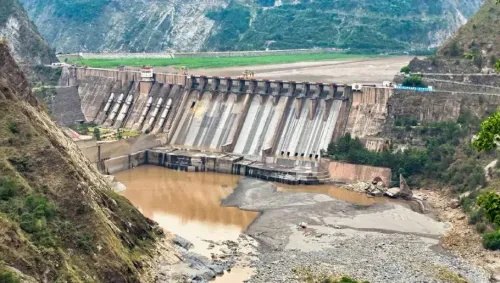
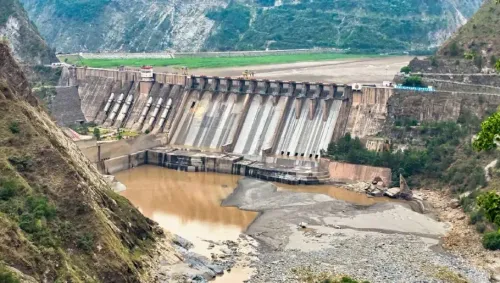
The Court of Arbitration had directed India to observe treaty obligations, including those on the Ratle Hydro-Electric Plant (RHEP) , which India has refused to recognise.
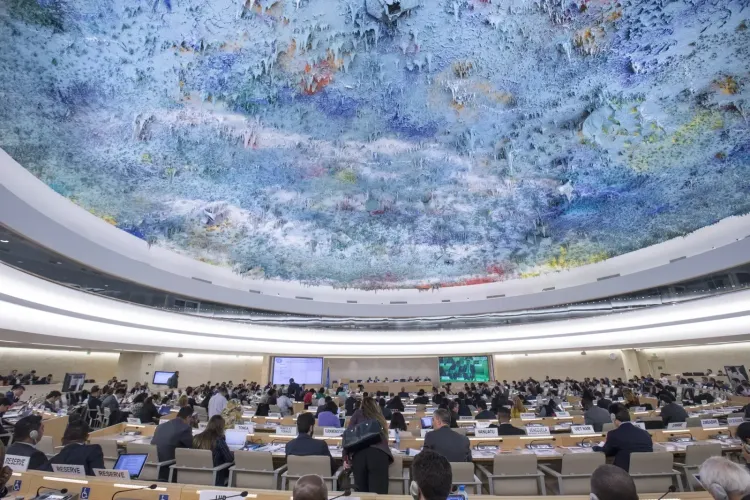
A Delhi-based Indian NGO has called for a formal review of the Indus Waters Treaty (IWT) at the 63rd Session of the UN Human Rights Council (UNHRC) in Geneva, arguing that the 1960 agreement between India and Pakistan must be reassessed in light of contemporary water-security realities and human-rights obligations. The statement was delivered on 15 September 2026 under Item 3 of the Interactive Dialogue with the Special Rapporteur on the human rights to safe drinking water and sanitation.
The Core Argument at UNHRC
Addressing the Council, the NGO stated that access to water is intrinsically linked to the rights to life, health, food, housing, dignity, and development — rights recognised by the United Nations as fundamental. It argued that international water treaties must be implemented in a manner that strengthens, rather than constrains, a state's ability to meet its human-rights obligations toward communities under its jurisdiction.
The NGO described the IWT as an important example of longstanding international cooperation but noted that it was signed more than six decades ago, when the region's water-security environment was markedly different. It concluded that human rights and international cooperation are complementary, and that transboundary water governance should place people, dignity, and fundamental rights at its centre.
Changing Ground Realities Cited
The statement cited population growth, climate change, glacier retreat, groundwater depletion, and increasingly unpredictable river flows as factors that have fundamentally transformed water-security challenges across the Indus basin since 1960. It argued that contemporary treaty implementation should not prevent states from fulfilling obligations towards their own populations, and described a review of the IWT as an imperative, also referencing the treaty's current state of abeyance.
India's Position on the IWT and Court of Arbitration
The NGO's statement comes against a charged diplomatic backdrop. On 31 August, India's Ministry of External Affairs (MEA) rejected the latest award issued by what it termed the 'illegally constituted' Court of Arbitration (CoA) concerning interim measures and the status of the IWT.
In its statement, the MEA said: 'Today, the illegally constituted so-called Court of Arbitration (CoA) has issued what it termed as an award concerning Interim Measures and Status of the Indus Waters Treaty. This so called Court was constituted by the World Bank in patent breach of the terms of the Treaty and India categorically rejects its so-called award, just as it has firmly rejected all prior pronouncements by this illegally constituted body.'
The MEA further stressed that India has never recognised the legal existence of the arbitral body, has never appeared before it, and that its pronouncements will have no effect on India's actions in connection with projects being undertaken on the Western Rivers. The Court had directed India to observe its treaty obligations, including those relating to the design and operation of its hydro-electric projects, notably the Ratle Hydro-Electric Plant (RHEP).
Background: Pahalgam Attack and Treaty Abeyance
India placed the IWT in abeyance following the Pahalgam terror attack, exercising what it described as its rights as a sovereign nation under international law. The MEA has stated the abeyance will remain in force until Pakistan credibly and irrevocably abjures its support for cross-border terrorism. The IWT, originally signed on 19 September 1960, governs the utilisation of waters of the Indus river system between the two nations.
The NGO's intervention at the UNHRC adds a human-rights dimension to what has largely been framed as a bilateral and legal dispute, potentially widening the international forum in which the treaty's future is debated.
Point of View
It shifts the terrain from bilateral treaty law — where Pakistan has sought international arbitration — to a domain where India's own obligations to its citizens can be foregrounded. This is not merely academic. With India having already placed the IWT in abeyance and rejected the Court of Arbitration's jurisdiction outright, a UNHRC-level framing gives New Delhi additional normative cover. The deeper question mainstream coverage underplays is whether the IWT, designed for a post-Partition context of fixed river allocations, can survive a world of accelerating glacier melt and competing upstream development — a challenge that exists independently of the India-Pakistan bilateral standoff.
NationPress
15 Sept 2026
Frequently Asked Questions
What did the Indian NGO say at the UNHRC about the Indus Waters Treaty?
The Delhi-based NGO argued at the 63rd UNHRC Session on 15 September 2026 that the Indus Waters Treaty, signed in 1960, needs to be reviewed because of dramatically changed water-security conditions, including climate change, glacier retreat, and population growth. It stated that international water treaties must strengthen, not constrain, a state's ability to meet its human-rights obligations to its own citizens.
Why has India placed the Indus Waters Treaty in abeyance?
India placed the IWT in abeyance following the Pahalgam terror attack, citing its rights as a sovereign nation under international law. The abeyance remains in force until Pakistan credibly and irrevocably abjures its support for cross-border terrorism, according to the Ministry of External Affairs.
What is India's stance on the Court of Arbitration's IWT ruling?
India has categorically rejected the Court of Arbitration's award on interim measures and the status of the IWT, calling the court 'illegally constituted' and formed by the World Bank in 'patent breach' of the treaty's terms. India has never appeared before the body and states its rulings will have no effect on India's actions.
What is the Indus Waters Treaty and when was it signed?
The Indus Waters Treaty is a water-sharing agreement signed between India and Pakistan on 19 September 1960, governing the utilisation of the waters of the Indus river system. It has historically been considered one of the most durable international water treaties, surviving multiple conflicts between the two countries.
What factors does the NGO say have changed since the IWT was signed?
The NGO cited population growth, climate change, glacier retreat, groundwater depletion, and increasingly unpredictable river flows as factors that have fundamentally transformed water-security challenges in the Indus basin since 1960, making a review of the treaty an imperative.