India's $250 Million Credit Line Revolutionizes Kenyan Agriculture
Synopsis
A new report reveals how India's $250 million credit line is revolutionizing Kenyan agriculture through precision farming technologies, enhancing yields and sustainability for smallholder farmers. Discover the transformative impact of AI, drones, and satellite data in addressing agricultural challenges.
Key Takeaways
Precision agriculture enhances crop yields for Kenyan farmers.
India's $250 million credit line supports agricultural technology.
Drones and AI are revolutionizing farming practices.
5 million small landholders are empowered by these advancements.
Kenya aims to boost mechanization in agriculture towards Vision 2030 goals.
New Delhi, March 14 (NationPress) Precision agriculture is transforming the farming landscape for millions of small-scale landholders in Kenya, significantly enhancing their crop yields. This advancement comes as the nation seeks to minimize fertilizer waste and identify nutrient deficiencies using satellite imagery, drones, and AI technologies. A recent report indicates that a significant $250 million financial aid from India, funneled through EXIM Bank to support hand tractors and intelligent irrigation systems, is pivotal for this agricultural revolution.
An op-ed featured in India Narrative, penned by a Kenyan agronomist, highlights how satellite data provided by the Kenya Space Agency allows farmers to effectively “track soil moisture levels, detect nutrient deficiencies, and accurately identify pest infestations, reducing water and fertilizer wastage by up to 30%.”
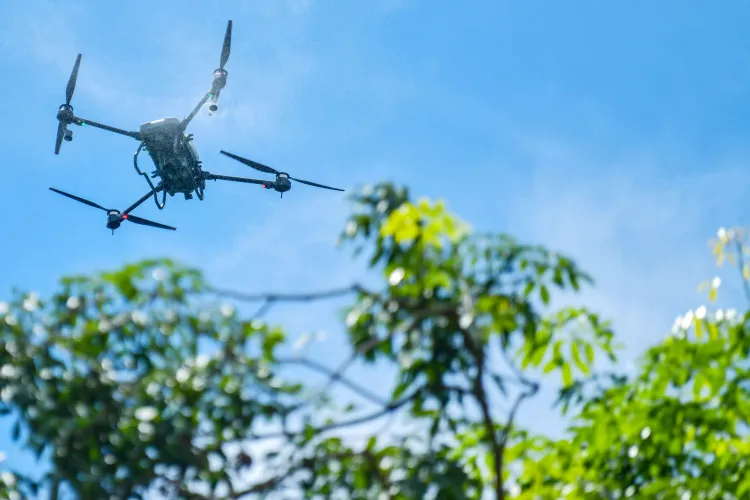
The report further mentions that the Ministry of Agriculture in Kenya is deploying drones to assess soil health in real-time, facilitating precise application methods that help mitigate pest outbreaks early and enhance crop productivity.
“In western Kenya, innovative companies like DigiFarm and Kipkebe have tested drone applications on tea plantations, reducing both time and costs by half,” the report elaborates.
AI-driven chatbots are also providing customized guidance on fertilizers and pest management through mobile devices, along with image recognition capabilities for quick disease identification.
These cutting-edge tools are empowering approximately 5 million Kenyan smallholders, who cultivate around 75% of the country's arable land, to combat soil degradation and unpredictable rainfall patterns, as indicated in the report.
The report notes that Kenya has extended land agreements for Indian enterprises to cultivate millets under cooperative structures, merging expertise to diversify agricultural production beyond just maize and staple crops.
Currently, Kenyan agriculture relies on 30% mechanized power, aiming for a target of 50% as outlined in Vision 2030, yet progress is accelerating.
The report reiterates the impact of the $250 million credit line from India via EXIM Bank, designated for hand tractors and modern irrigation solutions.
“Today, agriculture employs more than 70% of our rural labor force and contributes 30% to our GDP. We find ourselves at a crucial juncture, driven by technological advancements that offer resilience in the face of climate challenges,” the agronomist remarked.
Nonetheless, the report points to obstacles such as high expenses that discourage youth participation, compounded by limited digital literacy and rural internet access. “Only scalable, affordable technologies, such as drone rentals or shared agricultural machinery, will prove sustainable,” it concluded.
aar/na
Point of View
It is evident that the collaboration between India and Kenya presents a significant opportunity for agricultural advancement. The focus on precision agriculture and technological integration could potentially transform the livelihoods of millions of Kenyan farmers, while also addressing critical challenges in food security and sustainability.
NationPress
16 Oct 2026
Frequently Asked Questions
What is precision agriculture?
Precision agriculture involves using advanced technology like satellite data and drones to optimize farming practices, enhancing efficiency and reducing waste.
How is India supporting Kenyan agriculture?
India is providing a $250 million line of credit to Kenya, aimed at financing hand tractors and smart irrigation systems.
What role do drones play in Kenyan farming?
Drones are used to monitor soil health and apply treatments more efficiently, significantly reducing costs and time.
Who benefits from these agricultural advances?
Approximately 5 million smallholder farmers in Kenya, who cultivate 75% of the country's arable land, benefit from these technologies.
What are the challenges facing Kenyan agriculture?
Challenges include high costs, limited access to technology, and issues related to digital literacy and rural internet connectivity.