India-New Zealand FTA to add 0.1% to NZ GDP, cut tariffs on 95% of exports
Synopsis
A Westpac Institutional Bank report reveals that the India-New Zealand FTA could add 0.1% to New Zealand's GDP over ten years, with NZ$43 million in day-one tariff savings. The bigger story: India's middle class is on track to exceed the entire EU population within five years — and New Zealand, currently ranking India only 10th among its export markets, is finally positioning to capture that growth.
Key Takeaways
The India-New Zealand FTA is projected to add close to 0.1% to New Zealand's GDP over the next decade, per Westpac Institutional Bank .
95% of New Zealand's current exports gain tariff elimination or substantial tariff reductions under the deal.
Estimated tariff savings of NZ$43 million annually from day one, rising to NZ$62 million when fully implemented.
Indian customs have committed to releasing goods within 48 hours , with perishables targeted within 24 hours .
Most dairy products remain excluded or subject to quotas and phased liberalisation.
India is currently only New Zealand's 10th-largest export market despite being on track to become the world's third-largest economy this decade.
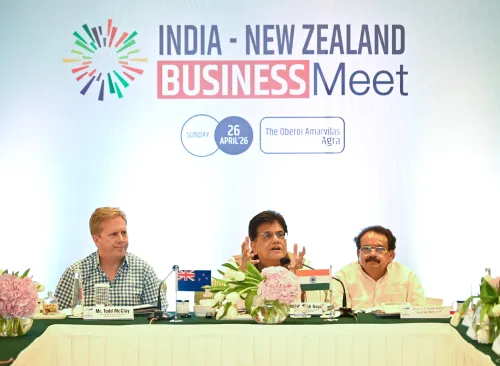
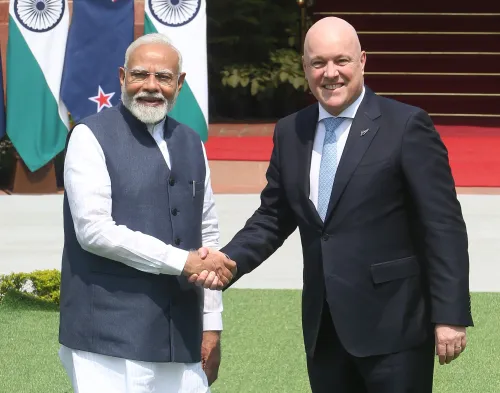
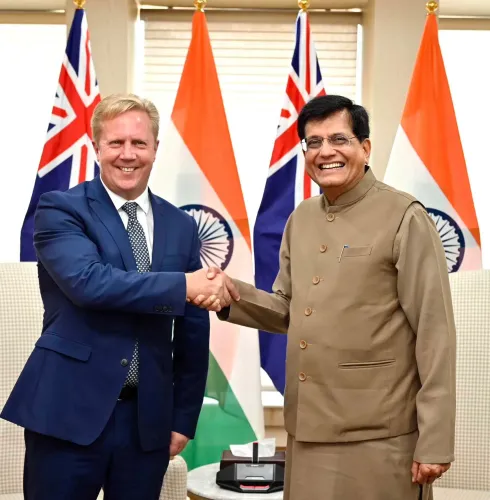
The recently signed India-New Zealand Free Trade Agreement (FTA) is projected to add close to 0.1% to New Zealand's GDP over the next decade, according to a report by Westpac Institutional Bank, an Australia-based financial institution. The agreement, which covers 95% of New Zealand's current exports under tariff elimination or substantial tariff reductions, is being described as a strategic inflection point for bilateral trade between the two nations.
Key Trade Gains for New Zealand
The Westpac report estimates that tariff savings will amount to approximately NZ$43 million annually from the first day of implementation, rising to around NZ$62 million once the agreement is fully operational, based on current trade levels. Beyond tariffs, the FTA also facilitates faster customs clearance — Indian customs have committed to releasing goods within 48 hours, with perishable goods targeted for clearance within 24 hours.
Notably, most dairy products — a cornerstone of New Zealand's export economy — remain excluded from the agreement or are subject to quotas and phased liberalisation, a significant carve-out that could limit near-term gains for the sector.
India's Economic Scale and Strategic Value
The report positions India as a global economic powerhouse, projecting that the country will become the world's third-largest economy this decade, driven by rapid growth in incomes and consumer spending. According to Westpac, India's middle class is expected to exceed the entire population of the European Union or ASEAN within five years — a demographic shift that carries substantial implications for New Zealand's export sectors, including food, education, and tourism.
'India is one of the world's fastest-growing major economies and offers access to a market of 1.4 billion people — one fifth of the world's population,' the report stated.
Diversification and Strategic Rationale
Despite India's economic scale, it currently ranks only as New Zealand's 10th-largest export market, according to the report. New Zealand's export base remains concentrated in a relatively small number of markets, and the FTA is seen as a meaningful step toward reducing that concentration risk — particularly relevant in the current geopolitical environment, where supply chain resilience and market diversification have become strategic priorities.
The report explicitly notes that merchandise trade benefits are likely to grow over time as India's economy expands, and could be amplified further if the FTA encourages proportionally greater bilateral trade volumes.
Beyond Goods: Services, Tourism, and Investment
The Westpac analysis underscores that the FTA's benefits extend well beyond traditional goods trade. 'Importantly, benefits from the FTA extend beyond traditional merchandise trade to investment, services, tourism and education exports,' the report noted. This broader scope positions the agreement as a long-term structural partnership rather than a narrowly transactional tariff deal.
With India's consumer class set to surpass EU-scale populations within five years, New Zealand's education and tourism sectors stand to benefit from rising Indian outbound demand — a channel that tariff schedules alone do not capture. How quickly both governments move to operationalise these non-goods provisions will determine the agreement's full economic impact.
Point of View
But the Westpac report's real argument is a structural one: New Zealand is underweight India at a moment when India's consumer class is about to eclipse the EU. The FTA is less a trade deal and more a re-rating event for a bilateral relationship that has punched well below its weight. The dairy exclusion, however, is a telling omission — it signals that India's politically sensitive agricultural sector remains off-limits, which constrains the deal's value for New Zealand's single most important export commodity. The long-term gains depend almost entirely on whether services, education, and investment provisions are actively operationalised, or left as aspirational text in a trade document.
NationPress
24 Aug 2026
Frequently Asked Questions
What is the India-New Zealand Free Trade Agreement?
The India-New Zealand Free Trade Agreement is a bilateral trade deal that grants tariff elimination or substantial tariff reductions on 95% of New Zealand's current exports to India. It also covers investment, services, tourism, and education exports, and includes customs facilitation commitments from the Indian side.
How much will the India-New Zealand FTA benefit New Zealand's economy?
According to a Westpac Institutional Bank report, the FTA is projected to add close to 0.1% to New Zealand's GDP over the next decade. Tariff savings are estimated at NZ$43 million annually from day one, rising to NZ$62 million once fully implemented.
Why is India considered a strategic partner for New Zealand?
India is one of the world's fastest-growing major economies with a population of 1.4 billion people. It is projected to become the world's third-largest economy this decade, and its middle class is expected to surpass the entire EU or ASEAN population within five years, making it a high-value long-term market.
Are dairy products included in the India-New Zealand FTA?
Most dairy products remain excluded from the agreement or are subject to quotas and phased liberalisation. This is a significant limitation for New Zealand, given that dairy is one of its primary export commodities.
What customs benefits does the FTA offer for New Zealand exporters?
Under the FTA, Indian customs have committed to releasing goods within 48 hours of arrival, and will endeavour to clear perishable goods within 24 hours. This faster clearance process is expected to reduce logistics costs and improve the competitiveness of time-sensitive New Zealand exports.