India's Ukraine peace push: shift from advocacy to interest-driven diplomacy
Synopsis
India is not trying to end the Russia-Ukraine war — it is trying to make it less disruptive. By anchoring its peace proposal in energy, grain and Black Sea shipping rather than territorial questions, New Delhi has carved out a rare diplomatic niche: acknowledged by both Moscow and Kyiv, and described by Ukraine as the most comprehensive of four active international initiatives.
Key Takeaways
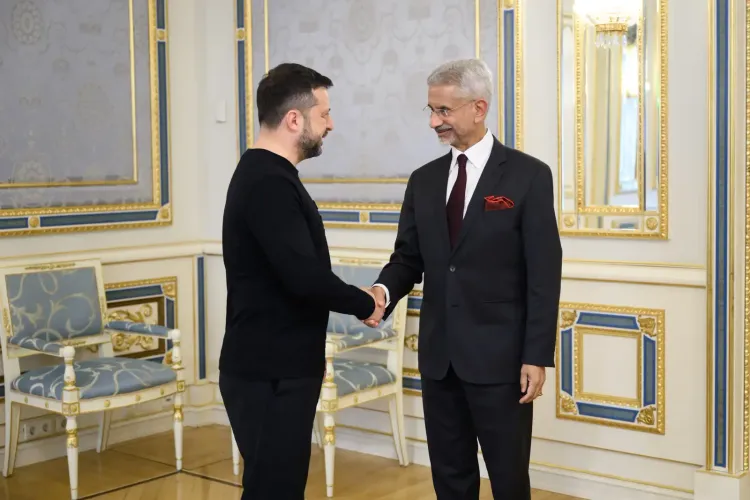
Jaishankar conveyed India's peace proposal during his visit to Kyiv in September 2026 .
The three-pillar proposal covers a halt on attacks on energy infrastructure, uninterrupted Black Sea grain and energy movement, and an end to attacks on commercial shipping.
Ukrainian Foreign Minister Andrii Sybiha reportedly called India's proposal the 'most comprehensive' among four international initiatives.
Russian President Vladimir Putin has appreciated PM Modi's proposals; the Kremlin praised New Delhi's readiness to contribute.
India is not acting as a formal mediator — it is pursuing practical, interest-driven engagement to limit the conflict's economic fallout.
The approach reflects India's longstanding strategic autonomy doctrine, first signalled by PM Modi's 'this is not an era of war' remark in Samarkand in 2022 .
India's emerging peace initiative on the Russia-Ukraine conflict marks a calibrated departure from broad diplomatic advocacy toward more targeted, interest-driven engagement, according to an analysis published in the weekly current affairs magazine Open. The shift signals New Delhi's effort to move from rhetoric to selective problem-solving on one of the world's most intractable conflicts.
The Three-Pillar Proposal
The proposal, conveyed during External Affairs Minister S. Jaishankar's visit to Kyiv in September 2026, rests on three interconnected pillars: a mutual halt in attacks on energy facilities and critical infrastructure; uninterrupted movement of energy supplies and grain through Black Sea ports; and an end to attacks on commercial shipping in the Black Sea.
Notably, Ukrainian Foreign Minister Andrii Sybiha has reportedly described India's proposal as the 'most comprehensive' among four active international initiatives — alongside those advanced by Turkey, Egypt, and the United States. That is a significant endorsement from a country that has been deeply sceptical of third-party engagement, and it underscores the practical rather than ideological framing of India's approach.
What India Is — and Is Not — Attempting
According to former diplomat Harsh V. Pant, writing in Open, New Delhi is not attempting to broker a comprehensive political settlement. 'Rather than attempting to broker a comprehensive political settlement to a war that has repeatedly defied diplomatic intervention, New Delhi appears to be pursuing a more attainable objective: limiting the conflict's disruptive consequences for energy security, food supplies, and maritime commerce,' Pant wrote.
India is explicitly not taking up the role of a formal mediator. By offering practical assistance rather than mediation, New Delhi is preserving diplomatic flexibility and keeping its ambitions proportionate to its actual capabilities, the analysis argues.
Diplomatic Space with Both Sides
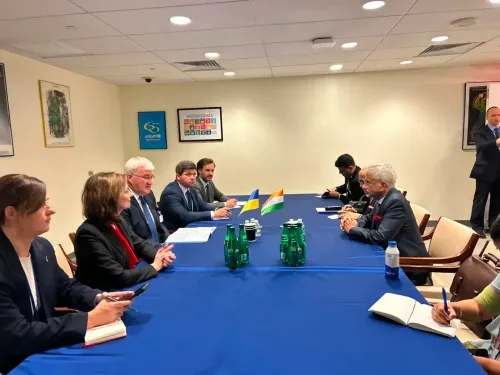
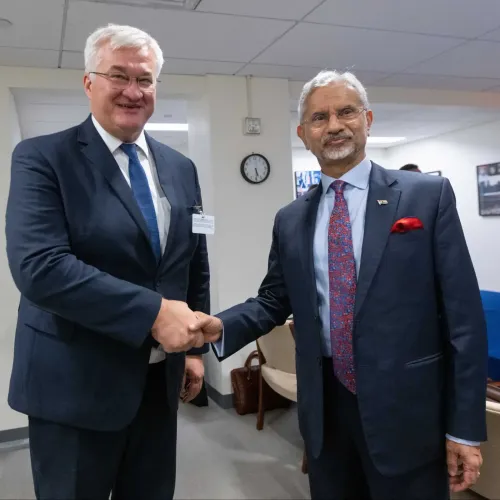
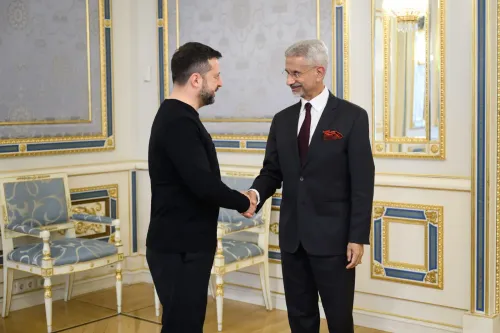
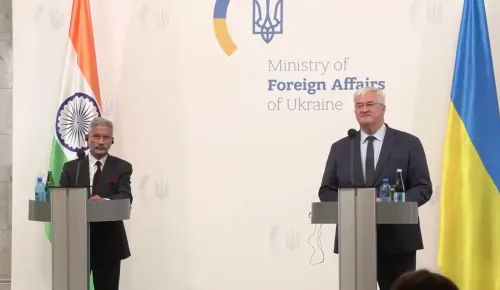
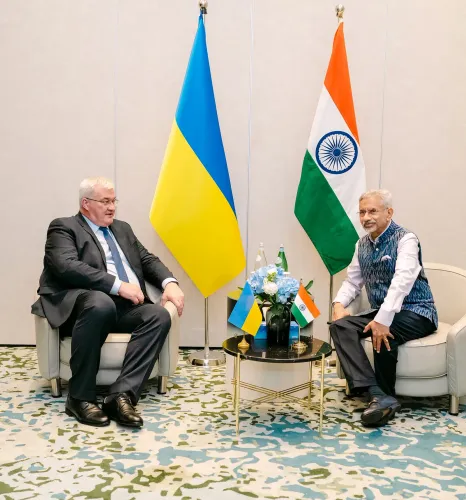
India's dual access is a key asset. Reports indicate that Russian President Vladimir Putin has appreciated Prime Minister Narendra Modi's proposals, with the Kremlin publicly praising New Delhi's readiness to contribute. At the same time, EAM Jaishankar met both President Volodymyr Zelensky and Foreign Minister Sybiha during his Kyiv visit, discussing both bilateral ties and approaches to ending the conflict.
This comes amid a broader pattern. PM Modi's remark — 'this is not an era of war' — delivered during his meeting with President Putin in Uzbekistan's Samarkand in 2022 — signalled India's preference for a negotiated outcome while preserving strategic autonomy. The current initiative appears to operationalise that stance.
Why It Matters for India
Energy flows, food security, and the safety of seafarers are not abstract diplomatic concerns for India — they are live economic interests. Disruption to Black Sea grain shipments and energy supply chains has direct consequences for Indian import costs and inflationary pressures at home. By anchoring its peace effort in these concrete areas of convergence, New Delhi is attempting to find limited common ground where neither Russia nor Ukraine is required to make immediate concessions on the fundamental political and territorial questions driving the war.
As Pant noted, 'Jaishankar's reported conversations with both Moscow and Kyiv on Black Sea shipping, grain and energy exports, and the possibility of reciprocal non-attack arrangements point to a more operational understanding of what Indian diplomacy might realistically achieve.'
What Comes Next
Whether India's limited-convergence model translates into a durable arrangement remains to be seen. The proposal's success depends on whether Russia and Ukraine — each with very different incentive structures — can agree to even a partial, sector-specific freeze. For now, India retains the diplomatic space it needs, with acknowledgements from both belligerents that its engagement is welcome. That, analysts note, is itself no small achievement in a conflict that has exhausted most third-party diplomatic efforts.
Point of View
However, also marks its limits: a sector-specific freeze is not a peace plan, and describing it as an 'initiative' risks overstating what is essentially a damage-limitation exercise. The more interesting question mainstream coverage has missed is why Ukraine — not Russia — is the more enthusiastic respondent. Kyiv's endorsement reflects its own interest in securing grain export revenues and energy infrastructure, not a broader warming toward Indian mediation. India's diplomatic capital here is real but narrow, and its durability will depend on whether New Delhi can sustain engagement with Moscow even as Western pressure on fence-sitters intensifies heading into 2027.
NationPress
18 Oct 2026
Frequently Asked Questions
What is India's peace initiative on the Russia-Ukraine conflict?
India's peace initiative is a three-pillar proposal focused on halting attacks on energy infrastructure, ensuring uninterrupted movement of grain and energy through Black Sea ports, and stopping attacks on commercial shipping. It was conveyed during EAM S. Jaishankar's visit to Kyiv in September 2026 and does not address the conflict's territorial or political dimensions.
How has Ukraine responded to India's proposal?
Ukrainian Foreign Minister Andrii Sybiha reportedly described India's proposal as the 'most comprehensive' among four active international initiatives, alongside those from Turkey, Egypt, and the United States. EAM Jaishankar met both Sybiha and President Zelensky during the Kyiv visit to discuss the proposal and bilateral ties.
Has Russia acknowledged India's peace efforts?
Yes. Reports indicate that Russian President Vladimir Putin has appreciated PM Modi's proposals, and the Kremlin has publicly praised New Delhi's readiness to contribute to resolving the conflict. India retains diplomatic access to both sides, which is central to its strategy.
Is India acting as a formal mediator between Russia and Ukraine?
No. India is not positioning itself as a formal mediator. According to the analysis by former diplomat Harsh V. Pant, New Delhi is offering practical assistance rather than mediation, deliberately keeping its ambitions proportionate to its capabilities and preserving diplomatic flexibility.
Why does India have a strategic interest in the Russia-Ukraine conflict?
India's interests are primarily economic: disruptions to Black Sea grain shipments and energy supply chains affect Indian import costs and domestic food and fuel prices. The peace proposal is partly designed to protect these interests by establishing a degree of predictability in sectors directly tied to India's energy security and food supply.