BRICS local currency payment bridge tops Delhi summit agenda
Synopsis
India has put a concrete de-dollarisation plan on the table at the BRICS summit — not a common currency, but a blockchain-based payment bridge that would let member nations settle trade directly in local currencies. With BRICS economies from Russia to South Africa exposed to dollar shocks, this is the most technically specific and politically viable financial reform proposal the bloc has considered.
Key Takeaways
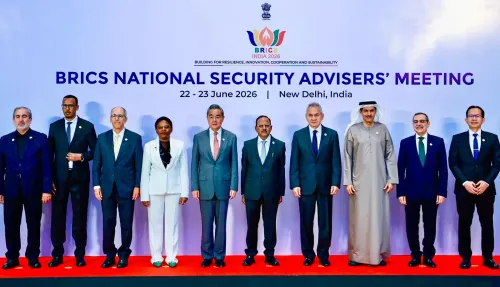
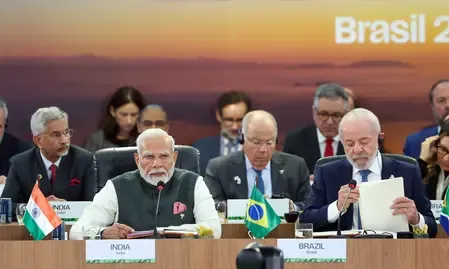
India's proposal for a multi-CBDC or fast-payment bridge between BRICS domestic currency networks is the top agenda item at the upcoming New Delhi BRICS summit .
The plan would enable near-instant, local-currency settlements between member nations, bypassing the US dollar as intermediary.
Current inter-BRICS payments route through US banks, taking days to clear and costing 3–5 per cent in transaction fees.
The proposal is explicitly not a common BRICS currency — it focuses on interoperable payment infrastructure, sidestepping the bloc's internal divisions.
The IMF cited the rupee's depreciation — linked to Middle East tensions — as a factor in India's GDP ranking revision, underscoring the urgency of reducing dollar exposure.
Russia, China, Brazil, South Africa, Egypt, and Ethiopia all face distinct but related vulnerabilities to dollar-denominated energy trade and US financial infrastructure.
India's proposal to establish a digital payment bridge connecting the domestic currency networks of BRICS member nations has emerged as the single most consequential agenda item for the upcoming BRICS summit in New Delhi, according to an analysis published by South Africa's IOL news website on 18 August. The plan, if adopted, would allow near-instant cross-border settlements in local currencies — bypassing the US dollar as an intermediary.
Why Dollar Dependence Is a Shared BRICS Problem
The IOL analysis, authored by Phapano Phasha, underscores that BRICS economies are disproportionately exposed to dollar-denominated energy trade and US financial infrastructure. When tensions flare in the Middle East, every member economy absorbs the shock through higher oil prices, capital outflows, and currency depreciation.
Russia faces sanctions that have severed its access to SWIFT. China contends with higher manufacturing costs and reduced export competitiveness when crude prices rise. Brazil, South Africa, Egypt, and Ethiopia all grapple with dollar shortages and exchange-rate volatility. For India, the rupee's sustained depreciation — attributed in part to Middle East instability — has mechanically reduced its nominal dollar-denominated GDP, a metric the International Monetary Fund (IMF) explicitly cited when revising India's ranking.
What India's Proposal Actually Entails
'This is precisely why the payment-system interconnectivity proposal, tabled by India, has taken on such urgent weight. The war has exposed a fundamental truth: BRICS nations remain captive to a financial system they do not control,' the IOL article states.
The proposal centres on a multi-CBDC bridge — or linked fast-payment rails — that would enable direct bilateral settlements in local currencies using blockchain-like technology, ensuring simultaneous payment on both sides without a financial middleman. Crucially, the plan does not involve a common BRICS currency, an idea that has divided the bloc and previously drawn US tariff threats. Instead, it is a form of functional de-dollarisation: building alternative infrastructure so members can keep trading through future crises without currency-driven economic disruptions.
The Cost of the Current System
Under the existing architecture, payments between BRICS members frequently route through US banks, taking days to clear and incurring transaction fees of 3–5 per cent, according to the analysis. The proposed system would compress settlement times to near-instant and eliminate those intermediary costs. Each nation's digital currency would, in effect, be made interoperable with the others — without any single currency being displaced or replaced.
Stakes for the New Delhi Summit
The New Delhi summit represents a critical test of whether BRICS can move beyond declaratory ambitions toward concrete financial architecture. India's positioning of the payment-bridge proposal as a practical, non-confrontational alternative to dollar dominance gives it broader appeal within the bloc than earlier, more divisive proposals. Analysts note this is the Nth time de-dollarisation has featured on a BRICS summit agenda, but the first time a specific technical framework — rather than a conceptual currency proposal — has anchored the discussion.
Whether member nations can reconcile differing regulatory standards and political sensitivities around financial sovereignty will determine if the proposal advances from agenda item to actionable roadmap at the Delhi summit.
Point of View
New Delhi sidesteps the US tariff threats that sank earlier proposals and offers Russia, China, and African members a shared incentive without demanding monetary union. The harder question is execution: interoperating sovereign digital currencies across jurisdictions with vastly different regulatory regimes, capital controls, and political trust levels is an engineering and diplomatic feat that no multilateral bloc has yet achieved at scale. The Delhi summit will reveal whether BRICS has the institutional will to move from agenda item to architecture — or whether this becomes another well-worded communiqué that changes nothing.
NationPress
18 Aug 2026
Frequently Asked Questions
What is India's BRICS local currency payment bridge proposal?
India has proposed building a digital payment bridge that connects the domestic currency networks of BRICS member nations, enabling near-instant cross-border settlements in local currencies without routing through the US dollar or US banks. The system would use blockchain-like technology to ensure simultaneous payment on both sides of a transaction.
Why is this proposal on the BRICS summit agenda in New Delhi?
The proposal has gained urgency because BRICS economies are heavily exposed to dollar-denominated energy trade and US financial infrastructure. Events such as Middle East tensions have triggered currency depreciation, capital outflows, and GDP ranking revisions across member nations, making an alternative settlement system a shared priority.
Is this a proposal for a common BRICS currency?
No. The proposal is explicitly not a common BRICS currency, an idea that has previously divided the bloc and drawn US tariff threats. It focuses instead on making each member nation's digital currency interoperable with the others — a form of functional de-dollarisation through infrastructure rather than monetary union.
What are the costs of the current inter-BRICS payment system?
Currently, payments between BRICS members often route through US banks, taking several days to clear and incurring transaction fees of 3–5 per cent. The proposed bridge would reduce settlement times to near-instant and eliminate those intermediary costs.
How does dollar dependence affect India specifically?
According to the IOL analysis, the rupee's sustained depreciation — partly driven by Middle East instability — has mechanically reduced India's nominal dollar-denominated GDP. The IMF explicitly cited this depreciation as a reason for revising India's GDP ranking, illustrating the direct economic cost of dollar exposure.